
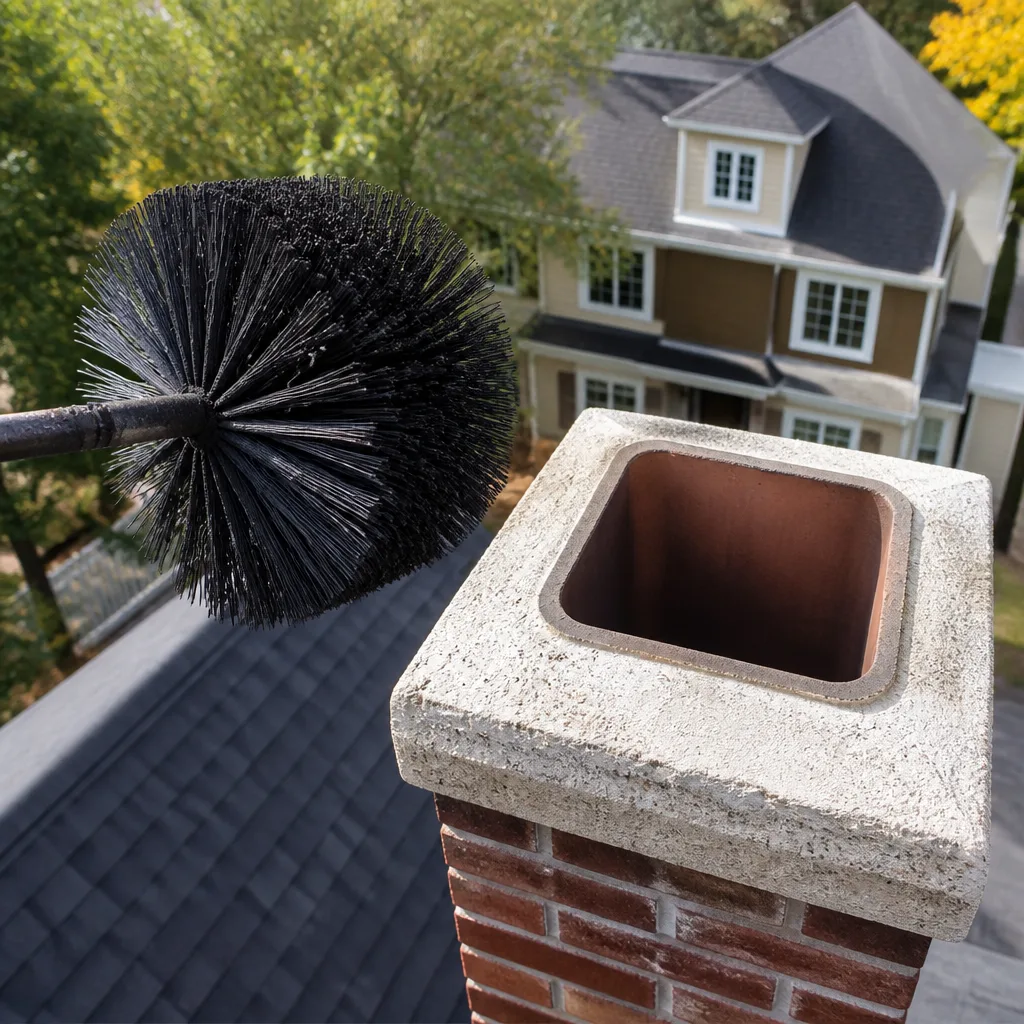
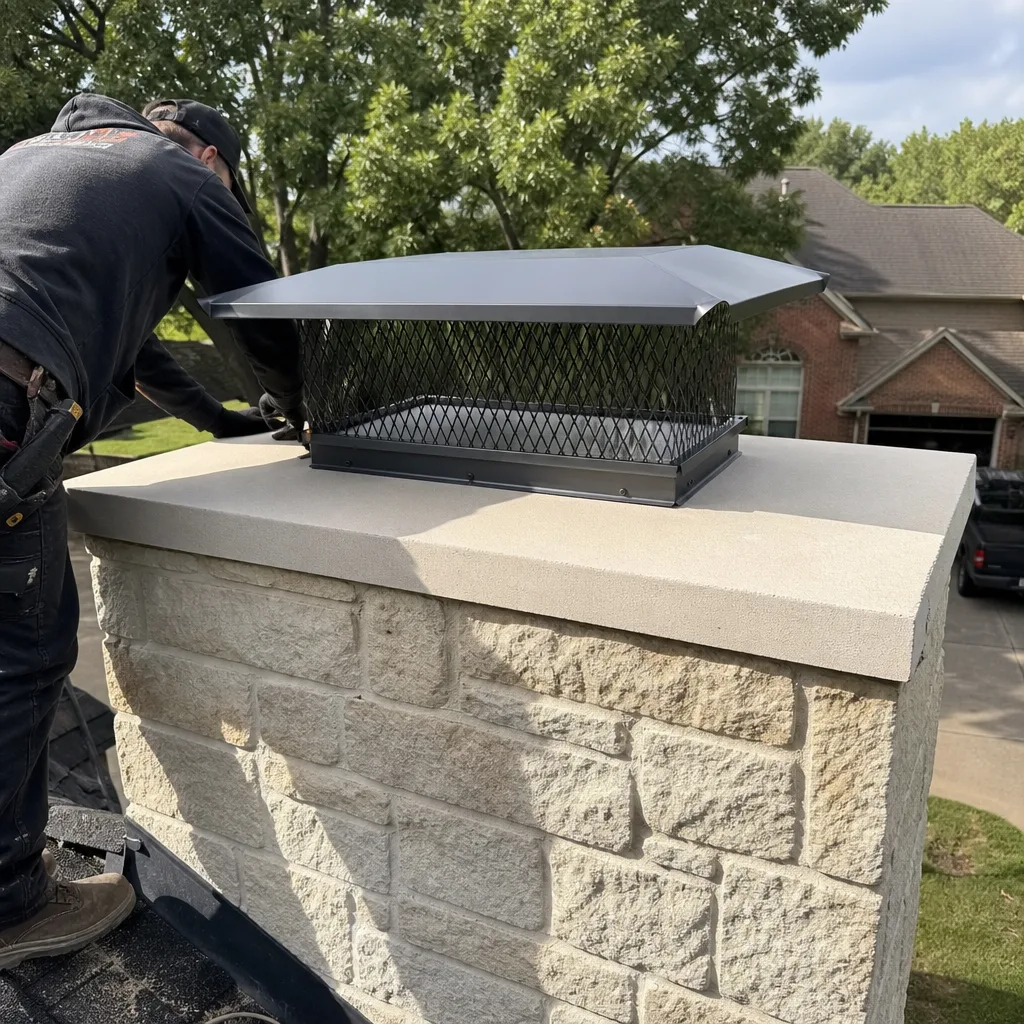
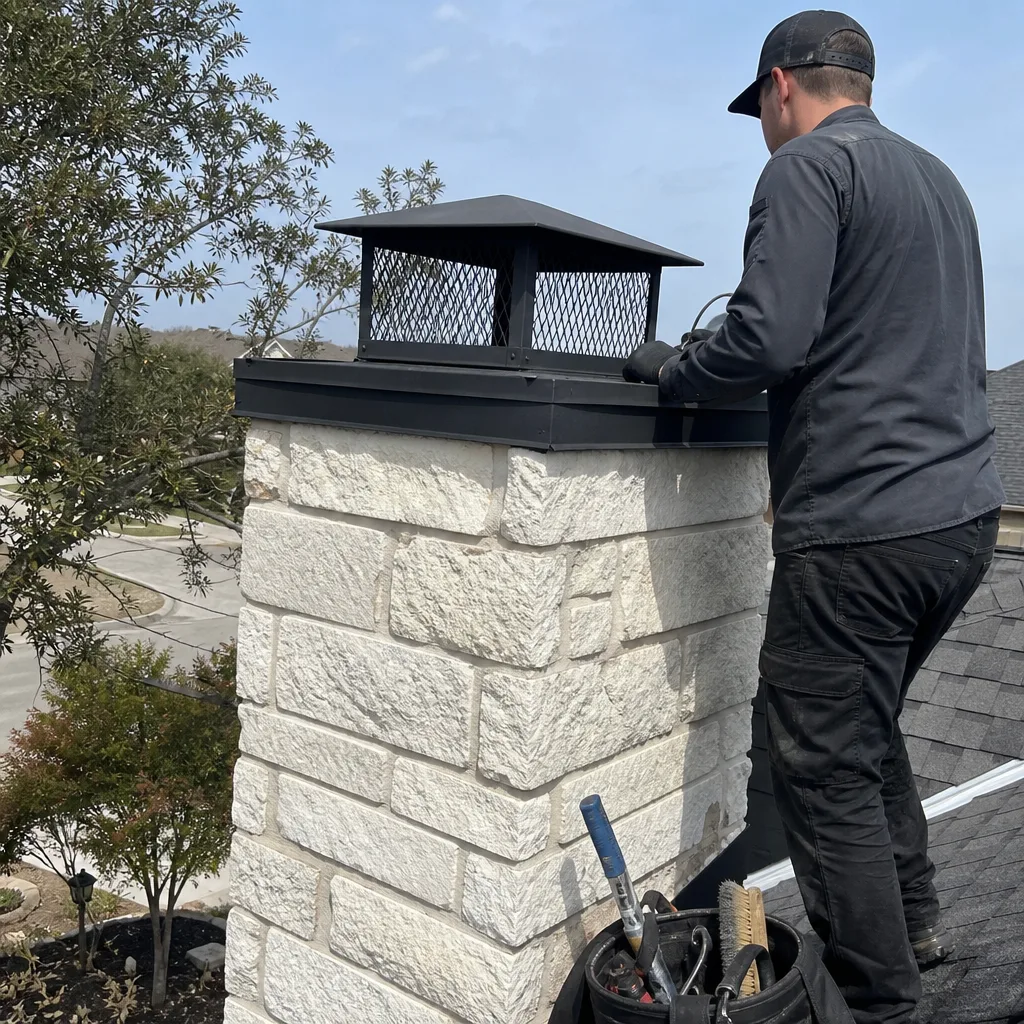
Level 1 sweep and inspection to the NFPA 211 annual standard - flue, crown, cap, and flashing checked and photographed
Chimney sweep logs do not sweep chimneys. They loosen some creosote - which then falls where a brush and vacuum still have to collect it.
Masonry repairGas fireplace service
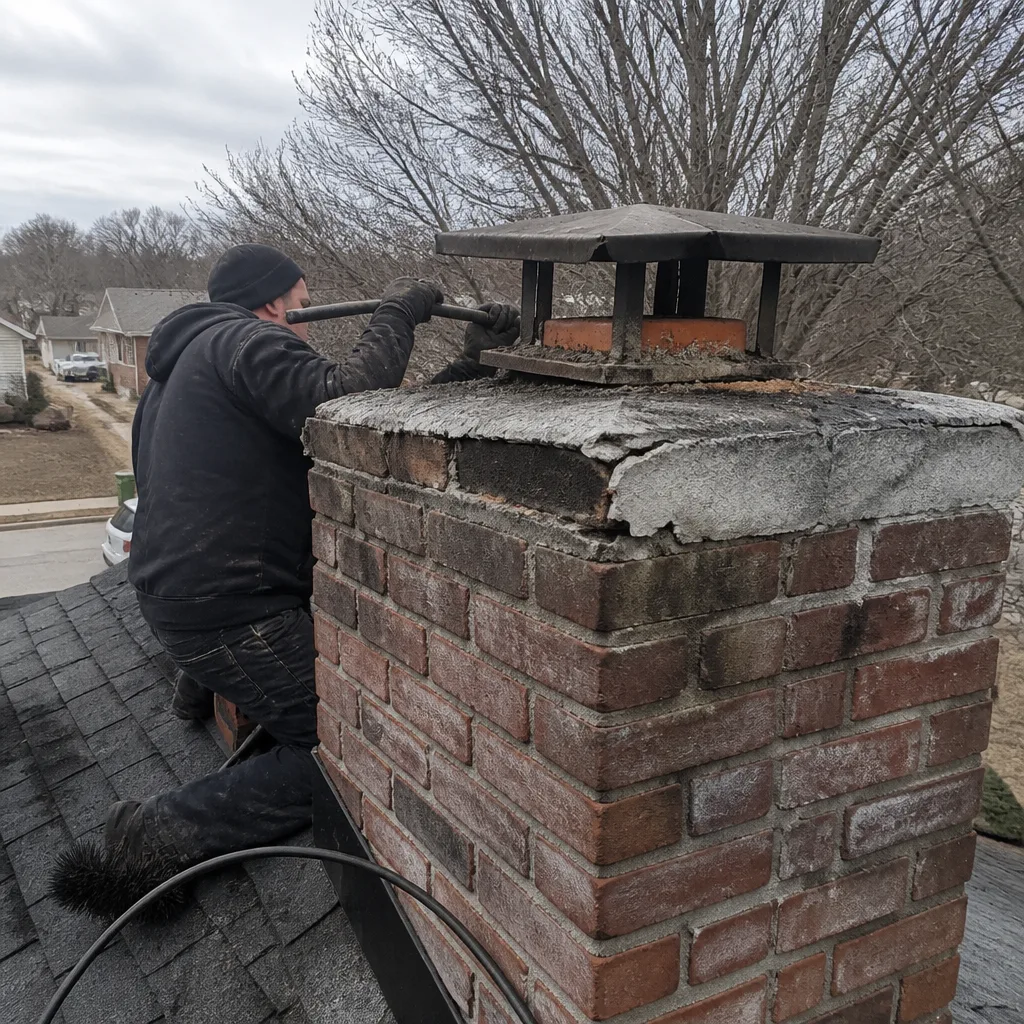 Before
 After
After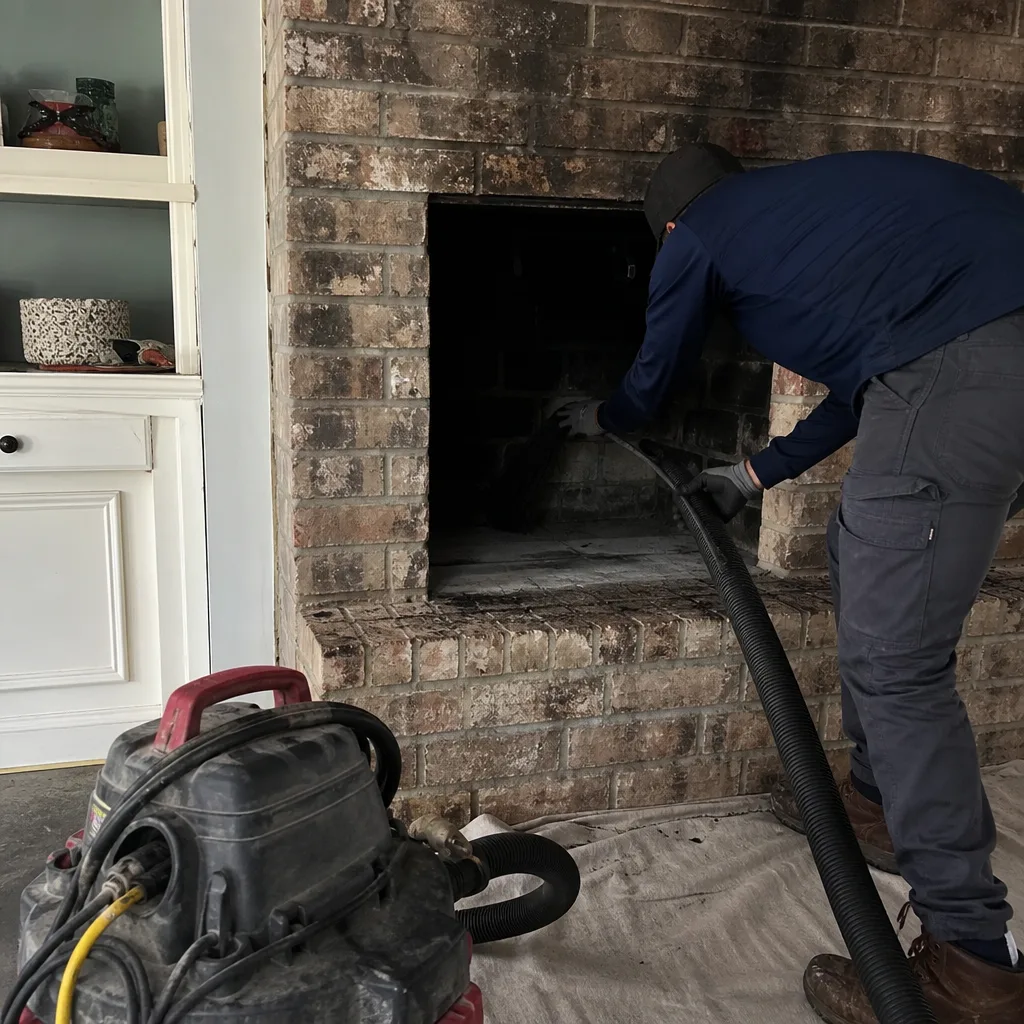 Before
 After
After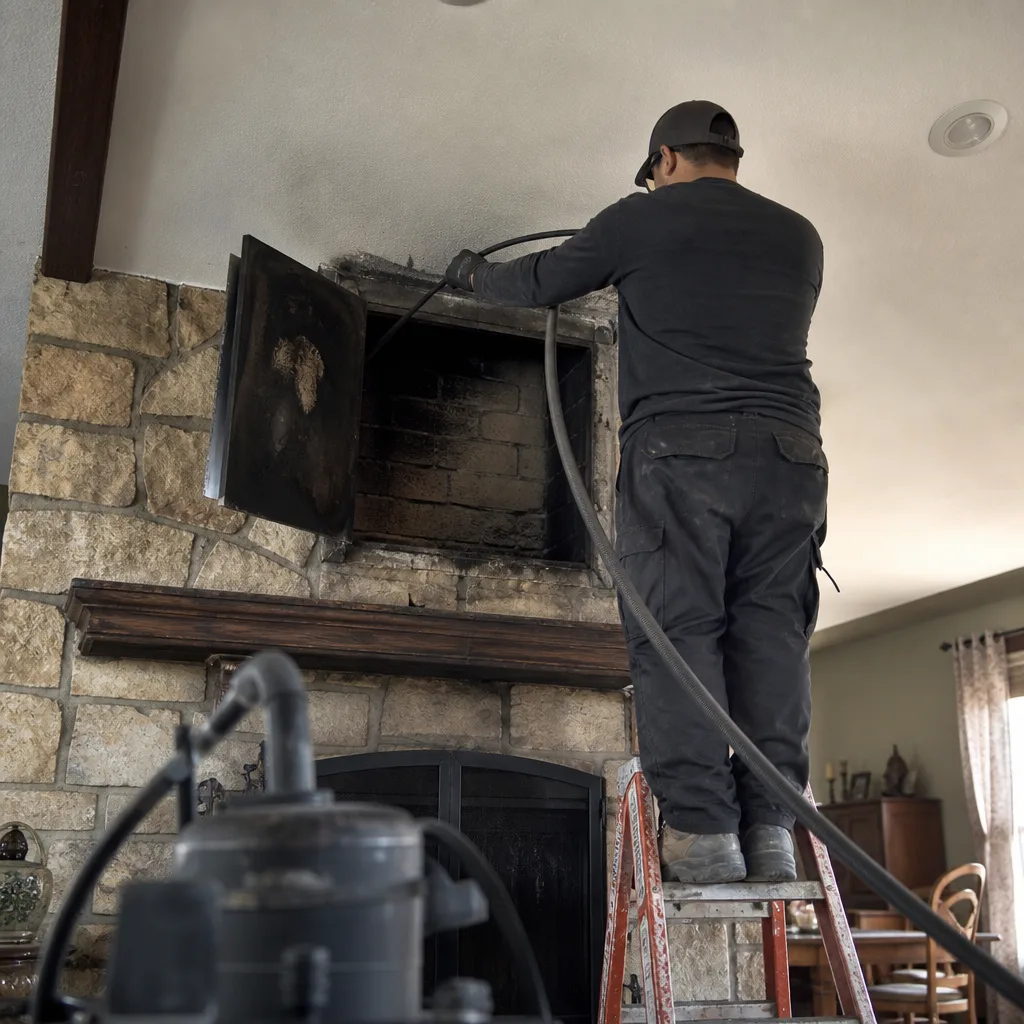 Before
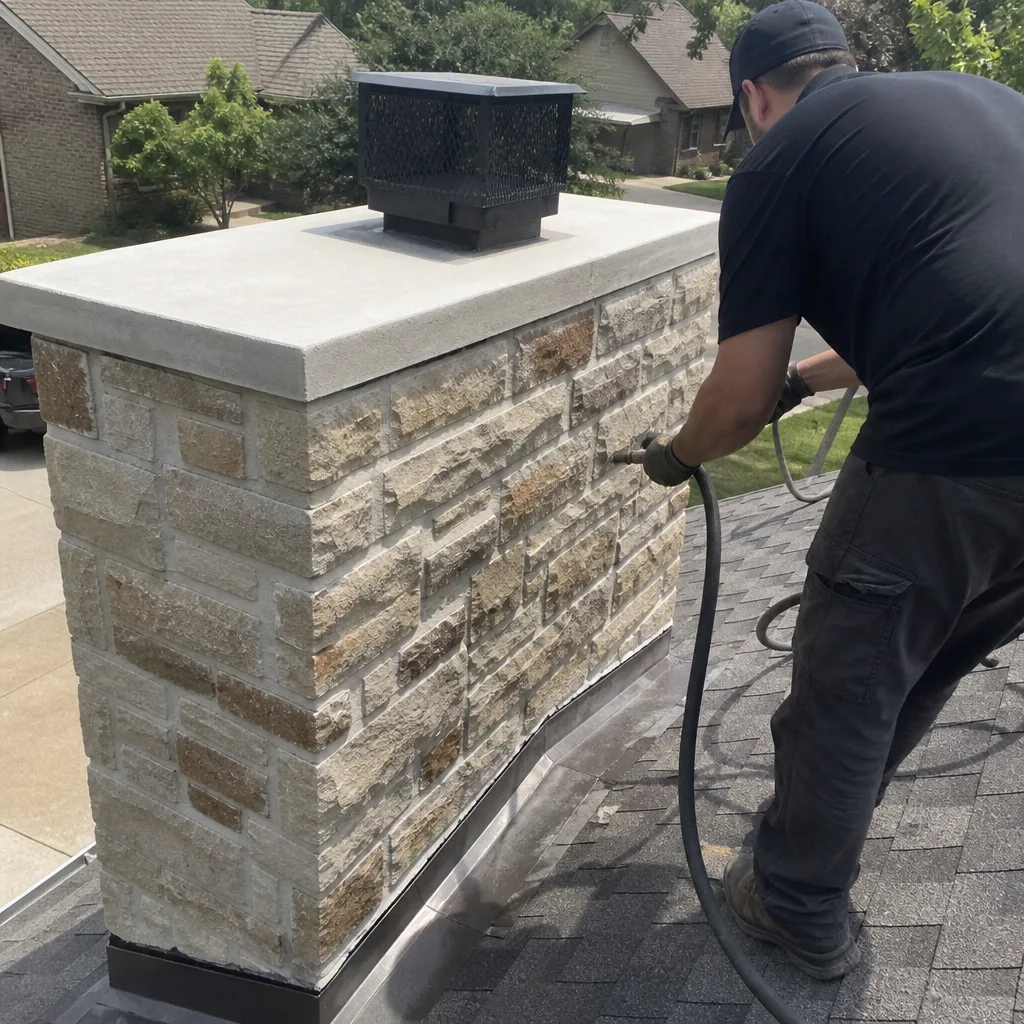 After
AfterMortar Repointing in McKinney, TX
Mortar repointing is the process of removing deteriorated mortar from the joints between your chimney’s masonry units and packing in fresh mortar – restoring the structural bond that keeps brick and stone locked together. If the joints on your chimney have started to crack, crumble, or pull away from the brick face, repointing stops water from working its way inside the masonry before a modest repair turns into a full rebuild. At Level Two Chimney McKinney, every repointing job starts with a camera-scan inspection so we know exactly what we’re dealing with before we quote you a price. Call us at (469) 429-2623 – a live person picks up, seven days a week.
McKinney’s climate puts mortar joints through a specific kind of punishment. The clay-heavy soil in Collin County shifts noticeably through the summer-to-winter temperature swings we see here, and that ground movement telegraphs right up through a chimney’s foundation. Add the heat cycles from an active fireplace on top of that, and standard mortar joints can start failing in as few as fifteen to twenty years on chimneys built in the 1990s and early 2000s – which covers a large share of the homes in Allen, Stonebridge Ranch, and the older subdivisions off Lake Forest Drive. If your home was built between 1993 and 2012 and you haven’t had the mortar joints examined, there’s a reasonable chance they’re showing wear you can’t see from the ground.
This page sits under our broader Chimney Repair in McKinney service – you’ll find information about crown repair, spalling brick, and firebox work there if you’re dealing with more than just the joints.
When You Need Mortar Repointing
Most homeowners notice one or two of the following before they call us. Any single item below is worth a camera-scan inspection; more than one means repointing is probably already overdue.
- Mortar crumbling or missing in sections. If you can poke a screwdriver or your finger into a joint and the mortar gives way, the bond is gone. Joints that are recessed more than a quarter-inch from the brick face are no longer shedding water the way they were designed to.
- White staining (efflorescence) on the chimney face. That chalky white residue is mineral salt being carried out of the masonry by water moving through failing joints. It’s the chimney’s way of showing you where moisture is getting in – not just a cosmetic issue.
- Water stains inside the firebox or on the ceiling above the fireplace. In McKinney we regularly find that homeowners in Eldorado Parkway neighborhoods trace interior water stains back to joint failure on the exterior, not a missing cap or a bad crown.
- Brick faces spalling or flaking. Once water gets past the mortar joint and into the brick itself, freeze-thaw cycles – even the mild ones we get in North Texas – cause brick faces to pop off. Repointing early prevents spalling from spreading to the brick units themselves.
- Visible gaps between the chimney and the house framing or flashing. If the chimney has shifted slightly away from the roofline, the mortar joints are usually the first place that separation shows up. This is common in Prosper and the Craig Ranch area where new construction settles over the first decade.
- A chimney inspection report flagging joint deterioration. If a Level 2 inspection – camera down the flue, written report in hand – has noted joint erosion anywhere from the cap to the firebox throat, that’s the clearest signal repointing belongs on your repair list before the next heating season.
Our Mortar Repointing Process
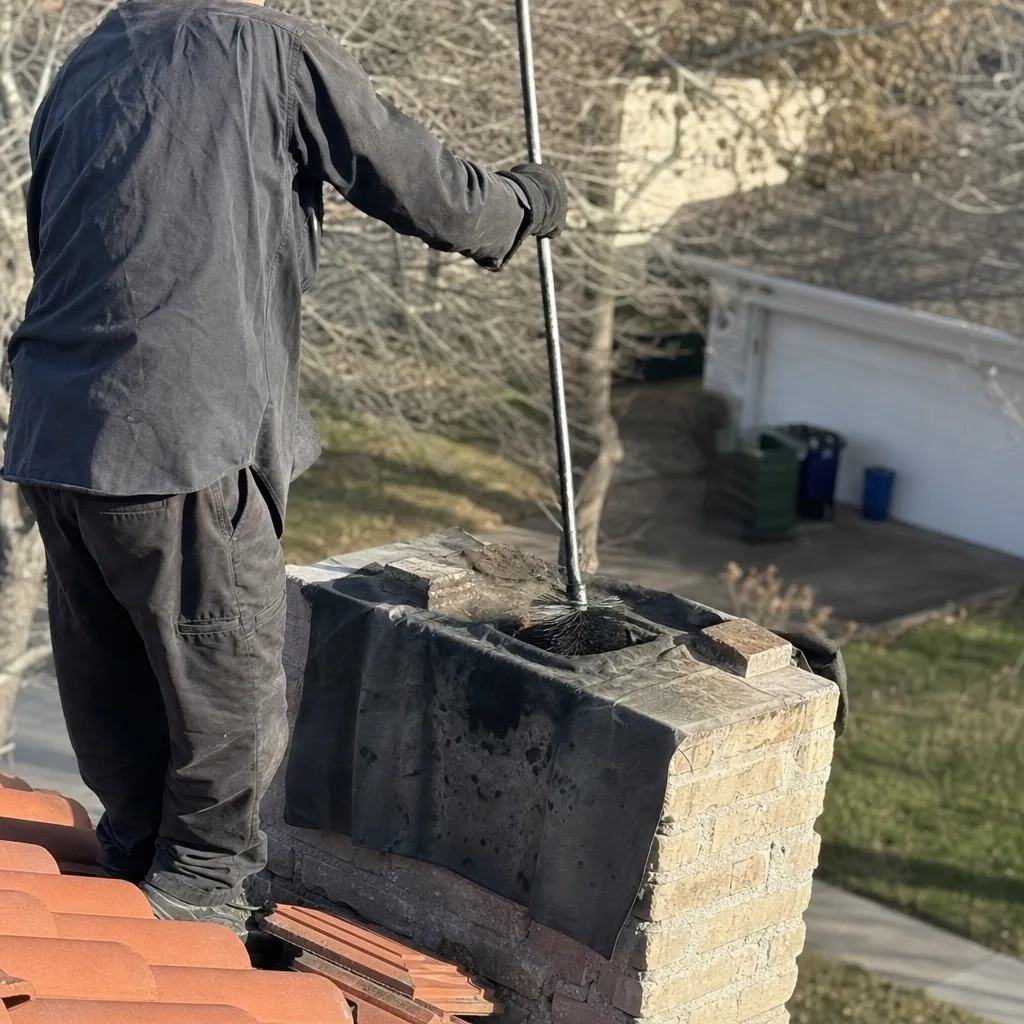
We don’t start cutting mortar until we know what type of mortar was originally used and what the brick units can tolerate. Using a mortar that’s harder than the brick it surrounds is one of the most common repointing mistakes we correct on jobs where a previous contractor used the wrong mix – it forces stress into the brick face rather than the joint, and eventually the bricks start to spall. Here’s how we work through a repointing job from the first call to the final photo record.
- Camera-scan inspection and written scope. Before a single tool touches your chimney, we run an NFPA 211 Level 2 inspection – camera down the flue, documented photo record of every affected joint we can identify. We note the joint profile (raked, struck, weathered, or beaded), the extent of deterioration, and any related issues like crown cracking or flashing gaps. That inspection produces a written price and written scope, delivered to you before any work starts. That’s Haven Standard Clause 1 – you have it in writing before anyone picks up a grinder.
- Mortar analysis and mix selection. We match the replacement mortar to the existing masonry. Older chimneys – especially those built in McKinney before 1985 – often used a softer lime-based mortar (Type O or Type K) that breathes with the masonry. Modern builds typically call for Type S. We source material through the Haven buying network, which lets us use quality products from suppliers like Gelco and Olympia Chimney without marking the material up to offset overhead.
- Joint preparation. Deteriorated mortar is cut back to a minimum depth of three-quarters of an inch using an angle grinder and hand chisels. This isn’t optional – new mortar packed over old, crumbling mortar fails within a few seasons. We clear debris from the joint cavity, brush it clean, and dampen the brick slightly so the new mortar bonds rather than dries out too fast in McKinney’s summer heat.
- Repointing. Fresh mortar is packed into the joint in layers when the void is deep, then finished to match the original joint profile. We work in manageable sections to keep the mortar at the right consistency throughout – something that matters more than most homeowners realize on a hot Texas afternoon when mortar can set faster than the technician can finish a long run of joints.
- Tooling and finishing. Once the mortar has reached the right firmness (not fully cured, but past the initial set), joints are tooled to compress the mortar surface, close any hairline voids, and produce the profile specified in the written scope. A properly tooled joint sheds water off the brick face rather than directing it into the joint.
- Final photo record and warranty documentation. Clause 4 of the Haven Standard requires a documented photo record on every job – not as an optional upgrade, but as a standard deliverable. You get before-and-after photos, the written warranty, and a record of the mortar type used. The 365-Day Done Right Promise covers the repointing work: if it’s not right, we make it right.
 Before
 After
AfterMortar Repointing Pricing in McKinney
If you’re wondering how much chimney repair costs, mortar repointing in McKinney typically runs between $300 and $1,800 depending on the size of the chimney, the number of joints affected, and how far the deterioration has progressed. That range covers the full scope of what we see in Collin County – from a single exterior face with minor joint recession to a full four-sided repoint on a two-story chimney with significant mortar loss at the cap and crown junction.
| Scope | Typical Price Range (McKinney) |
|---|---|
| Spot repointing (isolated failed sections, one face) | $300 – $550 |
| Partial repoint (two or three faces, moderate joint loss) | $550 – $950 |
| Full chimney repoint (all four sides, significant erosion) | $950 – $1,800 |
| Repointing combined with crown repair or cap replacement | $1,100 – $2,400 |
What moves a job toward the higher end of those ranges: chimney height requiring staging or extended ladder work, mortar that was applied incorrectly in a previous repair (overhard Portland-only mixes bonded to soft brick take more time to remove cleanly), and jobs where joint failure has allowed water to migrate and soften the substrate behind the brick face. We’ve seen that pattern regularly in older sections of McKinney near downtown and along the Highway 380 corridor where chimneys from the late 1970s and 1980s are still in service.
The written price you get before we start is the price you pay. There are no upcharges added once the technician is on site. If the inspection reveals something that changes the scope – a flue liner issue, crown cracking that wasn’t visible from the ground – we stop, update the written quote, and get your sign-off before continuing. That’s Haven Standard Clause 1, and it’s not a courtesy we offer: it’s how every job runs.
We also offer a free second opinion on any written estimate you’ve already received from another contractor. Bring us the written quote and we’ll review it and give you our honest assessment – in writing.
FAQs – Mortar Repointing
How do I know if my chimney needs repointing or a full rebuild?
Repointing is the right repair when the brick units themselves are structurally sound and the damage is limited to the mortar joints. A full or partial rebuild becomes necessary when the brick faces have spalled severely, when the chimney has leaned or shifted out of plumb, or when the inner wythe (the interior layer of brick) has deteriorated along with the joints. During our camera-scan inspection, we document both the joint condition and the brick condition with photos – you’ll see exactly what we found rather than taking our word for it. Most chimneys we inspect in McKinney that have joint erosion are good candidates for repointing rather than a full chimney repair or rebuild. Call (469) 429-2623 to schedule an inspection and get the written answer – not a guess from the driveway.
Can I repoint my chimney myself?
The mortar mixing, joint preparation, and finishing steps are physically straightforward, but two things make chimney repointing a job where DIY attempts frequently backfire. First, selecting the wrong mortar hardness – particularly using modern Type N or Type S Portland-heavy mixes on older soft-brick chimneys – transfers stress into the brick rather than the joint and causes spalling within a few years. Second, working at chimney height on a pitched roof carries real fall risk. We don’t recommend it, and we regularly repoint chimneys in McKinney where a homeowner’s previous attempt used the wrong mortar mix and accelerated the damage. If you want to understand what’s actually happening with your joints before deciding anything, the inspection gives you that picture first.
How long does mortar repointing last?
A properly matched and tooled mortar joint on a residential chimney in McKinney should hold for 20 to 30 years under normal conditions. The variables that shorten that lifespan are the same ones we check during the inspection: frequency of fireplace use, whether a chimney cap is keeping rain out of the flue, and whether ground movement from Collin County’s expansive clay soils has introduced stress into the stack. Repointing done with the wrong mortar mix can fail in as few as 5 to 8 years – which is why mortar selection is a documented part of our written scope, not an afterthought.
Does repointing fix water leaks coming into my fireplace?
Repointing fixes water leaks caused by failed mortar joints – and that’s one of the more common leak sources we find in McKinney homes, particularly on chimneys with no cricket (a small roof saddle that diverts water away from the chimney’s uphill face). But water intrusion through a chimney can also come from a cracked crown, a missing or ill-fitting cap, deteriorated flashing, or a liner breach, and those require different repairs. Our inspection identifies which source or sources are active before we recommend anything. If joint failure is part of the picture, we’ll tell you – and if it’s not the primary cause, we’ll tell you that too. Call (469) 429-2623 for a written inspection and a straight answer.
Why McKinney Homeowners Choose Level Two Chimney Co.
The name Level Two comes from the NFPA 211 Level 2 inspection standard – camera down the flue, written documentation, a real record of what was found. That’s been the default on every visit since 2009, which means we’ve built a photo and inspection archive across more than 38,000 chimneys. When a homeowner in Stonebridge Ranch calls us because a home inspector flagged joint deterioration during a sale, we can often pull documentation from a prior inspection on that address if we’ve been there before.
Every technician who comes to your home is background-checked, uniformed, and assigned by name. You get a text when they’re on the way. The written price is in your hands before any work starts – not after the ladder is against your house. And if anything about the job falls short in the 365 days after we finish, we come back and make it right. That’s the 365-Day Done Right Promise, and it’s on every repointing job we complete in McKinney.
Materials for our repointing jobs come through the Haven buying network – suppliers like Copperfield and Gelco – which keeps our procurement costs honest and passes that through to the price on your written quote.
If you’re looking at mortar joint issues alongside other masonry problems, our home page has a full picture of everything we cover, from liner installation to cap and crown work.
Schedule Mortar Repointing in McKinney
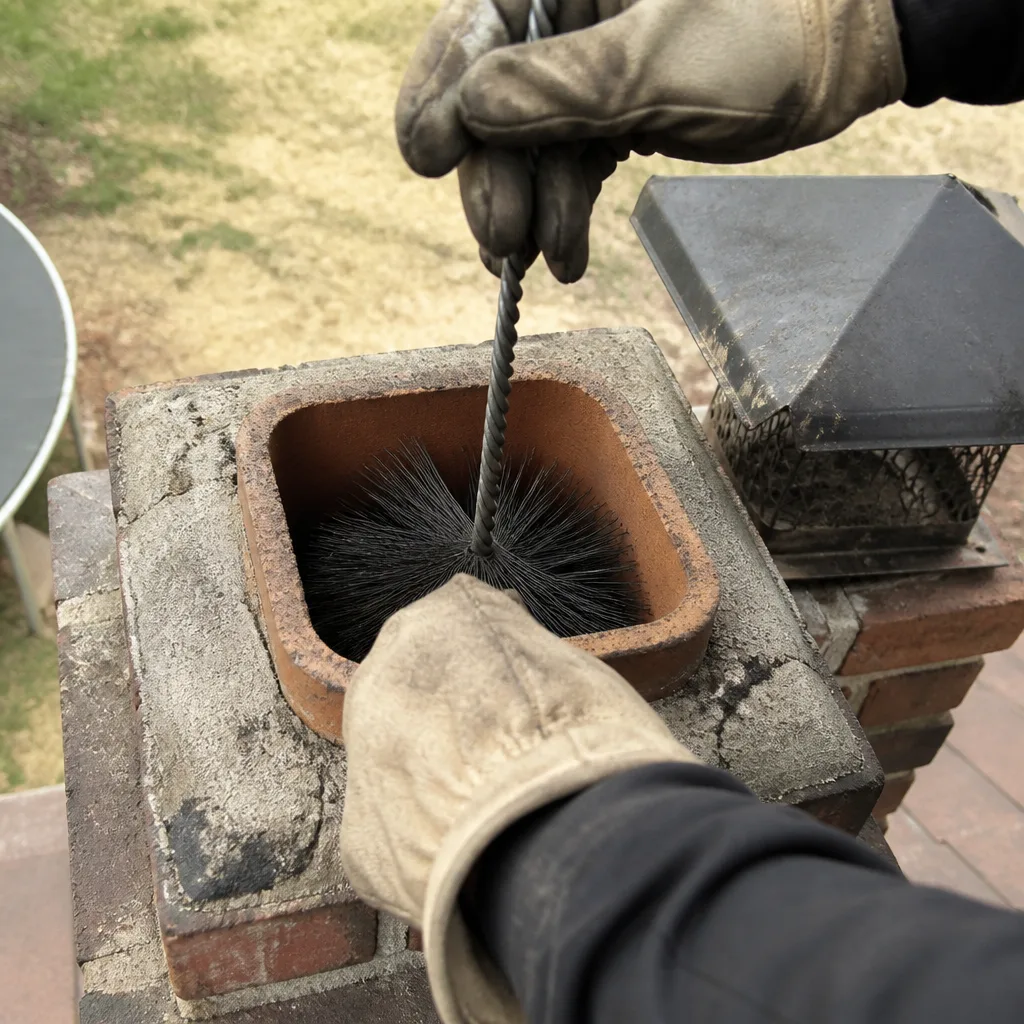
If you’re seeing crumbling joints, white staining, or water getting into your fireplace, the starting point is a written inspection – not a driveway estimate or a verbal quote. Call Level Two Chimney McKinney at (469) 429-2623. A live person answers, day or night. We’ll schedule the inspection, run the camera, document what we find, and give you a written price and written scope before any work begins. No pressure, no surprises. That’s how every job runs here in McKinney.
Written by Corrine Halstead, Owner at Level Two Chimney McKinney, serving McKinney.