
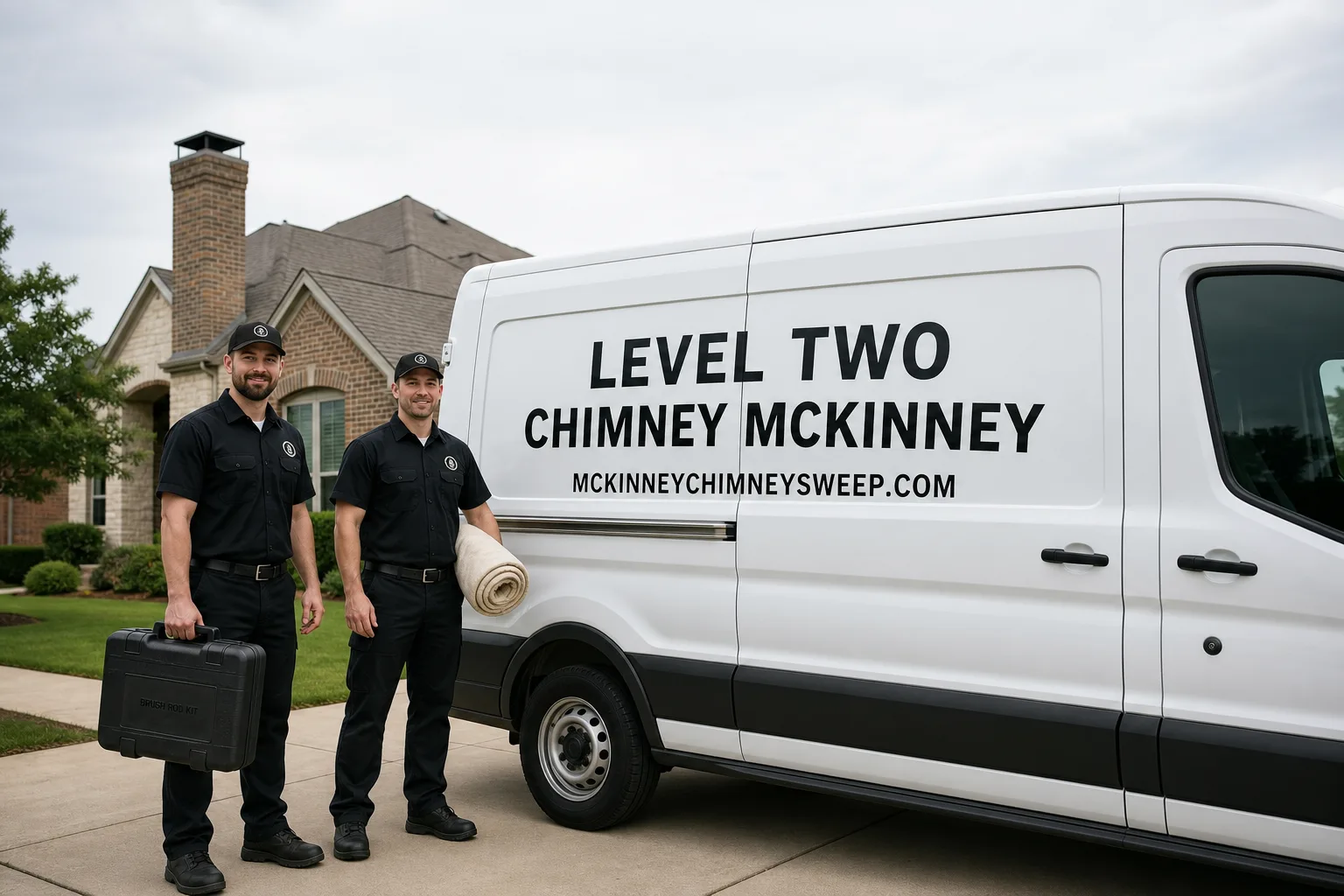
Level 1 sweep and inspection to the NFPA 211 annual standard - flue, crown, cap, and flashing checked and photographed
Chimney sweep logs do not sweep chimneys. They loosen some creosote - which then falls where a brush and vacuum still have to collect it.
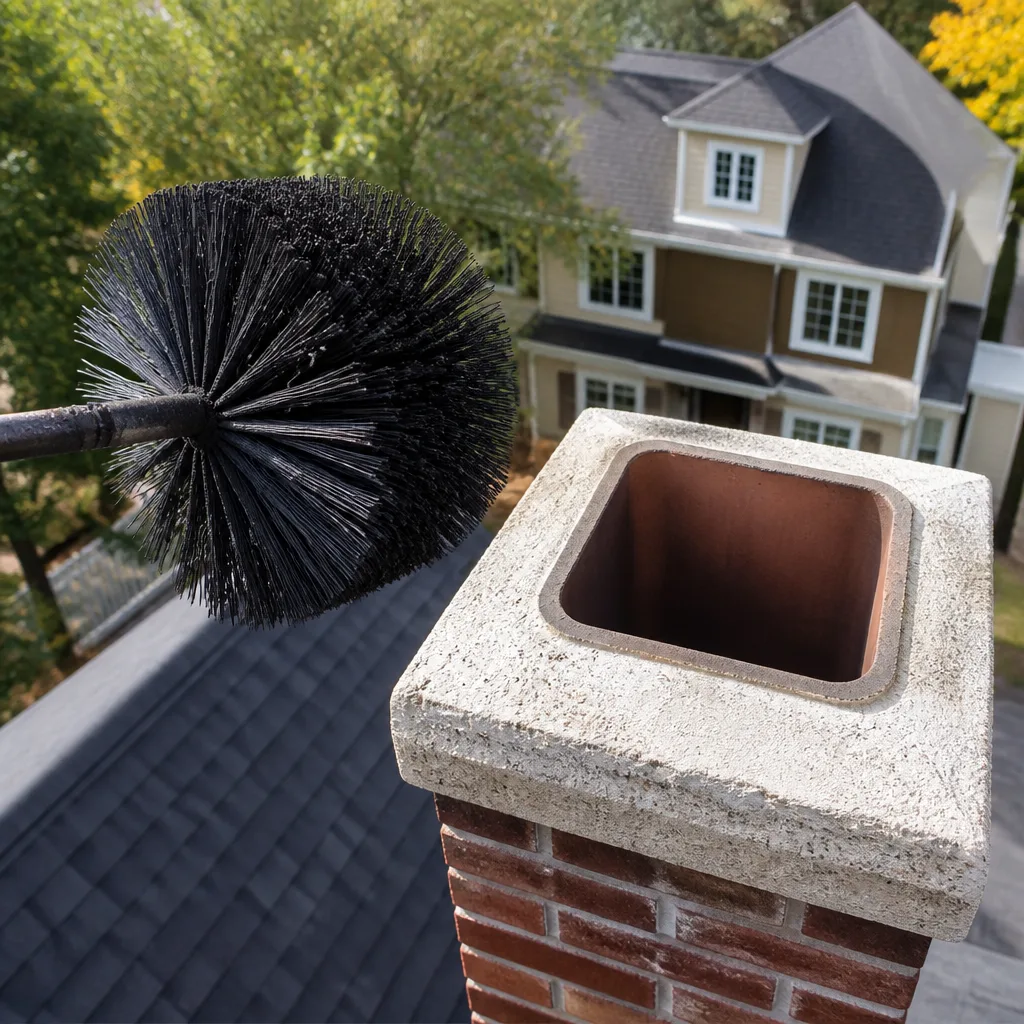
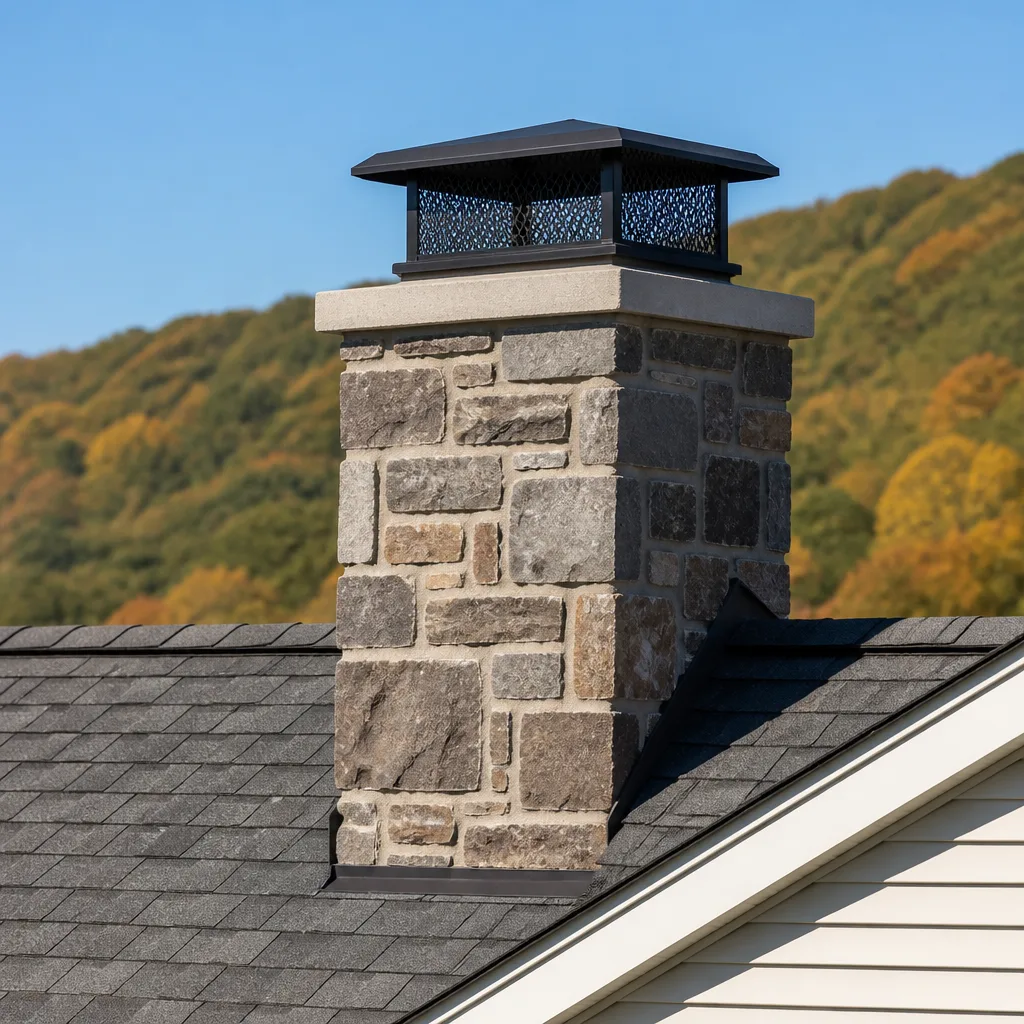
Masonry repairGas fireplace service
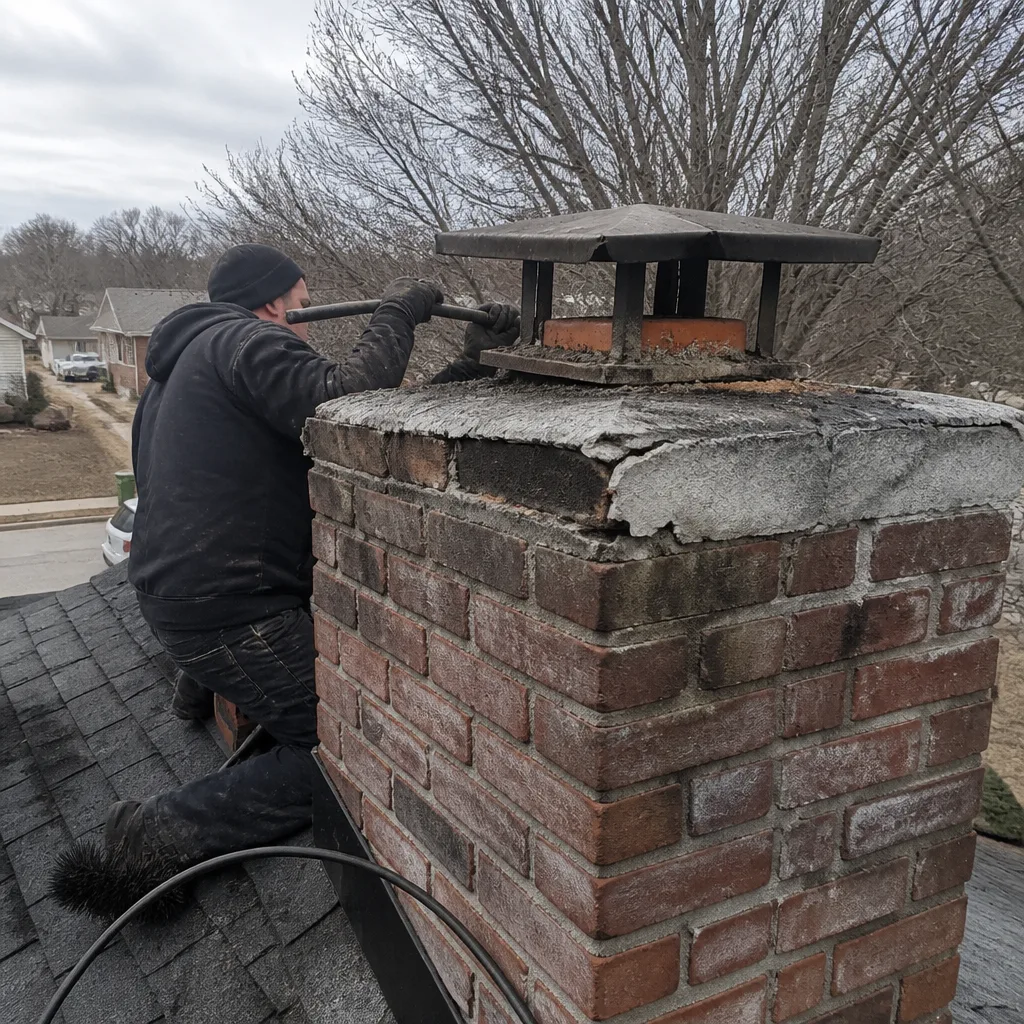 Before
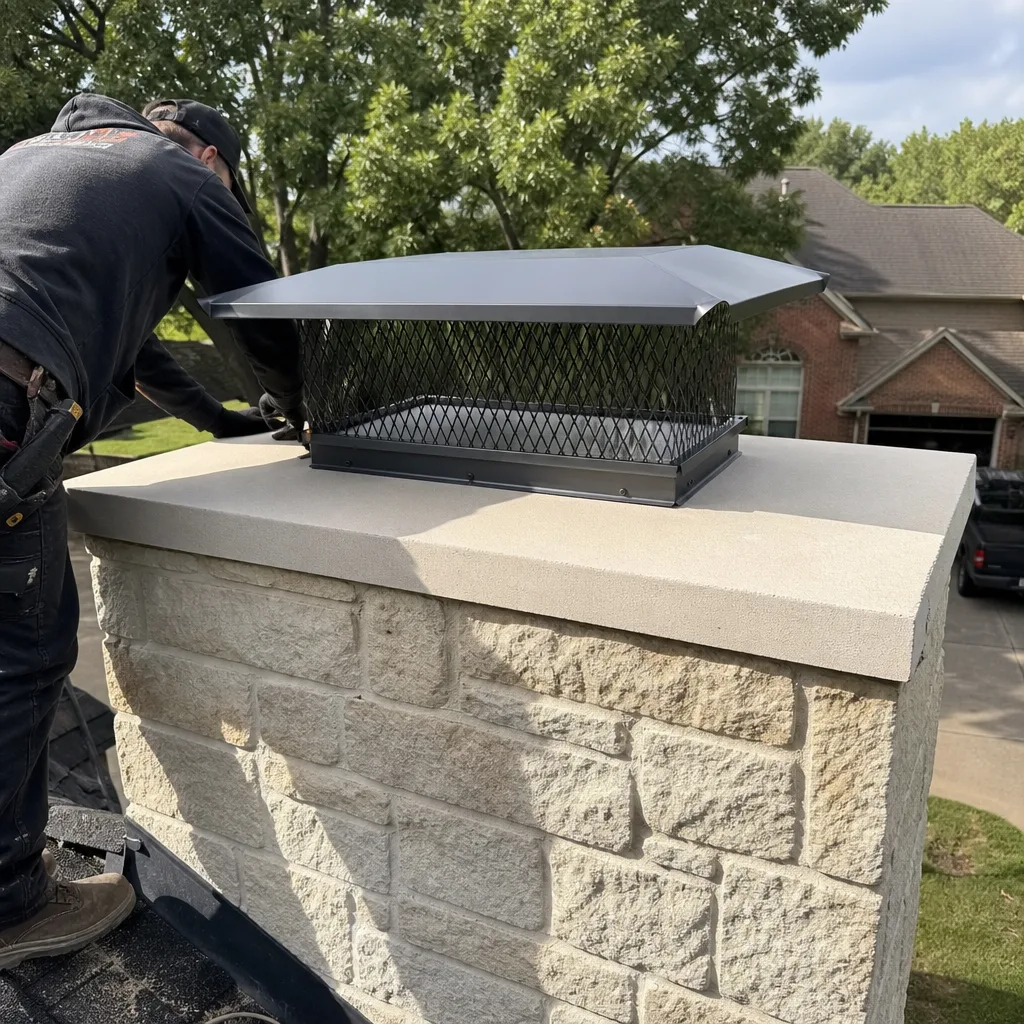 After
After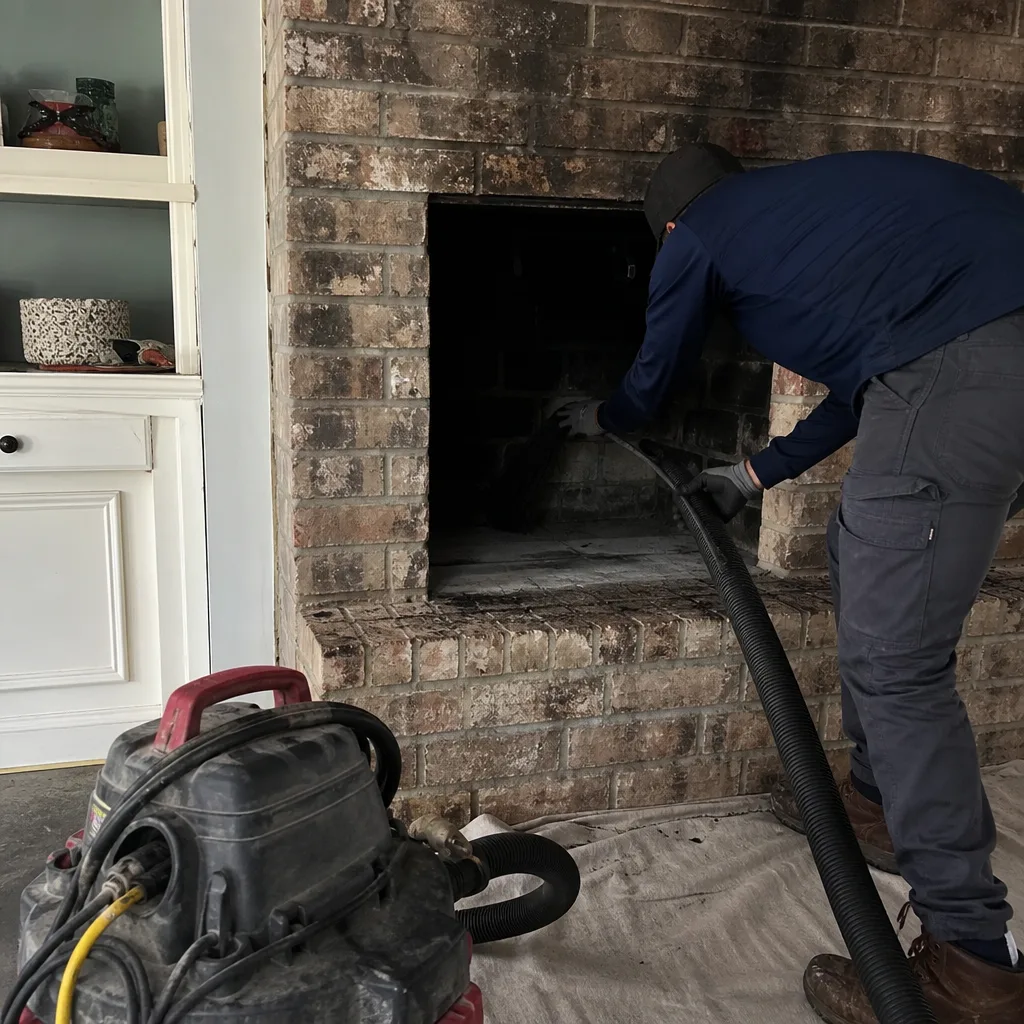 Before
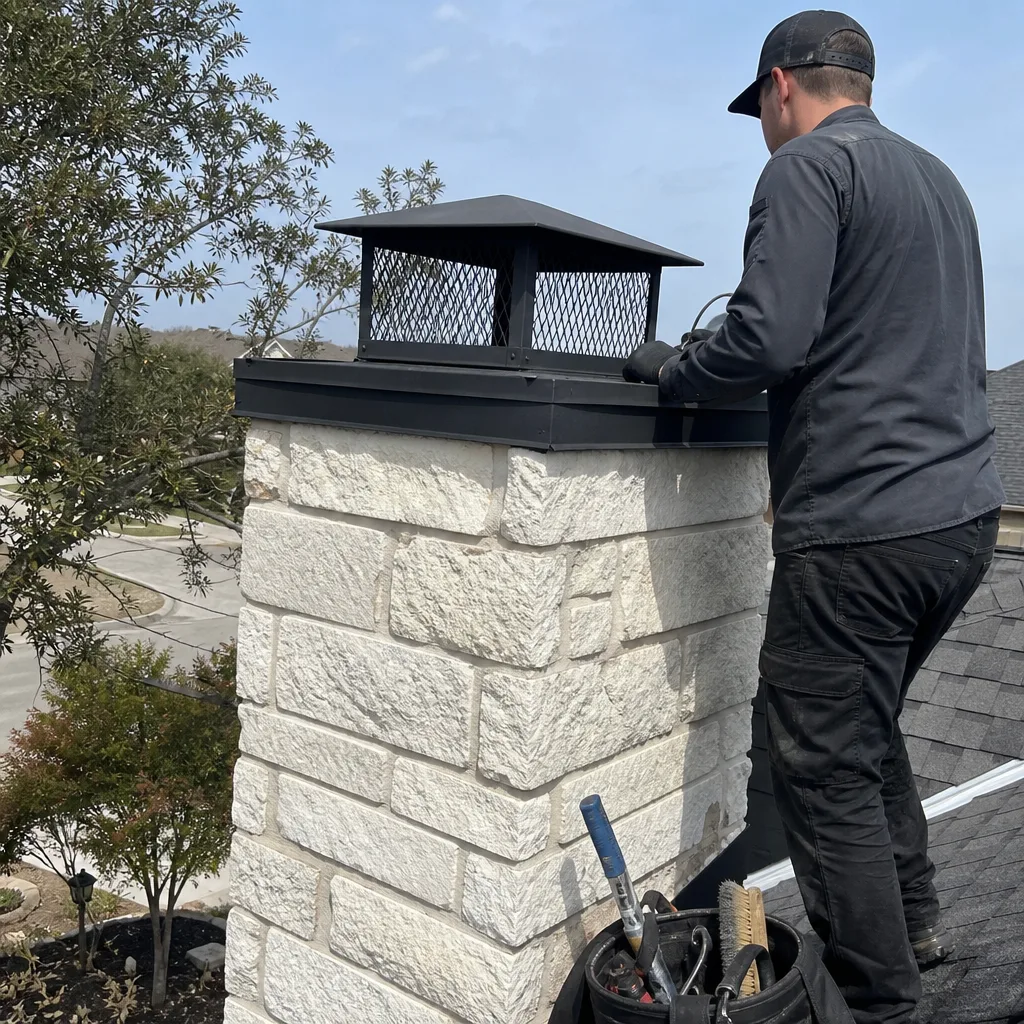 After
After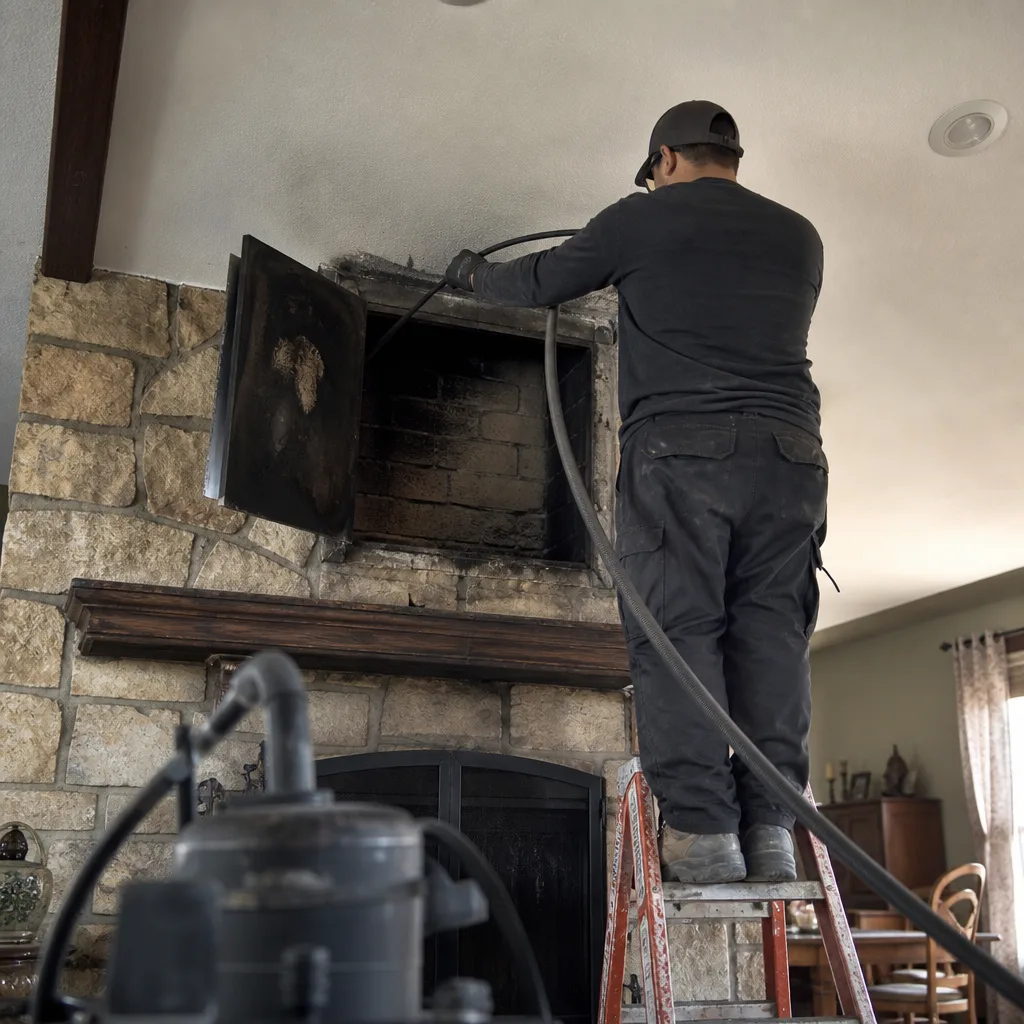 Before
 After
AfterHow Much Does Chimney Liner & Rebuild Cost in McKinney?
Chimney liner repair or replacement in McKinney, TX typically runs $900 to $5,500 depending on the liner type, flue length, and how much deterioration has already occurred. A full chimney rebuild – masonry, smoke chamber, firebox, and liner together – generally falls in our Chimney Liner & Rebuild services range of $3,500 to $12,000+ for most McKinney homes. Every job at Level Two Chimney Co. comes with a written price before anyone picks up a tool, a documented photo record when the work is done, and a 365-Day Done Right Promise behind it.
If you have a written estimate from another company, bring it to us – we offer a free second opinion on any written quote, no obligation.
Chimney Liner & Rebuild Cost Breakdown (2026)
These ranges reflect actual jobs completed in McKinney and the surrounding Collin County area. Prices will shift based on flue height, access, liner diameter, and the condition of the surrounding masonry – but these figures give you a real starting point.
| Service | Typical Range (McKinney, 2026) | Notes |
|---|---|---|
| Level 2 Camera Inspection (NFPA 211) | $149 – $249 | Included on every visit; produces a documented photo record |
| Stainless Steel Liner – single-story home | $900 – $1,800 | DuraFlex flexible liner, up to ~15 ft flue |
| Stainless Steel Liner – two-story home | $1,500 – $2,800 | Longer flue run, typically 18-25 ft in McKinney two-stories |
| HeatShield Cerfractory Resurfacing | $2,000 – $4,500 | Applied when tile liner is cracked but masonry shell is sound |
| Cast-in-Place Liner System | $2,500 – $5,500 | Poured ceramic liner; used when flue is irregular or badly deteriorated |
| Smoke Chamber Parging | $300 – $750 | Smooths corbeled smoke chamber walls; frequently needed in older McKinney builds |
| Crown Repair or Replacement | $200 – $600 | Often done alongside liner work to stop water reentry |
| Partial Chimney Rebuild (above roofline) | $1,500 – $4,500 | Spalled or failed brick above the flashing line |
| Full Chimney Rebuild (foundation to cap) | $5,500 – $12,000+ | Complete teardown and rebuild; includes new liner and cap |
| Firebox Rebuild | $1,200 – $3,500 | Refractory brick and mortar replacement inside the firebox |
One thing that pushes costs up in McKinney specifically: many homes built in Craig Ranch, Stonebridge Ranch, and the older sections of Eldorado were framed with tight chase clearances that make liner installation a slower job than a standard open-air chimney. That extra labor shows up in the price. On the other side, homes with a straight vertical flue and a clean masonry shell can sometimes come in at the lower end of the liner ranges – the camera scan tells us which situation we’re dealing with before a price is written.
Materials also drive a real difference. We source liners and resurfacing products through Haven’s buying network – DuraFlex, HeatShield, Gelco, Olympia Chimney, Famco, and Copperfield – specifically because volume procurement keeps per-job material costs lower without cutting to a cheaper product. That shows up in your written quote.
What Affects Chimney Liner & Rebuild Pricing in McKinney
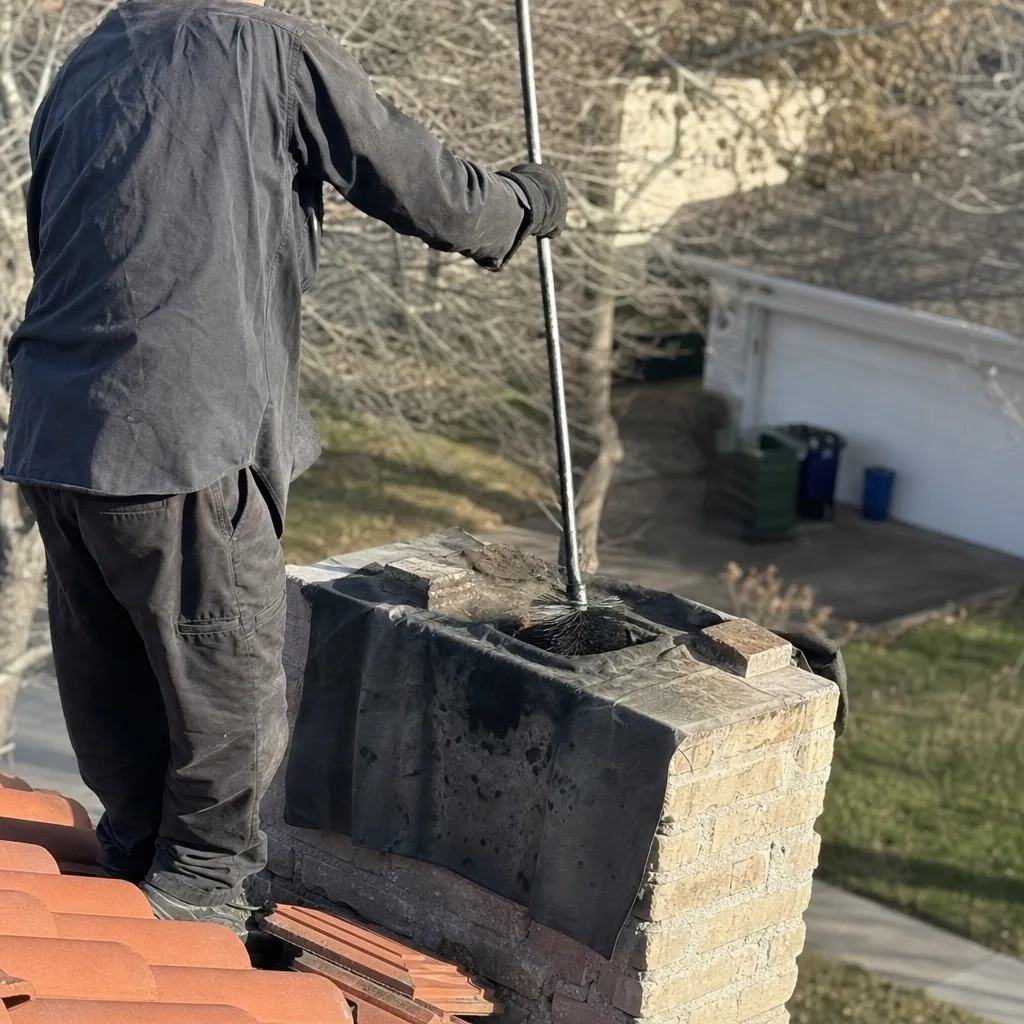
- Flue height and diameter. Most McKinney single-story homes have flues in the 12-16 ft range; two-stories commonly run 20-26 ft. Every additional foot of liner adds material cost and labor time. A wider flue – common on older wood-burning fireplaces in the Eldorado and Stonebridge Ranch neighborhoods – requires a larger-diameter liner that costs more per linear foot than the standard 6-inch round used on most gas inserts.
- Liner type: flexible stainless, HeatShield resurfacing, or cast-in-place. A DuraFlex flexible stainless liner is the fastest and typically the least expensive route when the existing tile liner is simply worn or missing. HeatShield Cerfractory resurfacing costs more upfront but preserves original tile liner segments that are cracked but still structurally intact – sometimes the right call on a 1990s build where the masonry shell is in good shape. Cast-in-place is the highest-cost option and the most durable; it gets specified when the flue has shifted, is irregularly shaped, or the deterioration is advanced enough that a flexible liner won’t seat cleanly.
- Extent of masonry damage. McKinney’s clay soil is expansive – it swells in wet winters and contracts in summer heat, and that movement stresses mortar joints steadily over time. A chimney that looks fine from the street can have significant spalling and cracked mortar above the flashing line. If the masonry needs work before or alongside the liner, that adds to the job scope and the written price reflects it upfront.
- Smoke chamber condition. The smoke chamber sits just above the firebox and below the flue tile. In McKinney homes built before about 2002, it’s common to find corbeled (stair-stepped) smoke chambers that were never parged smooth. NFPA 211 requires a smooth, solid smoke chamber surface; if it’s not already there, parging is added to the scope. The camera scan catches this before the price is written, not as a surprise mid-job.
- Permit requirements in McKinney. The City of McKinney Building Inspections department (part of the Development Services division) requires a permit for chimney rebuild work that involves structural masonry. Liner replacement alone typically doesn’t trigger a permit requirement under current IRC adoption in McKinney, but a full or partial rebuild above the roofline generally does. We handle the permit paperwork as part of the job scope when it’s needed – that cost is in the written quote, not added at the end.
- Access and roof pitch. A chimney centered on a steep hip roof in one of the newer West McKinney subdivisions requires more setup time and safety equipment than a chimney accessible from a low-pitch section. That labor difference is real and gets reflected honestly in the price.
- Gas insert vs. wood-burning configuration. Many McKinney homeowners converted wood-burning fireplaces to gas inserts between 2010 and 2020. A gas appliance requires a different liner diameter and material specification than a wood-burning system. If you’re relining after a gas conversion, the job may actually be simpler – and cheaper – than a wood-burning reline. The inspection tells us which spec applies.
 Before
 After
AfterLiner vs. Rebuild: Which One Does Your McKinney Chimney Actually Need?
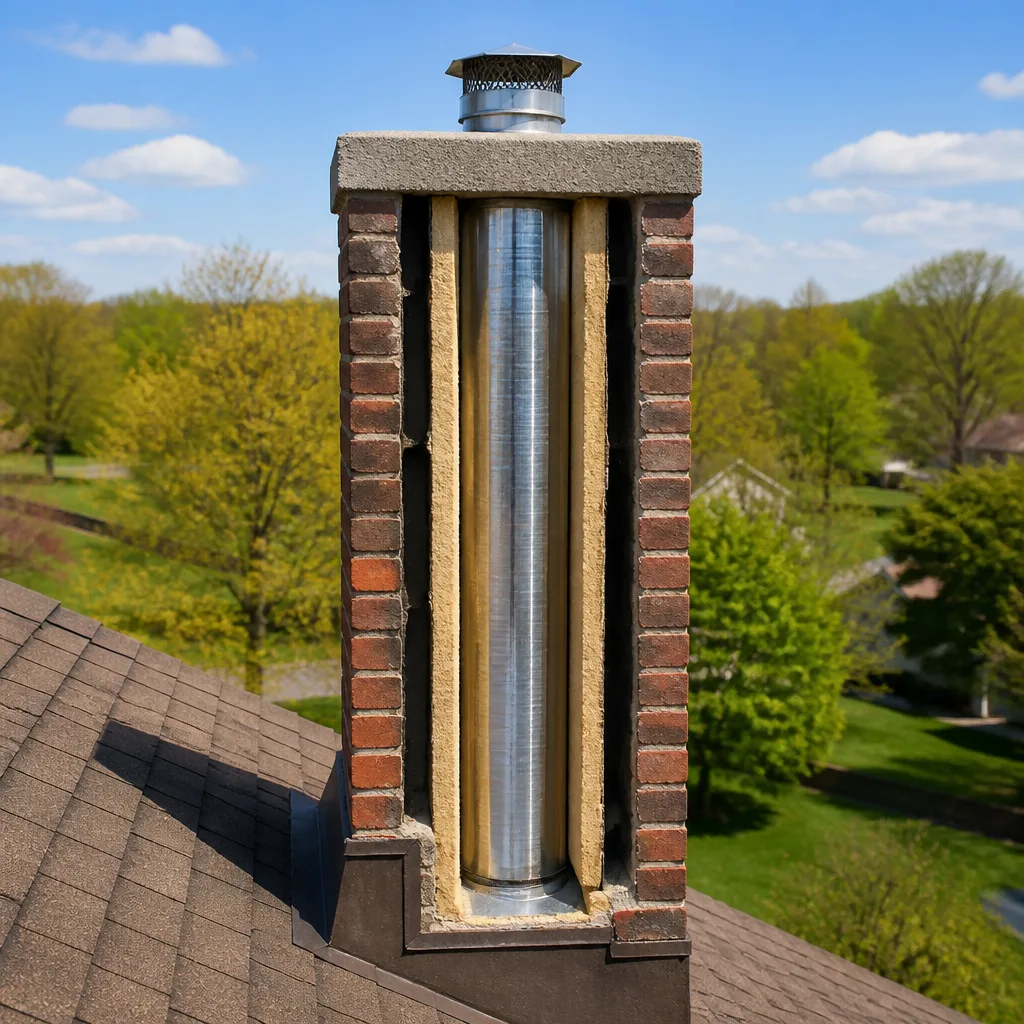
This is the question worth answering before a price even matters. A liner replacement addresses the interior flue system – the channel that moves combustion gases out of the home. A rebuild addresses the exterior masonry structure. They’re often done together, but not always, and the distinction matters for your budget.
Here’s what the camera scan typically shows us in McKinney homes:
- Cracked tile liner segments – common in homes built 1985-2005. If the cracks are hairline and the tile is still seated, HeatShield resurfacing may be enough. If segments have collapsed or are missing, a full liner replacement is the correct path.
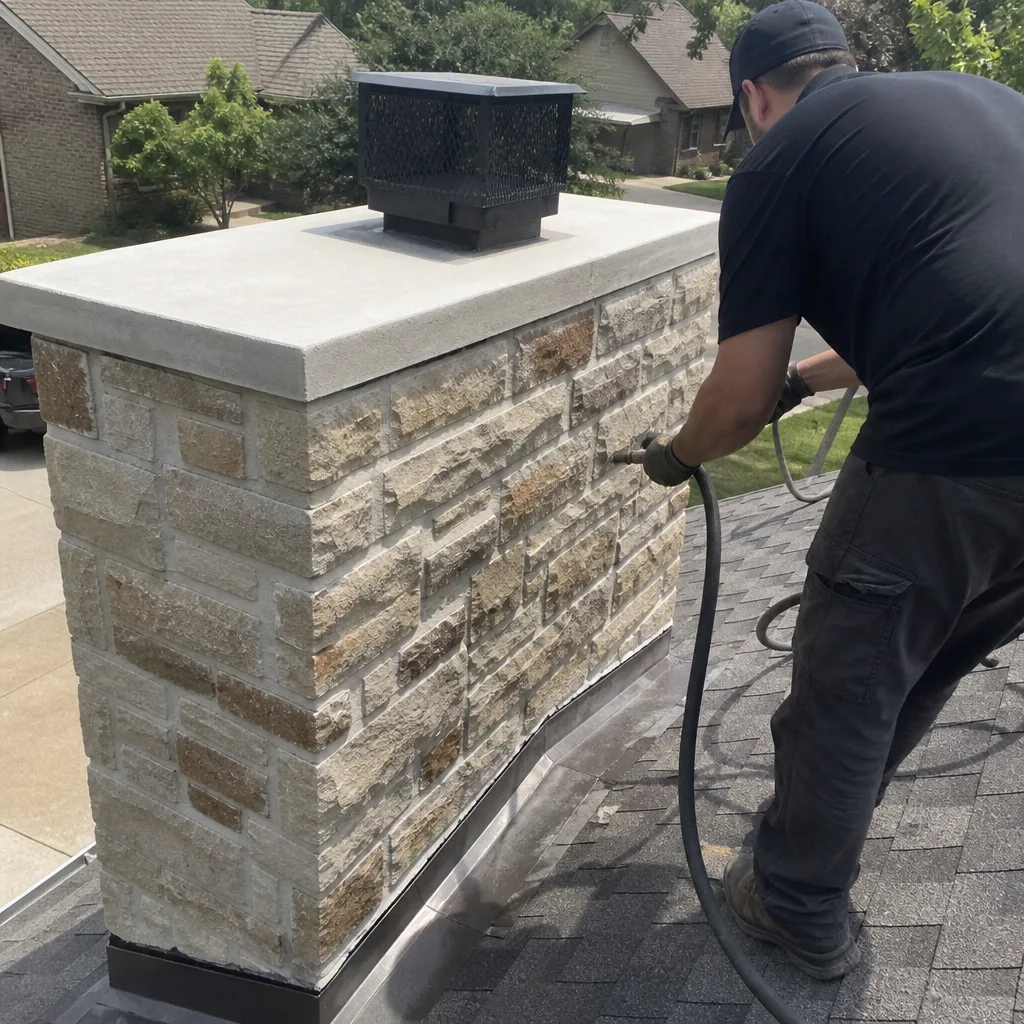
- Spalling brick above the roofline – extremely common in Stonebridge Ranch and Craig Ranch homes after successive freeze-thaw cycles. McKinney doesn’t get brutal winters, but we do get enough below-freezing nights that moisture in brick faces expands, pops the face off, and leaves the flue exposed. A partial rebuild above the flashing line is often the scope – not a full teardown.
- Deteriorated crown – the concrete cap that covers the top of the chimney. A cracked crown lets water track into the flue tile and smoke chamber. We see this on nearly a third of the McKinney inspections we run. Replacing the crown alongside the liner prevents the water reentry that caused the liner damage in the first place.
- Failed mortar joints – tuckpointing addresses this without a full rebuild in most cases. If mortar joints have failed throughout more than about 40% of the chimney, the economics usually shift toward a full rebuild.
The only way to know which category your chimney falls into is a Level 2 camera inspection – the NFPA 211 standard that sends a camera down the flue and documents what’s actually there. That inspection produces a written photo record. The written price follows from what the camera finds, not from a visual estimate from the ground.
To schedule yours, visit our Chimney Liner & Rebuild in McKinney service page or call (469) 429-2623.
A Note on Safety: Why Liner Work Is Not a DIY Job
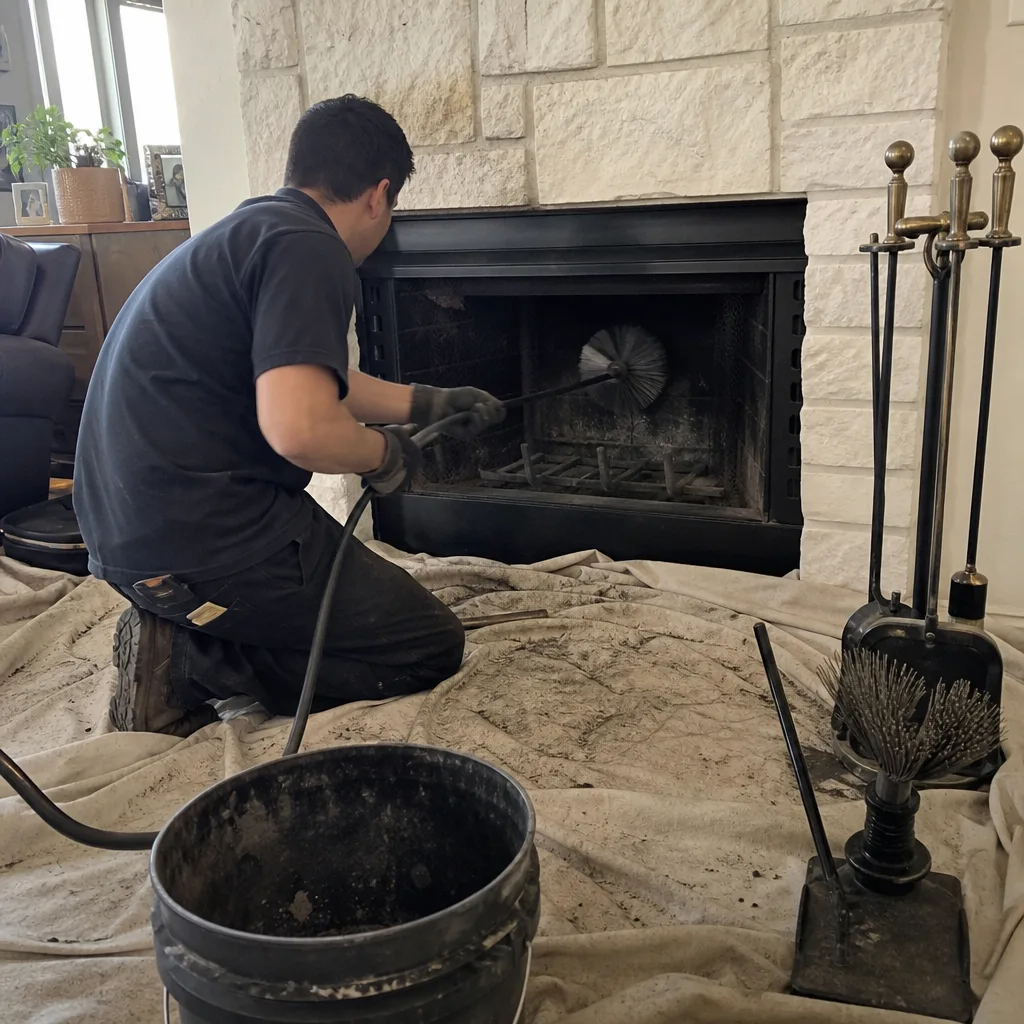
Chimney liners and flue systems move combustion gases – carbon monoxide, heat, and particulates – out of a living space. A liner that’s incorrectly sized, improperly seated, or missing critical clearance to combustibles is a carbon monoxide risk and a fire risk. NFPA 211 exists specifically because these failures injure and kill people; the standard defines minimum liner requirements for a reason.
We flag this not to generate alarm but because the internet carries a lot of “DIY liner” content that treats it as a weekend project. Flexible liner systems look approachable. They are not – at least not in any configuration where the job needs to meet NFPA 211, pass an insurer’s review, or actually function safely with a wood-burning or gas appliance behind it. Hire someone with a camera, a written price, and a license on the page. That’s the baseline.
How to Save on Chimney Liner & Rebuild in McKinney
Start with an accurate inspection, not a phone estimate. A price quoted over the phone without a camera inspection is a guess at best and a lowball that grows after the tech is already in your home at worst. The written price we deliver follows a Level 2 camera scan – which means it reflects what’s actually in the flue, not a best-case assumption. An accurate scope prevents “surprise” add-ons.
Combine work when the scope allows it. If your liner needs replacement and your crown is cracked (which is common in McKinney – we see it frequently in homes that went through 2021’s winter storm without adequate chimney covers), doing both in one visit cuts the mobilization cost significantly. Same with smoke chamber parging. When the camera scan shows multiple needs, we present the full written scope together so you can make that call.
Don’t patch a failing system incrementally. Applying HeatShield resurfacing to a liner that has structurally failed tile segments – not just cracks – delays the inevitable and adds cost when the liner eventually needs full replacement anyway. The camera tells us which situation applies. If resurfacing is the right call, we’ll say so. If it’s not, we’ll say that too.
Get a free second opinion on any written estimate. If another company has already given you a written quote for liner replacement or a rebuild, bring it to us. We’ll review it, run our own inspection, and give you a written comparison. There’s no charge for that review. If their price is fair and their scope is accurate, we’ll tell you. If we can do the same work for less, we’ll show you the numbers. Call (469) 429-2623 to set that up – or use the contact form and a live person will call you back, not a bot.
Time the job before fall. September and early October tend to have more scheduling flexibility than November, when McKinney homeowners start running their fireplaces again and realize something isn’t right. Earlier scheduling sometimes allows tighter crew allocation, which can affect the labor component of a written quote.
Verify what the written price includes. Under Haven Standard Clause 1 – what we call H.A.V.E.N. “Have it in writing” – every Level Two job delivers a written price, a written scope, and a written warranty before work starts. Check that any quote you receive from any company includes all three. A price without a written scope is incomplete; you need to know exactly what’s being done, not just what it costs.
What You Get When Level Two Does the Job
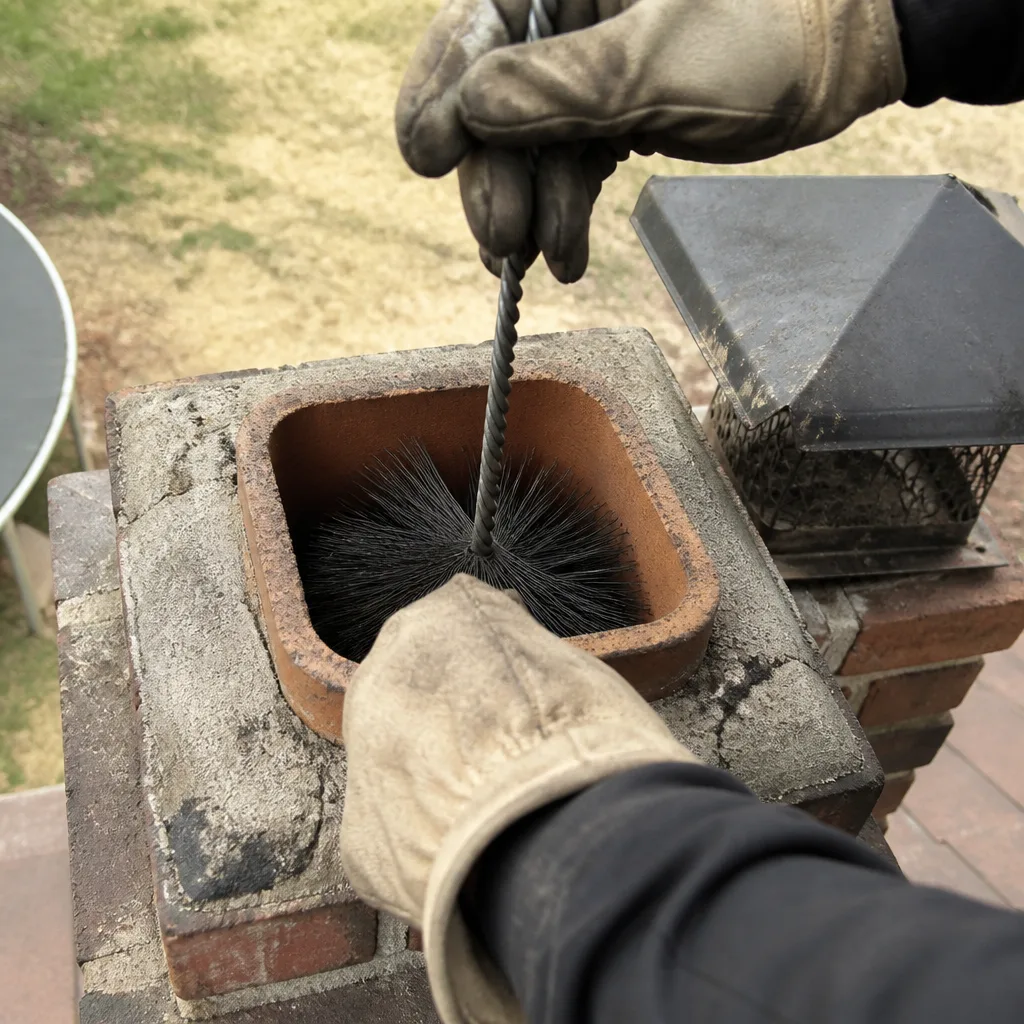
Before we start: a written price, a written scope of work, and a written warranty. Not after we’ve pulled the liner out, not midway through the job – before anyone does anything. That’s Haven Standard Clause 1, and it’s been our practice since 2009.
During the job: a background-checked, uniformed technician – you’ll get a text when they’re on the way, and they’ll be the person whose name was assigned to your job. Our crews have been through this process on more than 38,000 chimney inspections and cleanings across the McKinney area and North Texas since the company opened. That volume matters because it means the technician has seen the specific liner failure patterns that show up in Craig Ranch basements and Stonebridge Ranch two-stories – not just the textbook version.
After the job: a documented photo record, per Haven Standard Clause 4. Every visit produces a written record with camera footage and photos of the flue, the liner installation or repair, and the finished crown and cap. That record lives in your file. Insurers ask for it. Home buyers ask for it at closing. It’s yours – included, not optional.
Behind the job: the 365-Day Done Right Promise. If it’s not right within the year, we make it right. That commitment is stamped on every job.
For a full overview of our service process and materials, the Level Two Chimney Co. home page covers our inspection-first approach and the Haven Standard that runs through every job.
McKinney-Specific Notes: What We See in This Market
McKinney’s growth over the past 15 years has produced a wide mix of chimney conditions across the city. Homes built in the early Craig Ranch phases (roughly 2003-2008) are now old enough that original factory-built fireplaces are showing liner wear and smoke chamber deterioration that wasn’t present at the 10-year mark. Those same homes frequently have gas insert conversions that were done without a proper liner resize – meaning a 6-inch gas liner was never installed to replace the 8-inch or larger tile liner built for wood burning. That mismatch creates draft problems and condensation buildup inside the flue.
In the older Eldorado and Greenfield Village areas of McKinney, we’re seeing original 1990s tile liners that were never replaced. Some are still serviceable; many have reached the point where HeatShield resurfacing is a reasonable option, but a handful need full liner replacement because the tile segments have cracked past the threshold where resurfacing is structurally appropriate. The camera makes that determination – not a visual from the rooftop.
In the newest subdivisions on McKinney’s west side – Trinity Falls, Painted Tree, and some of the newer sections along US-380 – we’re primarily doing inspection work and catching installation defects that show up in the first 3-5 years: crown cracking from builder-grade concrete that wasn’t properly cured, missing spark arrestors, and cap sizes that don’t match the flue opening. These are generally lower-cost corrections when caught early.
One weather factor worth noting: McKinney sits in a transitional climate zone where summer heat keeps the masonry thoroughly dried out and occasional winter freezes introduce the moisture-expansion cycle that damages brick faces and mortar joints. It’s not as dramatic as a northern climate, but it’s consistent enough that chimney masonry that’s 20+ years old will almost always show some degree of mortar joint failure or surface spalling – and that affects whether a liner job can be done cleanly without addressing the surrounding masonry first.
FAQs: Chimney Liner & Rebuild Cost in McKinney
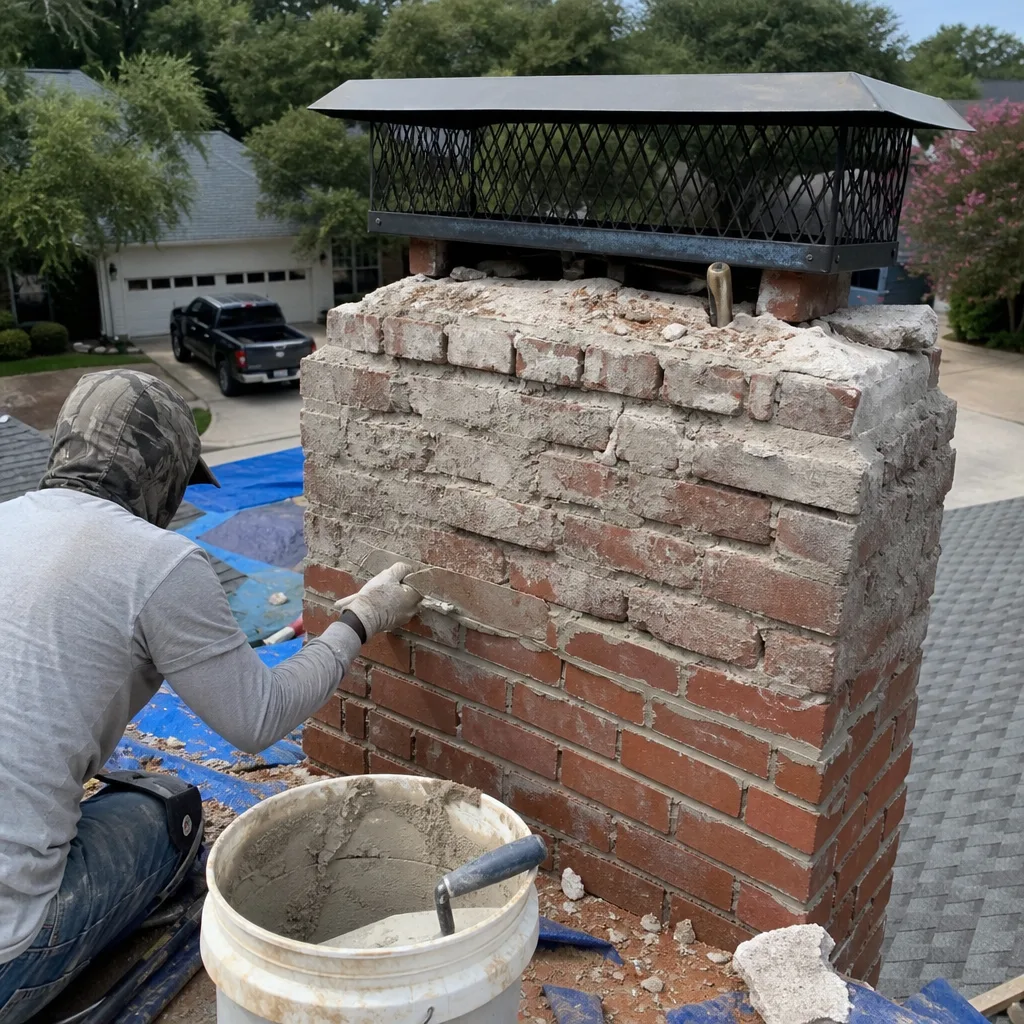
How much does chimney liner replacement cost in McKinney, TX?
Chimney liner replacement in McKinney typically costs $900 to $2,800 for a standard stainless steel flexible liner (DuraFlex or equivalent), depending on flue length and diameter. HeatShield Cerfractory resurfacing runs $2,000 to $4,500, and a cast-in-place liner system is generally $2,500 to $5,500. The right liner type depends on what the camera inspection finds – a cracked but structurally intact tile liner is a different call than a liner with missing or collapsed segments. Call (469) 429-2623 for a free written estimate after inspection – not a phone guess.
How much does a full chimney rebuild cost in McKinney?
A full chimney rebuild in McKinney – tearing down to or near the roofline and rebuilding with new brick, mortar, liner, and cap – typically runs $5,500 to $12,000, with larger chimneys or multi-flue systems at the higher end. A partial rebuild above the flashing line (which is more common for McKinney homes with surface spalling rather than structural failure) generally costs $1,500 to $4,500. Permits from the City of McKinney Building Inspections department are typically required for structural masonry work, and that cost is included in the written scope we deliver before the job starts. Call (469) 429-2623 to get a written price that covers the full scope.
Is it cheaper to repair the existing liner or replace it entirely?
Repair – specifically HeatShield Cerfractory resurfacing – is cheaper upfront at $2,000 to $4,500 versus a full liner replacement at $900 to $2,800 for stainless or up to $5,500 for cast-in-place, but resurfacing is only appropriate when the existing tile liner has cracks without structural failure or missing segments. If the tile liner has collapsed sections, resurfacing adds cost without solving the problem – a full liner replacement is the correct call. The Level 2 camera inspection documents which situation you’re in before we write the price. Call (469) 429-2623 and we’ll show you the camera footage alongside the written quote.
Can chimney liner work be done the same day in McKinney?
Same-day completion is realistic for a straightforward stainless steel liner replacement on a single-story McKinney home – most are done in 4-6 hours once the inspection is complete and the price is accepted in writing. HeatShield resurfacing and cast-in-place liner systems require additional cure time, so those are typically multi-visit jobs. Masonry rebuild work depends on the scope but generally runs 2-5 days. A camera inspection is always the first step – it sets the scope, and the scope sets the timeline. Call (469) 429-2623 to schedule.
Does a chimney liner replacement require a permit in McKinney, TX?
Liner replacement alone (inserting a flexible stainless liner into an existing flue) generally does not require a standalone permit under McKinney’s current building code adoption. A chimney rebuild involving structural masonry – new brick, new mortar, new crown construction above the roofline – typically does require a permit from the City of McKinney Development Services / Building Inspections division. We confirm the permit status for every job during the inspection phase, and permit costs are included in the written scope before any work begins. Call (469) 429-2623 with questions about your specific situation.
What is included in a Level Two chimney inspection in McKinney?
A Level 2 camera inspection per NFPA 211 standard sends a video camera down the full length of the flue and documents the liner condition, smoke chamber, firebox, and crown. You receive a written photo record of every finding – not a verbal summary. That photo record is included on every Level Two Chimney Co. visit as standard under Haven Standard Clause 4, not as an add-on. The inspection finding is what the written price is built from. In McKinney, the inspection runs $149 to $249 depending on flue configuration. Call (469) 429-2623 to schedule.
Key Takeaways
- Chimney liner replacement in McKinney typically costs $900 to $5,500 depending on liner type and flue length.
- A full chimney rebuild runs $5,500 to $12,000+; a partial above-roofline rebuild is usually $1,500 to $4,500.
- McKinney’s clay soil movement and freeze-thaw cycles accelerate masonry wear – earlier inspections catch damage before it compounds.
- A Level 2 camera inspection (NFPA 211) is the only accurate basis for a written price – phone estimates without camera access are guesses.
- Every Level Two job includes a written price before work starts, a documented photo record when it’s done, and the 365-Day Done Right Promise behind it.
- City of McKinney permits are required for structural masonry rebuild work – we handle the paperwork and include the cost in the written quote.
- Free second opinion on any written estimate – bring us a competitor’s quote and we’ll review it at no charge.
Get a Written Price Before Anyone Starts
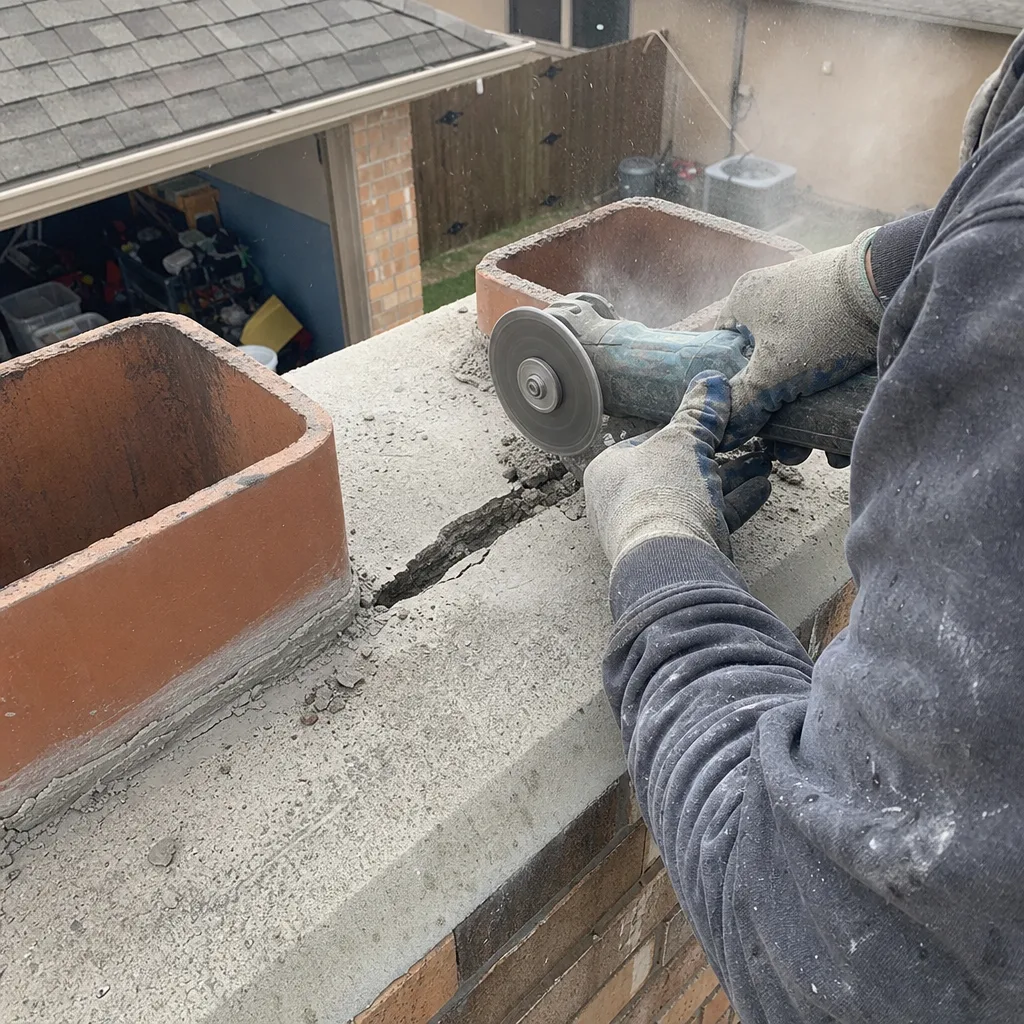
If your McKinney chimney needs a liner replacement, a partial rebuild, or a full teardown and reconstruction, the first step is a Level 2 camera inspection – a camera down the flue, a documented photo record, and a written price that covers the full scope before any work begins. Corrine Halstead and the Level Two Chimney Co. team have run this process on thousands of McKinney-area chimneys since 2009. The written price, the written scope, and the written warranty aren’t add-ons – they’re the baseline.
Call (469) 429-2623 to schedule your inspection. Live phone support is available 24 hours a day, 7 days a week – not a voicemail, not a web form, a person. Or bring us any written estimate you’ve already received and we’ll give you a free second opinion on it. No pressure either way – just a camera, a written price, and a clear picture of what your chimney actually needs.
Written by Corrine Halstead, Owner at Level Two Chimney McKinney, serving McKinney, TX since 2009.
Pricing reflects the McKinney market as of 2026. Level Two Chimney McKinney offers free estimates – call (469) 429-2623.
What Our Customers Say
"They told me the flue was fine and I did not need a liner. Charged me for the inspection and nothing else. That is why I have called them twice since."
- Hal M."We were buying the house and needed a real inspection. The report had photographs, the standard it was done to, and a clear repair figure. The seller paid for the repair."
- Lorna D."Cap and crown replaced after water was getting in. Price was quoted in writing, and they showed me the mortar failure first."
- Neil O.