
Last updated September 22, 2026
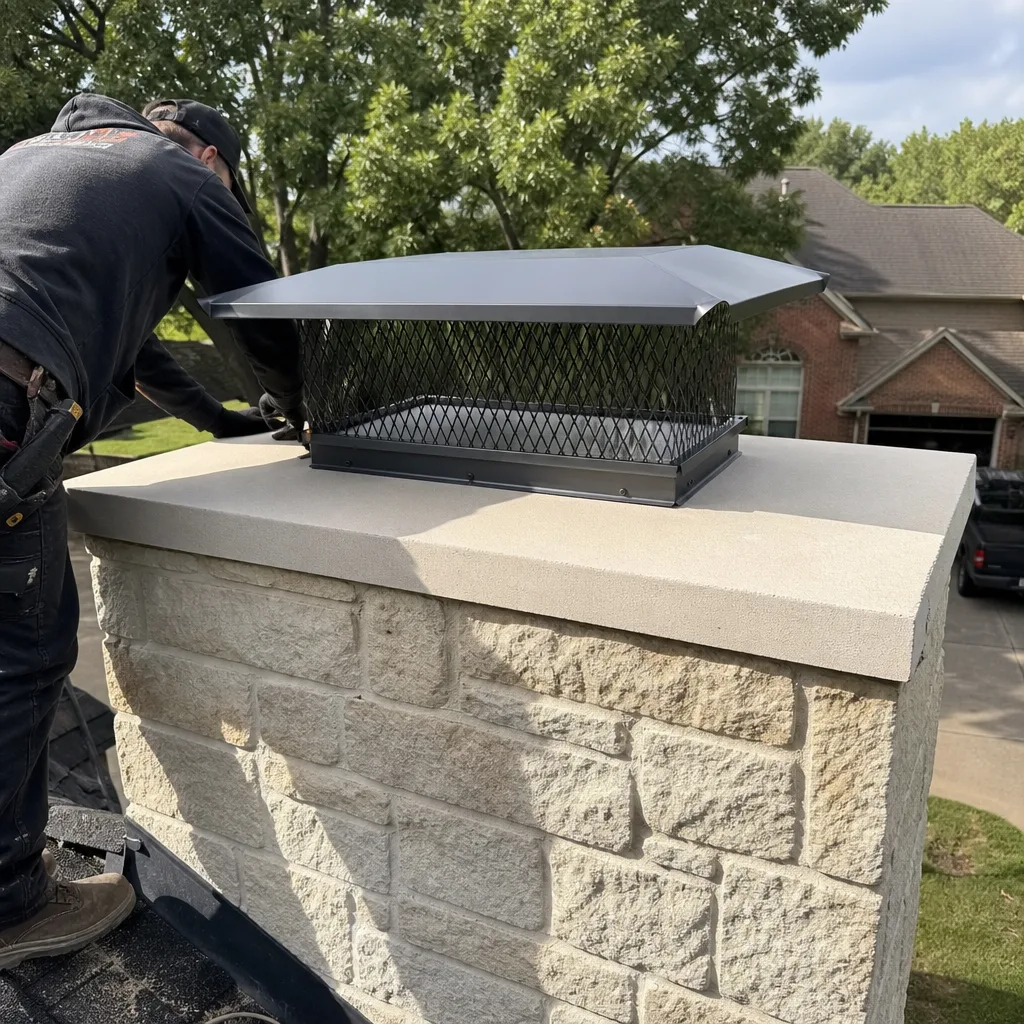
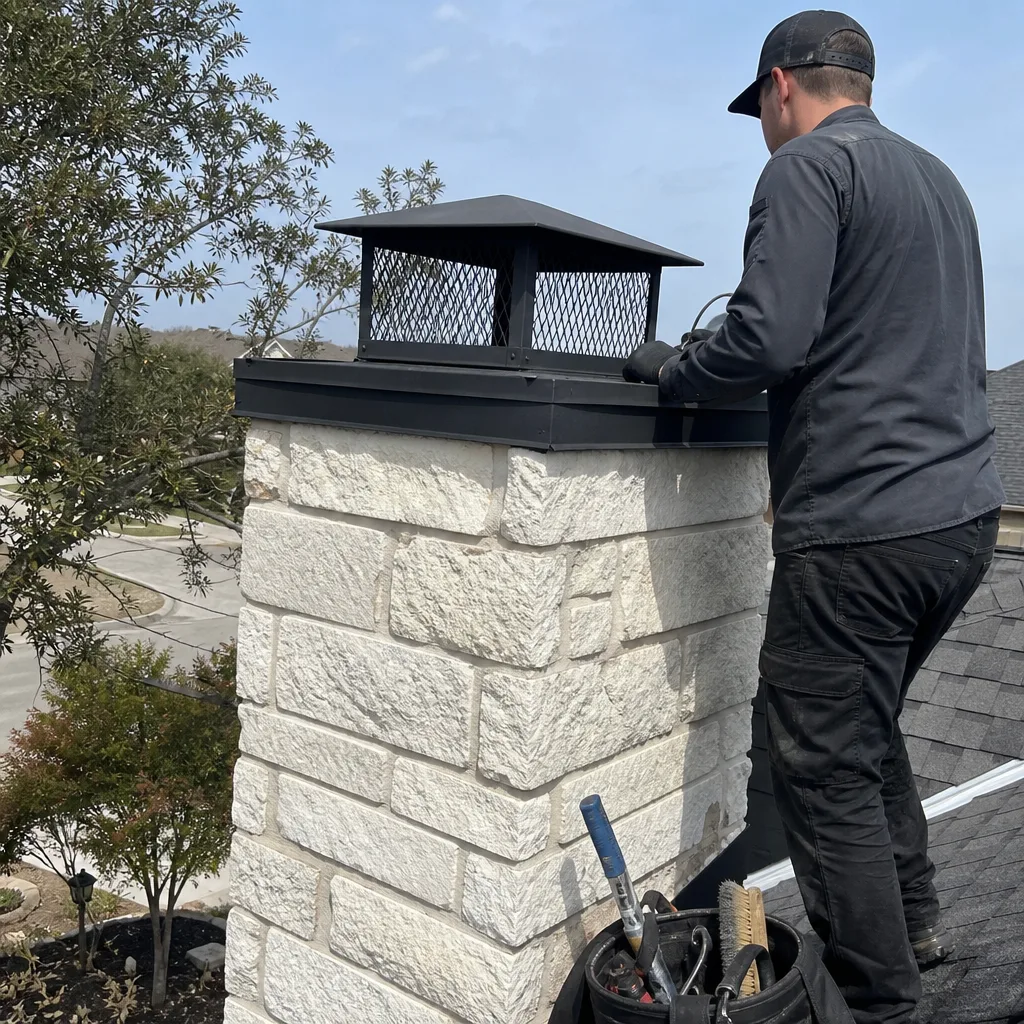
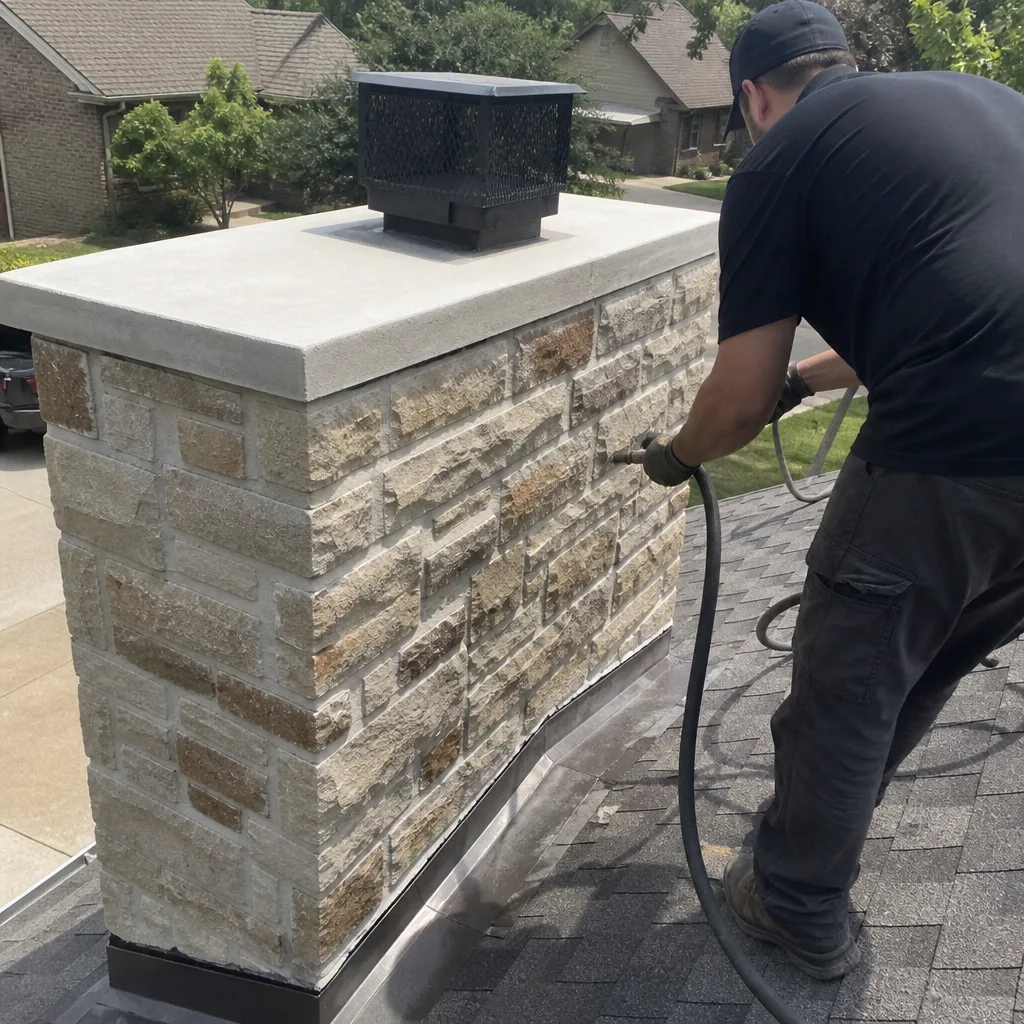
Level 1 sweep and inspection to the NFPA 211 annual standard - flue, crown, cap, and flashing checked and photographed
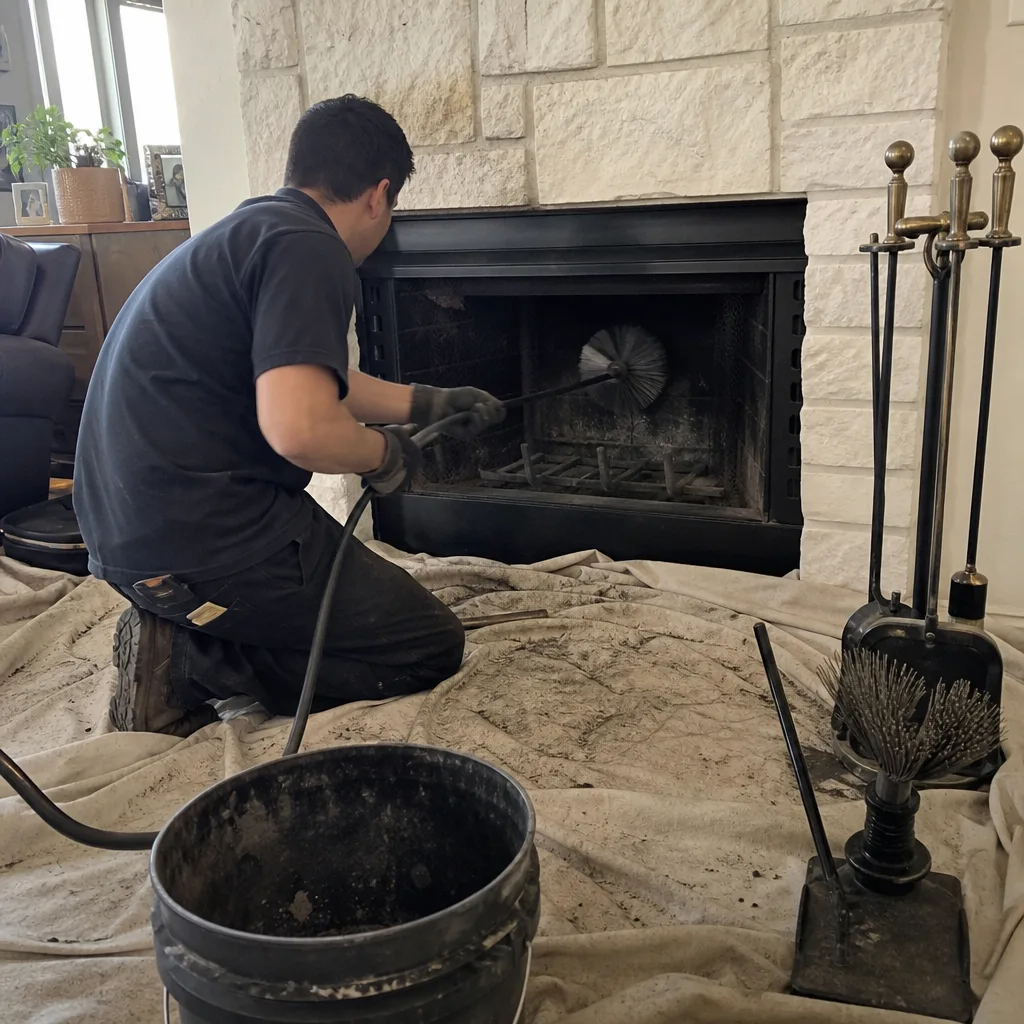
Chimney sweep logs do not sweep chimneys. They loosen some creosote - which then falls where a brush and vacuum still have to collect it.
Masonry repairGas fireplace service
 Before
 After
After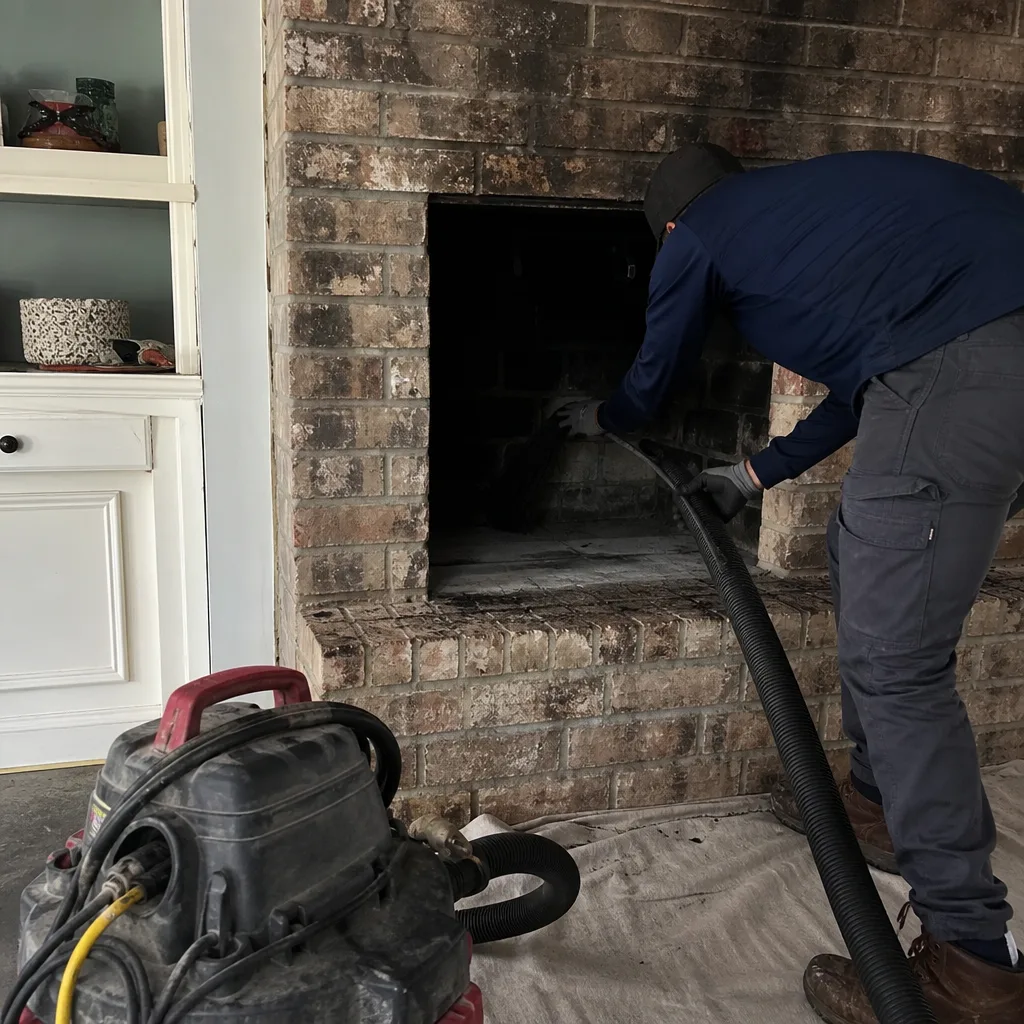 Before
 After
After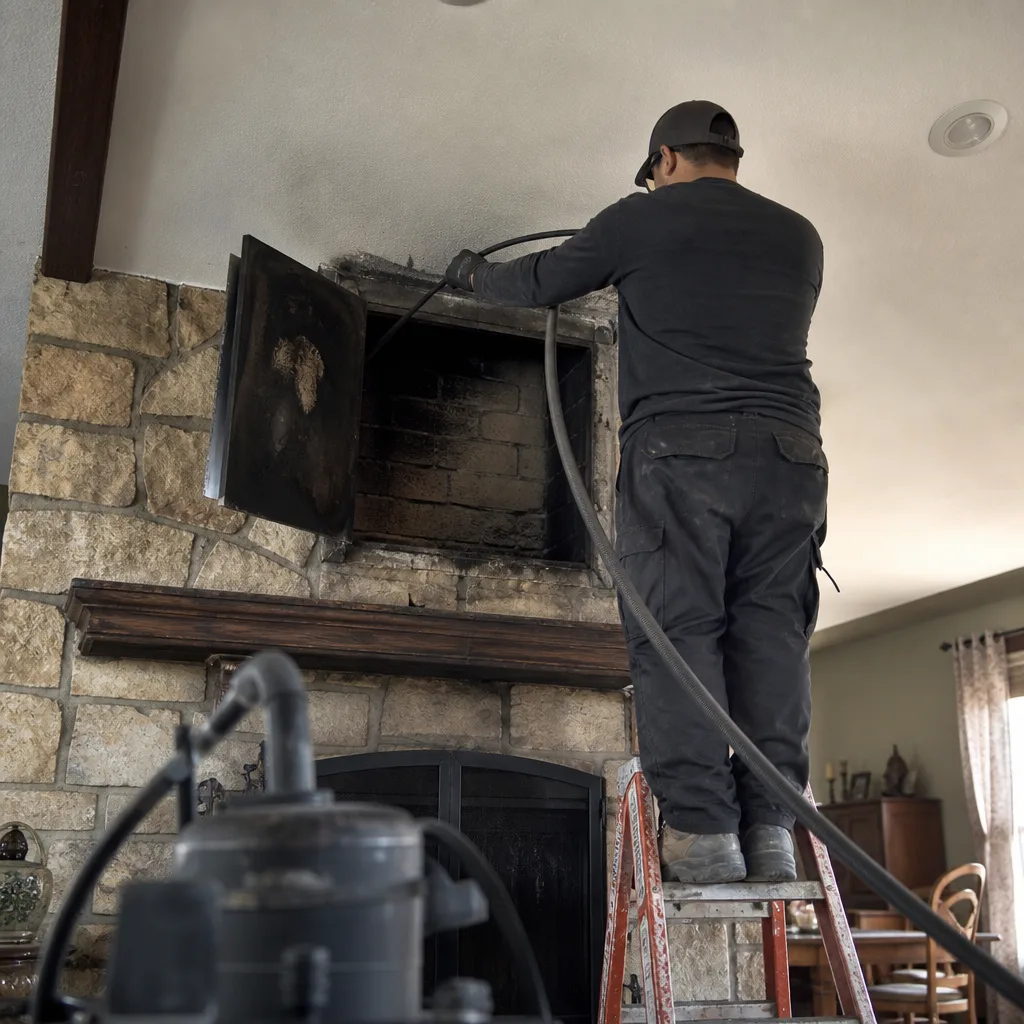 Before
 After
AfterSeasonal Chimney Cleaning Care for McKinney: Year-Round Homeowner’s Guide
Here’s the counterintuitive truth about chimneys in McKinney: most system failures we diagnose each October didn’t start in winter. They started the previous July. While national guides tell you to clean before the first fire, North Texas summers do the real damage. Heat cycling between 105°F afternoons and 75°F evenings stresses mortar joints. UV radiation degrades crown sealant. Chimney swifts nest in flues protected by federal law until September. By the time you’re ready for that first fire, the damage is already done. This guide maps what actually happens to chimneys in McKinney’s climate month by month, and what to do before the damage becomes dangerous-our Chimney Cleaning & Sweep Maintenance Checklist for McKinney Homeowners covers the full seasonal protocol.
Quick Answer
McKinney homeowners should inspect their chimney system twice yearly: once in late spring for wildlife and moisture intrusion, and again in early September with a camera scan before first fire. Summer heat causes more structural damage than winter fires in North Texas, and federal protections for chimney swifts block cap installation from March through August. A proper seasonal cycle in McKinney means addressing summer damage in September, not waiting until something fails mid-winter.
Table of Contents
- Why Summer Damages McKinney Chimneys More Than Winter
- Month-by-Month Chimney Care Calendar for McKinney
- Wildlife Seasons in McKinney: Swifts, Squirrels, and Wasps
- The First-Fire Smoke Test Every McKinney Homeowner Should Do
- Gas Fireplace Seasonal Maintenance: What Most Guides Skip
- How North Texas Heat Attacks Mortar and Crowns
- Mid-Winter Creosote Checks for Heavy Users
- Common Mistakes to Avoid
- When to Call a Professional
- Frequently Asked Questions
 Before
 After
AfterWhy Summer Damages McKinney Chimneys More Than Winter
The standard chimney advice assumes a northern climate: freeze-thaw cycles in winter, burning season from October through March, clean it before you light it. That model doesn’t fit McKinney, as we explain in our Chimney Cleaning Cost Breakdown: The McKinney Homeowner’s Reference for 2026.
In Collin County, we see 100-plus-degree days from June through September. The exterior of a chimney flue can reach 140°F in direct afternoon sun while interior temperatures stay near ambient. That differential creates expansion stress at mortar joints, crown edges, and flue liner seams. Over a decade, that cycling opens hairline cracks that winter rains exploit.
Meanwhile, the chimney sits unused. No draft pulls air upward. Humidity settles. In neighborhoods like Eldorado Heights and Adriatica, we’ve pulled nests from flues that blocked 60 percent of the airway. Homeowners never noticed because they weren’t burning. By October, the system is compromised but the owner has no clue until smoke backs up into the living room.
Here’s what summer inactivity actually means for McKinney chimneys:
- No draft means no drying: Moisture from summer humidity and occasional hard rains sits in the flue instead of being pulled out by regular fires. This accelerates liner corrosion in metal systems and spalling in clay liners.
- UV degradation of crown sealant: The acrylic or silicone sealant applied to concrete crowns breaks down under McKinney’s intense UV. A crown that looked fine in April can be porous by October.
- Thermal cycling without use: Daily temperature swings of 30-40°F stress the system without the moderating effect of regular, controlled heating. It’s like bending a paperclip back and forth.
- Unmonitored wildlife entry: Without regular visual checks, squirrels chew flashing, wasps build paper nests in caps, and swifts occupy the flue itself.
The result: in our experience across 38,000 inspections since 2009, the majority of “fall startup failures” in McKinney trace back to conditions that developed between May and September. The chimney didn’t fail in October. It was already failed. The first fire just revealed it.
Month-by-Month Chimney Care Calendar for McKinney
We’ve refined this calendar through sixteen years of McKinney-specific service records. It accounts for actual climate patterns, wildlife behavior, and the burning habits we see in local homes from Stonebridge Ranch to Craig Ranch.
January: Mid-Winter Creosote Assessment
If you’ve burned more than three times weekly since November, schedule a mid-season check. Class I creosote (sooty, brushable) can become Class III (glazed, tar-like) with heavy use. Class III requires rotary cleaning, not standard sweeping. We document the condition with camera footage under Haven Standard Clause 4.
February-March: Post-Season Documentation
After your last fire, do a visual exterior check. Look for:
- Missing or shifted chimney cap mesh
- Crown cracks wider than a credit card edge
- Efflorescence (white powder) on brick faces, indicating moisture migration
- Damaged or rusted flashing at the roofline
Photograph anything suspicious. This becomes your baseline for September comparison.
April: Spring Nest Inspection
This is critical timing. Chimney swifts return to McKinney from South America in late March and early April. Once a pair selects your flue, federal protections under the Migratory Bird Treaty Act prohibit disturbance until the young fledge in late August. If you suspect swifts, do not cap the chimney now. Wait. Mark your calendar for September.
Also check for squirrel nesting in unused flues, particularly in homes near the Heard Natural Science Museum greenbelt or along the Trinity Trail corridor where tree cover is dense.
May-June: Cap and Crown Pre-Summer Check
Before the worst heat arrives, verify your cap is secure and crown sealant is intact. In McKinney’s UV intensity, sealant begins meaningful degradation after 18-24 months. If your crown was last sealed in 2022, it’s time.
This is also when we recommend a professional camera scan if you skipped post-season inspection. Moisture intrusion from spring storms is easier to address before summer baking sets the damage.
July-August: Monitor, Don’t Act on Wildlife
If swifts are present, wait. For other species, note activity but avoid disturbing established nests. Wasps in cap screens can be addressed by a pest professional if the nest is accessible without flue entry.
Do a monthly visual from ground level. Look for new crown cracks, shifted flashing, or vegetation growth near the base. In McKinney’s clay soils, foundation movement peaks in late summer drought; watch for separation between chimney and house wall.
September: The Critical Camera Scan
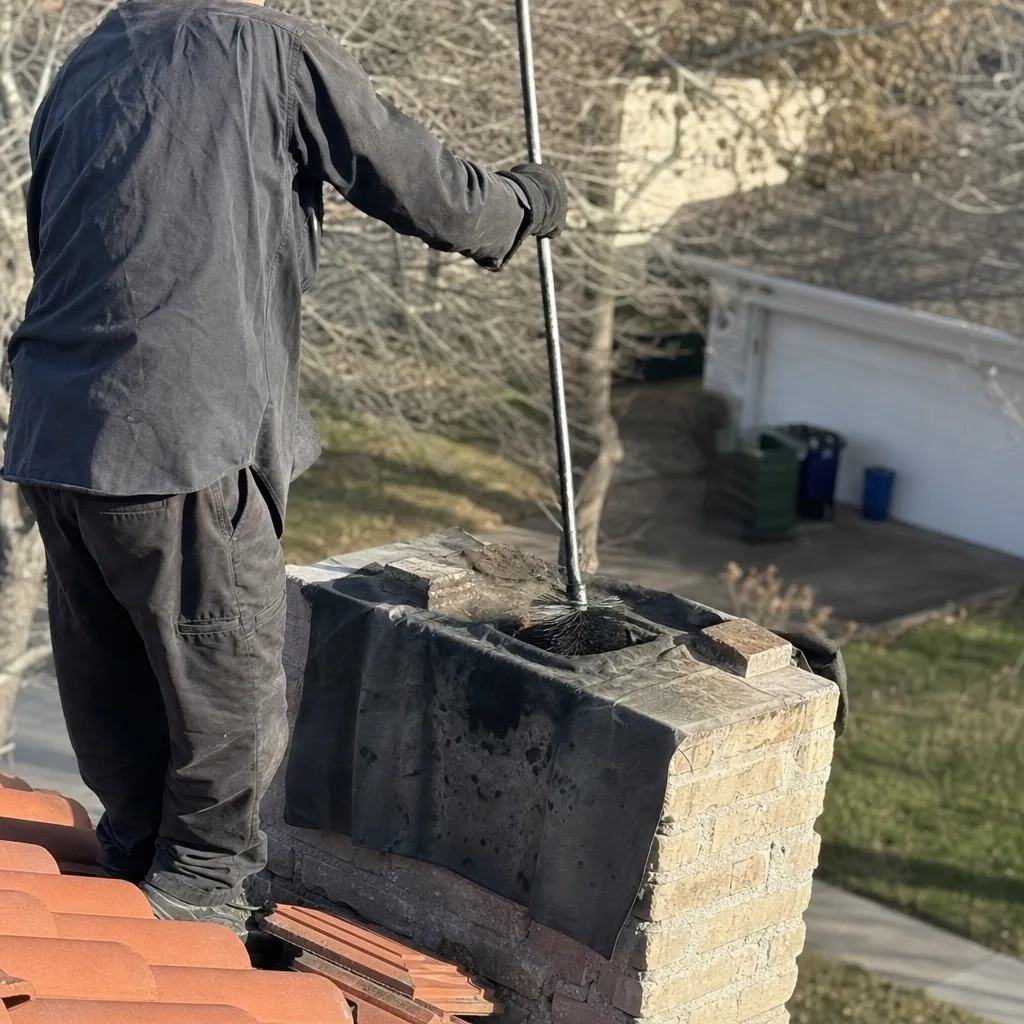
After Labor Day, before first fire. This is non-negotiable in our view. Schedule a Chimney Cleaning & Sweep in McKinney that includes NFPA 211 Level 2 camera inspection. We scan every flue inch with a Chim-Scan or equivalent, document with photos, and provide written findings before any work is discussed.
September is also when swift protections lift. If swifts occupied your flue, cap installation can proceed now. We use DuraFlex and Gelco cap systems sized to your flue count and diameter.
October-November: First Fire Protocol
See the smoke test section below. Even with a clean September scan, perform this test before your first sustained fire. McKinney’s temperature inversions in late October can create downdraft conditions that weren’t present during inspection.
December: Heavy-Use Monitoring
For daily burners, watch for:
- Smoke spillage at startup (indicates cold flue or blockage)
- Unusual odors (moisture, animal, or chemical smells)
- Visible creosote flakes in the firebox
Any of these warrants a call before continued use.
Wildlife Seasons in McKinney: Swifts, Squirrels, and Wasps
McKinney’s greenbelts and mature neighborhoods support robust wildlife populations that view chimneys as premium real estate. Each species has a seasonal profile that affects when and how you can address intrusion.
Chimney Swifts (March - Late August)
These birds are the most legally complicated. Swifts cannot perch horizontally; they roost only on vertical surfaces inside chimneys. Once a pair builds their twig nest and lays eggs, federal law protects the active site. Disturbance carries penalties.
In McKinney, arrival typically occurs the last week of March. Nest construction takes 3-7 days. Eggs hatch in roughly 19 days, and young fledge about 20 days later. Most McKinney nests are empty by September 1, though we’ve seen stragglers into mid-September.
What this means for homeowners: If you hear chittering or see birds entering your flue in April, mark September 15 on your calendar for cap installation. Do not light the fireplace. Do not attempt to smoke them out. Wait, then call us for swift-safe cap sizing.
Eastern Gray Squirrels (Year-Round, Peak Nesting February-March and July-August)
Squirrels chew through standard mesh caps, damage flashing, and pack leaves into flues. In Craig Ranch and Tucker Hill, where oak canopy is dense, we see 20-30 squirrel-related blockages each spring.
Squirrel nests are not federally protected. However, if young are present, most homeowners prefer to wait. We can install chew-resistant stainless caps with tighter mesh, but timing matters. A squirrel that can’t get back to its nest will cause damage trying.
Paper Wasps and Mud Daubers (April - October)
Wasps build in cap screens and atop dampers. A fully blocked screen can reduce draft capacity by 40 percent. Mud daubers fill flue corners with tubular nests that break loose and fall into the firebox.
Wasps are a maintenance issue, not an emergency. During your September service, we clear nests and can treat cap screens with non-toxic repellent coatings.
The First-Fire Smoke Test Every McKinney Homeowner Should Do
Even with a September camera scan and clean sweep, perform this test before your first sustained fire. It costs nothing and catches what a static inspection cannot: dynamic draft behavior under actual conditions.
- Open the damper fully. Verify it moves freely and seats completely open. Partially open dampers create turbulence that spills smoke.
- Crack a window in the same room as the fireplace. This neutralizes negative pressure from HVAC systems, which is common in McKinney’s tightly sealed newer construction.
- Roll two sheets of newspaper into a tight torch. Light it and hold it at the damper opening, up inside the firebox throat.
- Watch the smoke behavior for 60 seconds. Proper draft pulls smoke smoothly upward. Any spillage into the room, downdraft puffing back at you, or hesitation indicates a problem.
- If smoke rises cleanly, proceed to a small kindling fire. If not, extinguish and call for inspection before larger fuel.
What stops the test: Smoke spillage, chemical odors (indicating prior animal presence or moisture damage), or visible debris falling. These warrant a professional re-inspection even if your September scan was clear. Conditions change.
This test is safe because it uses minimal fuel and brief duration. It is not a substitute for professional inspection, but it catches the gap between “inspected in September” and “conditions today.”
Gas Fireplace Seasonal Maintenance: What Most Guides Skip
Approximately 60 percent of McKinney homes built since 2015 have gas fireplaces, not wood-burning. National seasonal guides ignore these systems entirely. That omission is dangerous.
Gas fireplaces accumulate dust and lint on burner ports, which causes incomplete combustion and elevated carbon monoxide. The ceramic logs degrade and shift, blocking flame patterns. Venting systems, whether B-vent or direct-vent, develop corrosion or insect nests in termination caps.
Here’s the McKinney-specific maintenance cycle for gas systems (find more guides & resources on our blog):
- Pre-season (September): Visual inspection of the glass gasket, burner port cleanliness, and pilot assembly. Check that the remote or wall switch responds properly. Verify the CO detector in the same room has fresh batteries.
- First use: Run for 30 minutes with the glass front open (if design permits) or with windows cracked. Smell for gas odor at startup. Blue flame with minimal yellow tipping indicates proper combustion. Persistent yellow or orange suggests port cleaning is needed.
- Mid-season (January): Vacuum accessible dust from the firebox with the gas off and pilot cooled. Do not disassemble the burner. If logs are cracked or shifted, schedule professional re-positioning.
- Post-season (March): Shut off the pilot if you won’t use the system until fall. A standing pilot wastes gas and generates moisture in the firebox all summer.
We service gas systems under our Fireplace Services in McKinney program, including HeatShield refractory repair for damaged fireboxes and direct-vent termination replacement using Olympia Chimney components.
Safety note: Never attempt to clean gas burner ports with wire or pins. The orifices are precisely sized; damage causes dangerous flame lift. This is a trained technician task.
How North Texas Heat Attacks Mortar and Crowns
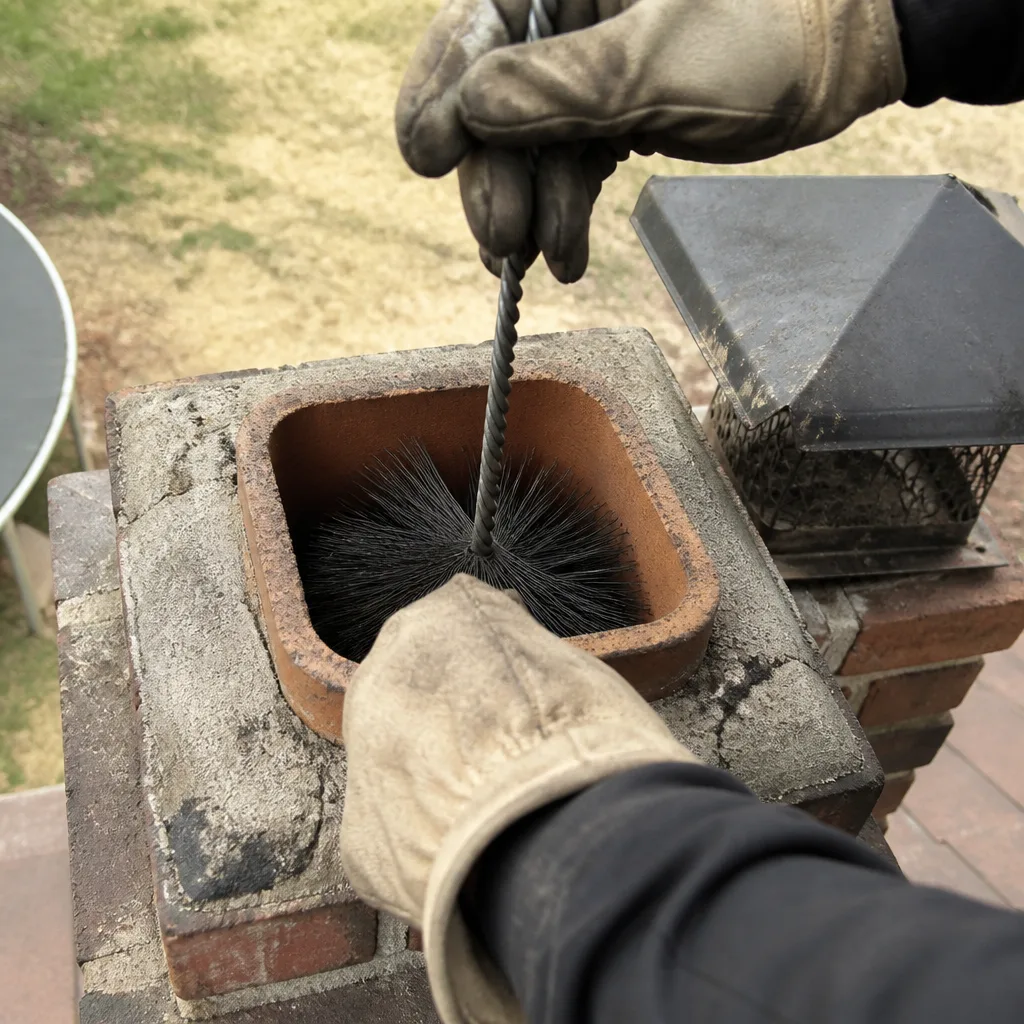
McKinney’s summer climate is uniquely hard on masonry chimneys. The mechanism is thermal shock from rapid cycling, not gradual heating.
A south-facing chimney in Stonebridge Ranch absorbs solar radiation from 10 AM to 5 PM, surface temperatures reaching 150°F-plus. At 6 PM, ambient drops to 85°F. The exterior skin contracts while the interior mass remains warm. This differential shear stress opens mortar joints at the rate of 0.002-0.005 inches per significant cycle. Over a summer, that’s measurable movement.
Crowns suffer differently. The concrete crown sits atop the chimney, exposed on all surfaces. Sealant UV degradation allows water absorption. When rain does come, typically in brief, intense bursts, water enters micro-cracks. The next 100°F day evaporates it rapidly, leaving salt deposits that expand and widen the crack. This is the same spalling mechanism that destroys highway concrete, accelerated by McKinney’s UV intensity.
What to look for from ground level:
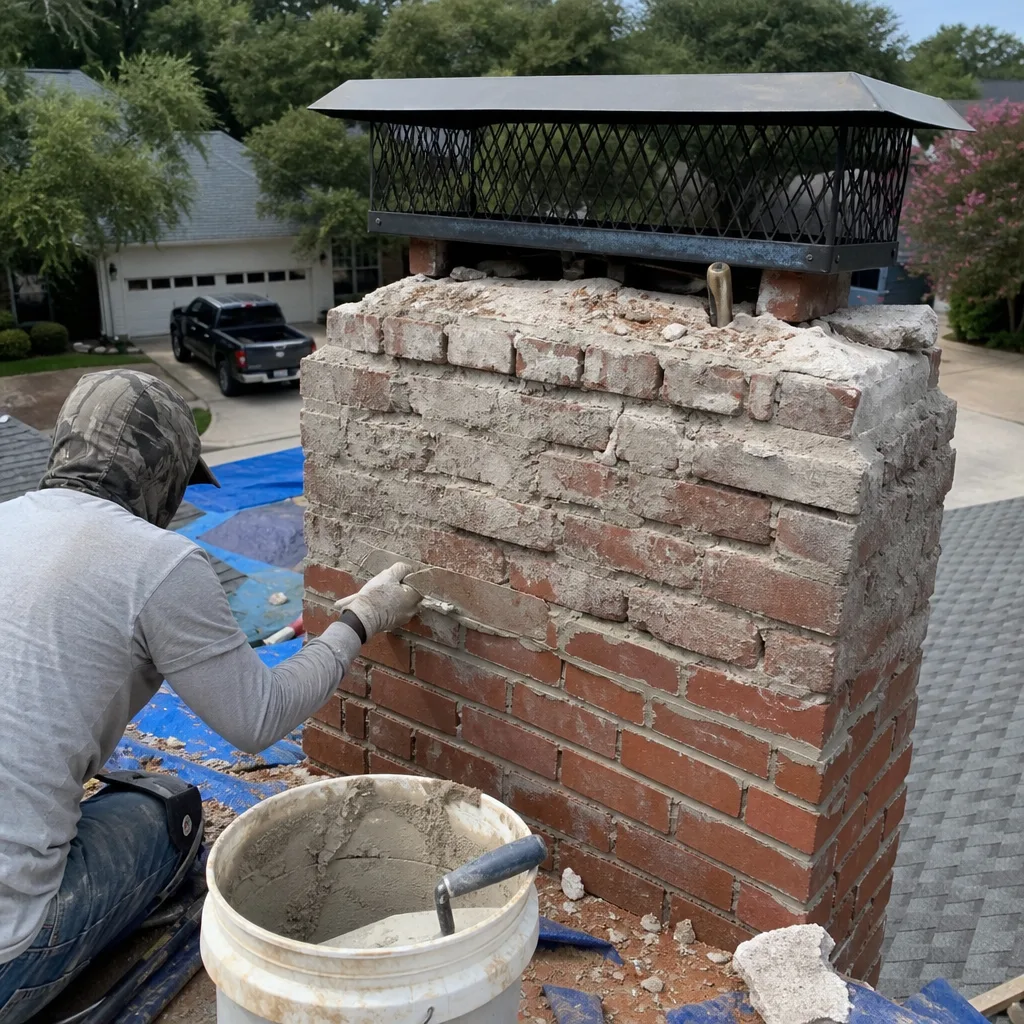
- Hairline cracks in the crown surface, particularly radiating from the flue tile
- Missing mortar at head joints (vertical joints between bricks at the chimney top)
- Efflorescence streaking, white or gray, on brick faces below the crown
- Rust staining on brick, indicating corroded flashing or liner anchors
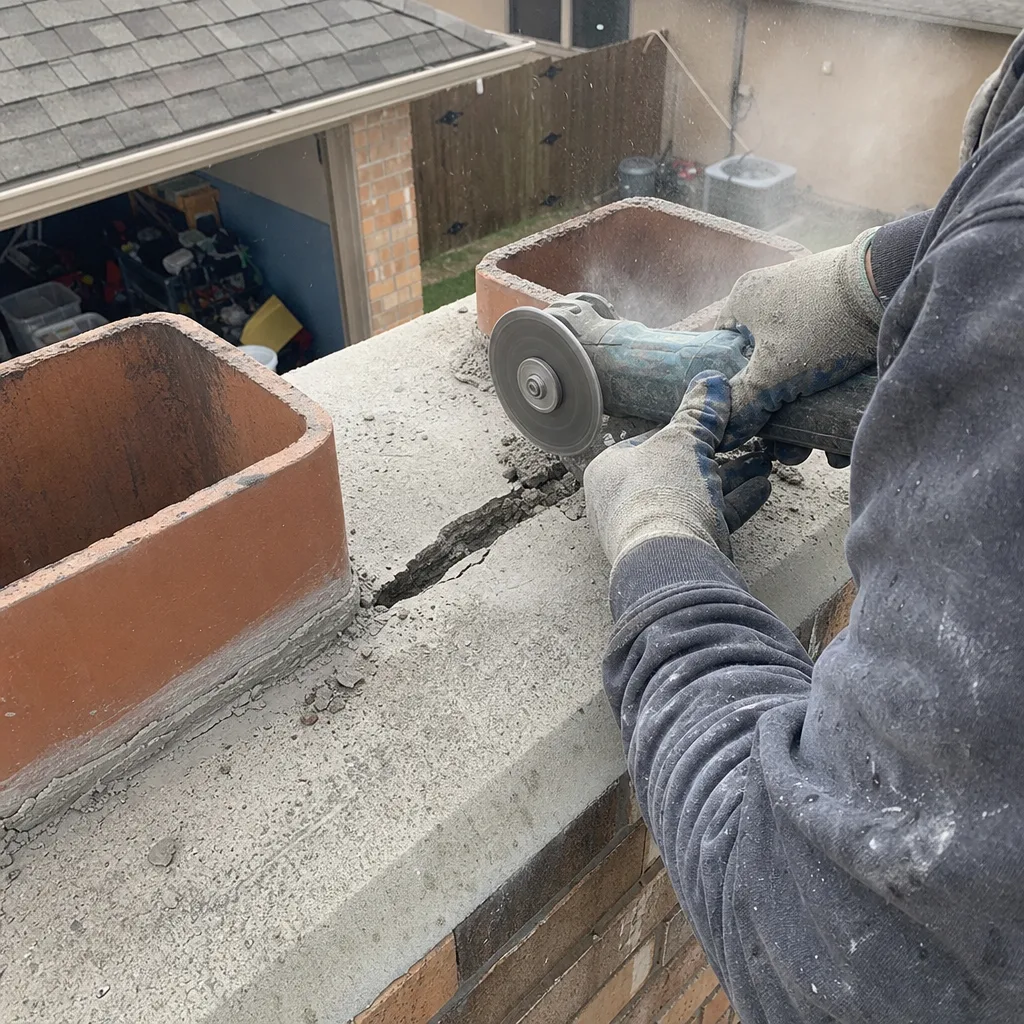
When to act: Crown cracks wider than 1/16 inch warrant professional evaluation. We apply crown coat sealants using HeatShield and Copperfield formulations rated for 200°F continuous exposure. For deteriorated crowns, we pour new concrete with integrated drip edges and expansion joints.
Foundation movement compounds the problem. McKinney’s expansive clay soils shrink dramatically in August-September drought. We’ve measured chimney separation from house walls of 3/8 inch in homes near the Trinity River floodplain. This opens flashing gaps that direct water into wall cavities.
Mid-Winter Creosote Checks for Heavy Users
For McKinney homeowners who burn daily from November through February, a single pre-season sweep is insufficient. Creosote accumulation is cumulative and non-linear; the last third of the burning season produces more deposit than the first two-thirds combined because the flue is already coated.
Creosote classes matter for scheduling:
- Class I: Sooty, dusty, brushes off easily. Normal for seasoned hardwood and hot fires. Annual sweeping sufficient.
- Class II: Granular, crunchy, requires more aggressive brushing. Indicates some unseasoned wood or restricted airflow.
- Class III: Glazed, tar-like, hard as enamel. Requires rotary chains or chemical treatment. Indicates chronic smoldering, unseasoned wood, or closed-damper operation. Fire hazard.
We see Class III most often in McKinney homes with older airtight stoves or inserts, where owners damp the fire for overnight burn. The practice saves wood and creates hazard.
Heavy-user schedule: If you burn more than four times weekly, schedule a mid-January inspection. We camera-scan to assess creosote class and liner condition without disassembly. If Class II or III is present, we sweep with appropriate method and document with photos. The cost of a mid-season check is negligible against the cost of a chimney fire or Chimney Repair in McKinney after overheating damage.
Materials matter for rebuilds if overheating has occurred. We source replacement flue liners through DuraFlex for stainless systems and Copperfield for clay replacements, procured through Haven’s buying network to maintain honest pricing.
Common Mistakes to Avoid
- Waiting for “chimney sweep weather” in October. By then, every reputable sweep in Collin County is booked two weeks out. Summer damage goes unaddressed. Schedule your September scan in August.
- Installing a cap in April without checking for swifts. We’ve had to remove newly installed caps at cost because homeowners didn’t know about federal protections. A May visit from a pair of swifts turns into a September re-service.
- Assuming gas fireplaces need no maintenance. Dust accumulation on burner ports causes CO elevation. The “clean gas” myth has sent McKinney homeowners to the ER.
- Using the fireplace as a disposal for wrapping paper or construction scraps. Flash fires from glossy paper or pressure-treated lumber exceed flue temperature ratings. We’ve replaced liners in Adriatica and Spur 141 homes after holiday paper fires.
- Ignoring efflorescence as “just cosmetic.” White powder on brick means water is moving through the masonry, dissolving salts, and depositing them at the surface. The same water movement destroys mortar from inside.
- DIY sweeping with a hardware store brush. Standard brushes don’t reach smoke chamber shelves or remove Class III creosote. Worse, they can damage clay flue tiles if forced past offsets. The $40 brush costs $2,400 in liner replacement.
- Skipping the first-fire smoke test because “it was fine last year.” Wind patterns, nearby construction, and HVAC modifications change draft behavior. The two-minute test catches what assumption misses.
When to Call a Professional
Call for inspection before lighting if you see crown cracks, smell animal odor from the fireplace, or had any water intrusion in the chimney wall during the previous year. Call immediately if smoke spills during the first-fire test, if you hear animal activity in an active flue, or if you see visible creosote flakes in the firebox after limited use.
For gas systems, call if the pilot won’t stay lit, if flame color shifts to persistent yellow, or if your CO detector alarms. These are not wait-and-see situations.
Level Two Chimney McKinney offers free estimates in McKinney. Every visit includes NFPA 211 Level 2 camera inspection, written findings, and a written price before any work begins. Call (469) 429-2623 to schedule. We answer live, 24 hours a day.
Frequently Asked Questions
A standard chimney sweep with NFPA 211 Level 2 camera inspection in McKinney typically runs $199-$289 for a single-flue system, depending on accessibility and creosote class. Multi-flue or chase-mounted systems may range higher. We deliver a written price before any work starts, with no surprise add-ons. Call (469) 429-2623 for an exact quote on your system - estimates are free.
You need a new liner when the existing one is cracked, perforated, or improperly sized for your appliance, and only if camera evidence confirms the damage. We don’t recommend liner replacement without showing you the scan. In McKinney, we see unnecessary liner sales most often in homes built 1985-2005 with original clay liners that are intact but dirty. A clean sweep and camera verification is usually sufficient. If replacement is warranted, we use DuraFlex stainless or HeatShield resurfacing depending on the defect type. Call (469) 429-2623 for a free second opinion on any written estimate.
NFPA 211 recommends annual inspection for all systems, and sweeping when creosote exceeds 1/8 inch. For McKinney’s typical occasional burner (1-2 times weekly in season), annual service before first fire is sufficient. Heavy users burning 4-plus times weekly should add a mid-season check. Gas fireplaces need annual burner and vent inspection, though “sweeping” isn’t the right term for these systems. The September timing matters more than the calendar interval in our climate.
Three outcomes, in order of probability: first, a blocked or degraded flue spills smoke and carbon monoxide into living space, usually detected at the first fire of season. Second, accumulated creosote ignites in a chimney fire, which can crack liners and damage surrounding structure even if contained. Third, undetected moisture intrusion destroys masonry from inside, leading to rebuild-level repairs. In McKinney, we see outcome one and three most often because summer damage goes unnoticed. The cost of prevention is a fraction of the cost of remediation. Call (469) 429-2623 to schedule before you light this year’s first fire.
No. Federal law protects active swift nests, and a fire would kill the birds and potentially block the flue with nest material. Wait until the young fledge, typically by September 1 in McKinney. Mark your calendar for professional cap installation after confirmed departure. We can verify vacancy with a camera scan before capping.
Summer chimney odor in McKinney usually means moisture plus organic material. Humidity activates creosote deposits, producing a sour, smoky smell. Animal entry, even past nesting, leaves debris that decomposes in heat. Negative pressure from air conditioning pulls these odors down the flue into living space. The solution is removing the source (sweeping and debris removal) and addressing the pressure imbalance. A top-sealing damper or outside air intake often helps in tightly sealed newer homes. We diagnose odor sources with camera inspection and provide written recommendations.
The Bottom Line
McKinney’s chimney maintenance cycle runs opposite to northern convention. Summer heat and inactivity cause more system damage than winter fires. The critical service window is September, not October, and must include camera documentation of flue condition. Wildlife protections, gas system maintenance, and mid-season creosote monitoring are non-negotiable elements of local care. Homeowners who follow this calendar avoid the October rush, catch damage before it becomes dangerous, and maintain systems that last decades rather than requiring premature rebuild.
Level Two Chimney McKinney has completed more than 38,000 chimney inspections and cleanings since 2009, every one with a written price before work started and a documented photo record on completion. The 365-Day Done Right Promise backs every job. Schedule your September camera scan now, or call for a free second opinion on any written estimate you’ve received.
Written by Corrine Halstead, Owner at Level Two Chimney McKinney, serving McKinney since 2009.