
Last updated September 22, 2026
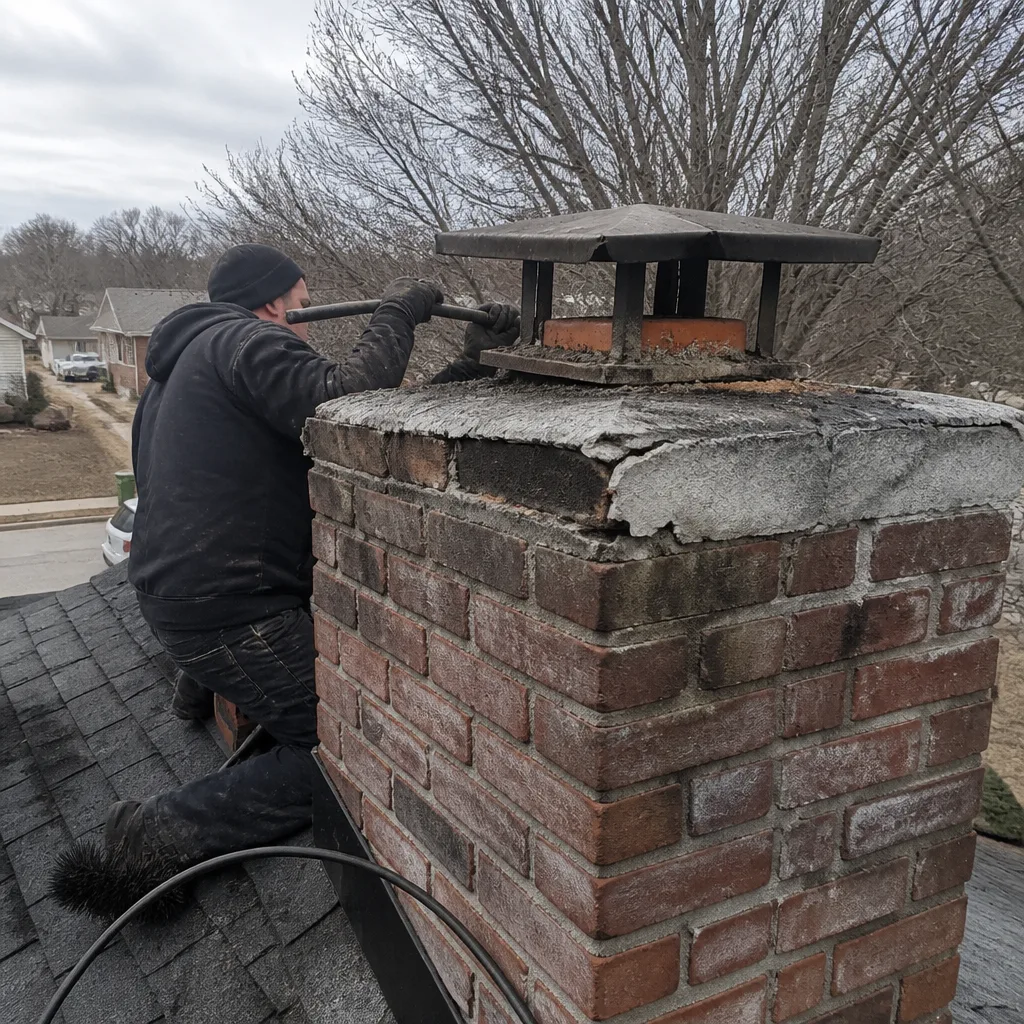
Level 1 sweep and inspection to the NFPA 211 annual standard - flue, crown, cap, and flashing checked and photographed
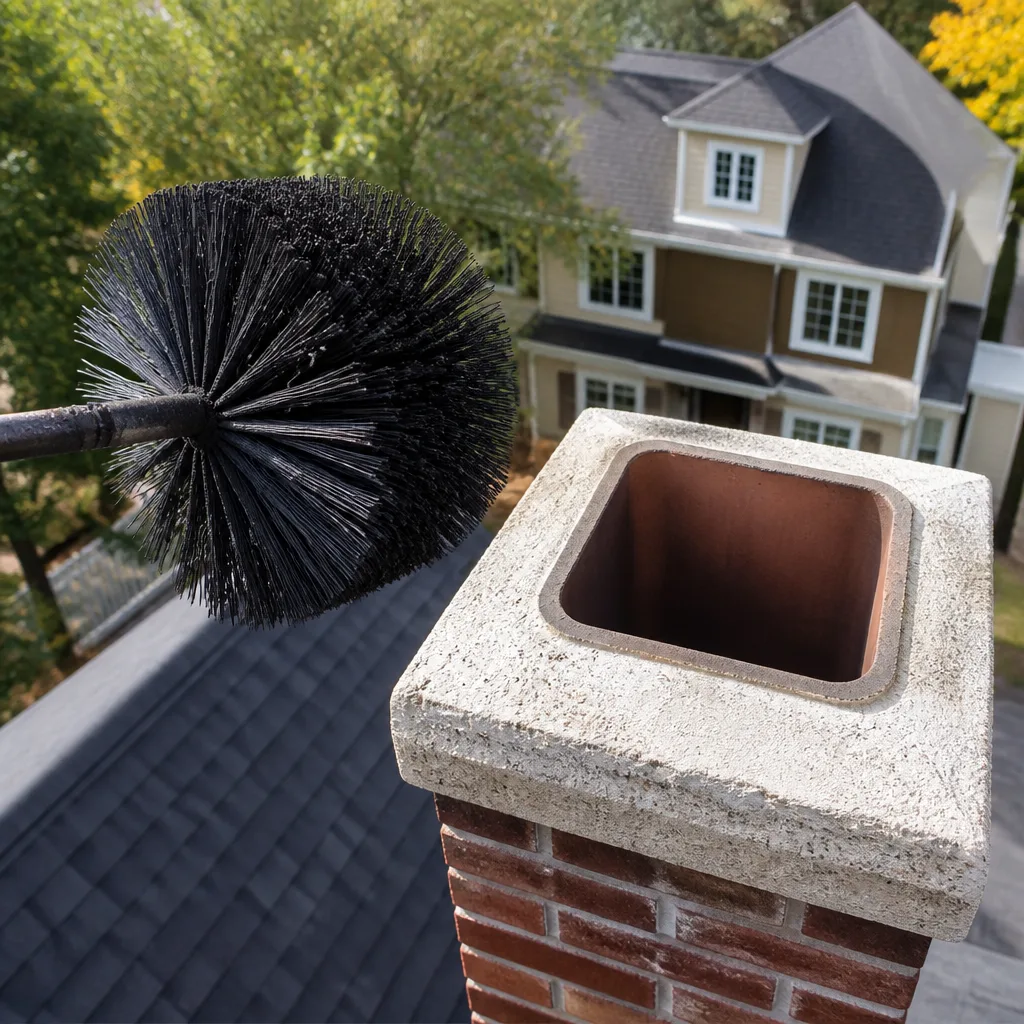
Chimney sweep logs do not sweep chimneys. They loosen some creosote - which then falls where a brush and vacuum still have to collect it.
Masonry repairGas fireplace service
 Before
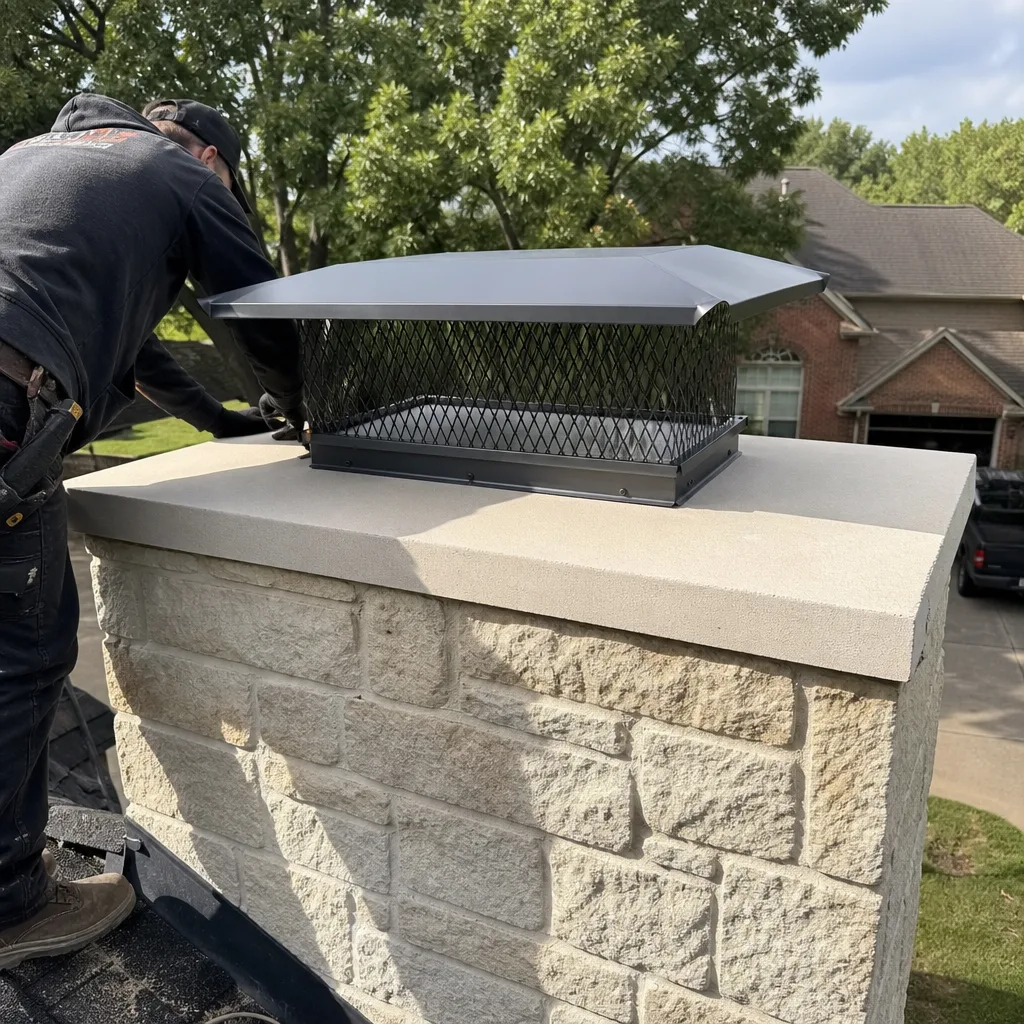 After
After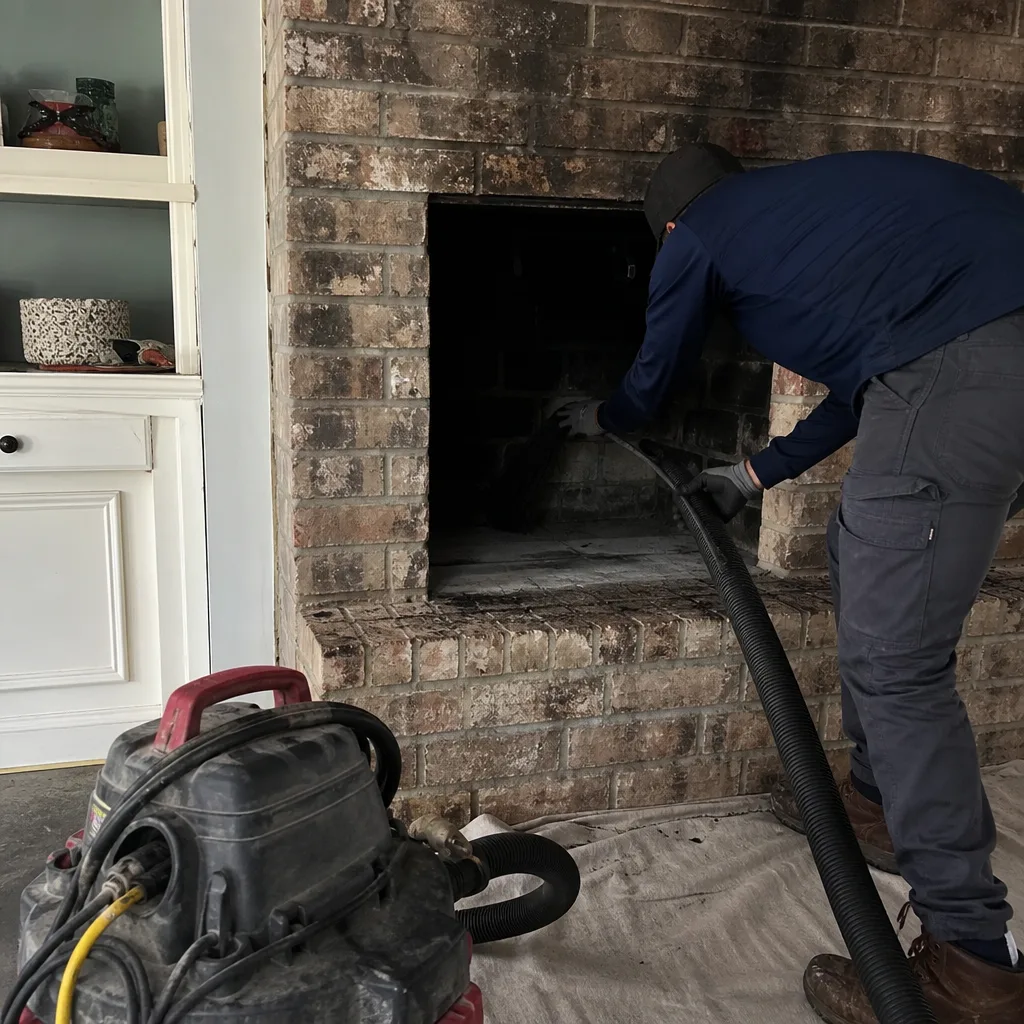 Before
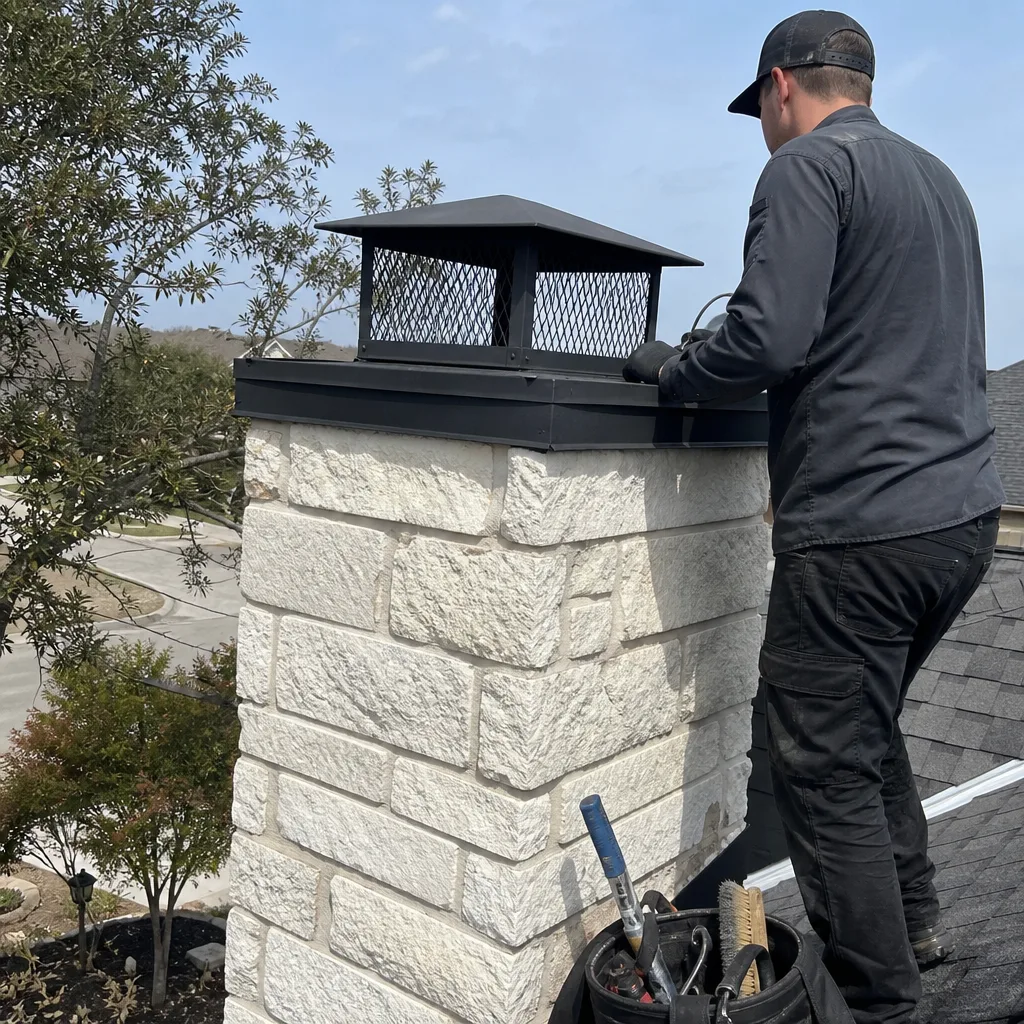 After
After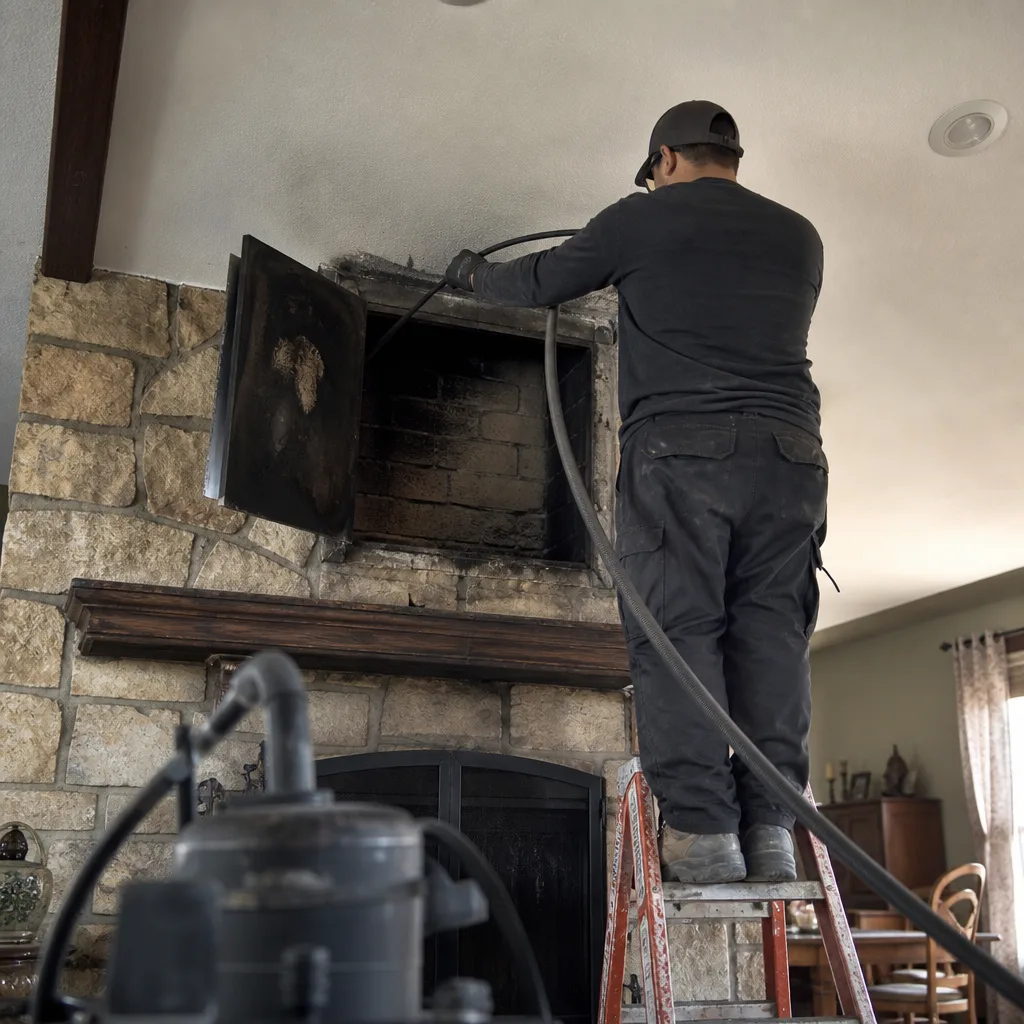 Before
 After
AfterChimney Cleaning & Sweep Maintenance Checklist for McKinney Homeowners
Most chimney maintenance checklists fail at the same point: they tell you to “inspect the crown” or “check the damper” without defining what failure actually looks like. A homeowner in McKinney’s Craig Ranch following generic advice could miss a hairline crown crack that’s already admitting water, while someone in Stonebridge Ranch might replace a damper that only needs adjustment. After 38,000 inspections across North Texas, we’ve learned that checklists work only when every item has a pass-fail threshold you can see, measure, or photograph. This guide gives McKinney homeowners the exact benchmarks professionals use, room by room, so you can verify the work rather than trust it was done.
Quick Answer
A complete chimney maintenance checklist for McKinney homeowners covers five zones: firebox condition, damper operation, smoke chamber and flue integrity, exterior crown and flashing, and documentation standards. Professional service should include NFPA 211 Level 2 camera inspection with photo records, written pricing before work begins, and a 365-day workmanship guarantee. In McKinney specifically, clay soil movement, hail exposure, and extreme heat cycling create failure patterns that differ from national averages.
Table of Contents
- The Pre-Sweep Owner Walkthrough: What You Can Check Safely
- Firebox and Smoke Shelf: Visual Benchmarks for Damage
- Damper Inspection: Pass-Fail Standards and Draft Loss Thresholds
- Exterior Crown, Flashing, and Chase Cover: McKinney-Specific Failure Modes
- What Requires a Licensed Professional: NFPA 211 Level 2 Standards
- Post-Service Verification: Confirming the Work Matches the Invoice
- Documentation Standards: What You Should Walk Away With
- How Often to Run This Checklist in McKinney’s Climate
 Before
 After
AfterThe Pre-Sweep Owner Walkthrough: What You Can Check Safely
Before any technician arrives, you can complete a 15-minute owner walkthrough that saves time, surfaces concerns, and protects you from being sold work you don’t need. These are observation tasks only. No tools, no ladder, no disassembly.
Firebox, from the hearth opening: Shine a flashlight at the back wall and side cheeks. You’re looking for three specific defects, not general “wear.” First, missing or crumbling mortar joints between firebrick - a joint recessed more than one-quarter inch from the brick face needs repointing. Second, spalling brick faces, where the surface has flaked or popped off, exposing the porous interior. Third, vertical cracks through bricks rather than mortar joints, which indicate heat stress or structural movement. In McKinney’s Adriatica or Tucker Hill neighborhoods, we’ve seen accelerated spalling in homes built 2015-2019 where salvaged or low-density brick was used for aesthetic matching.
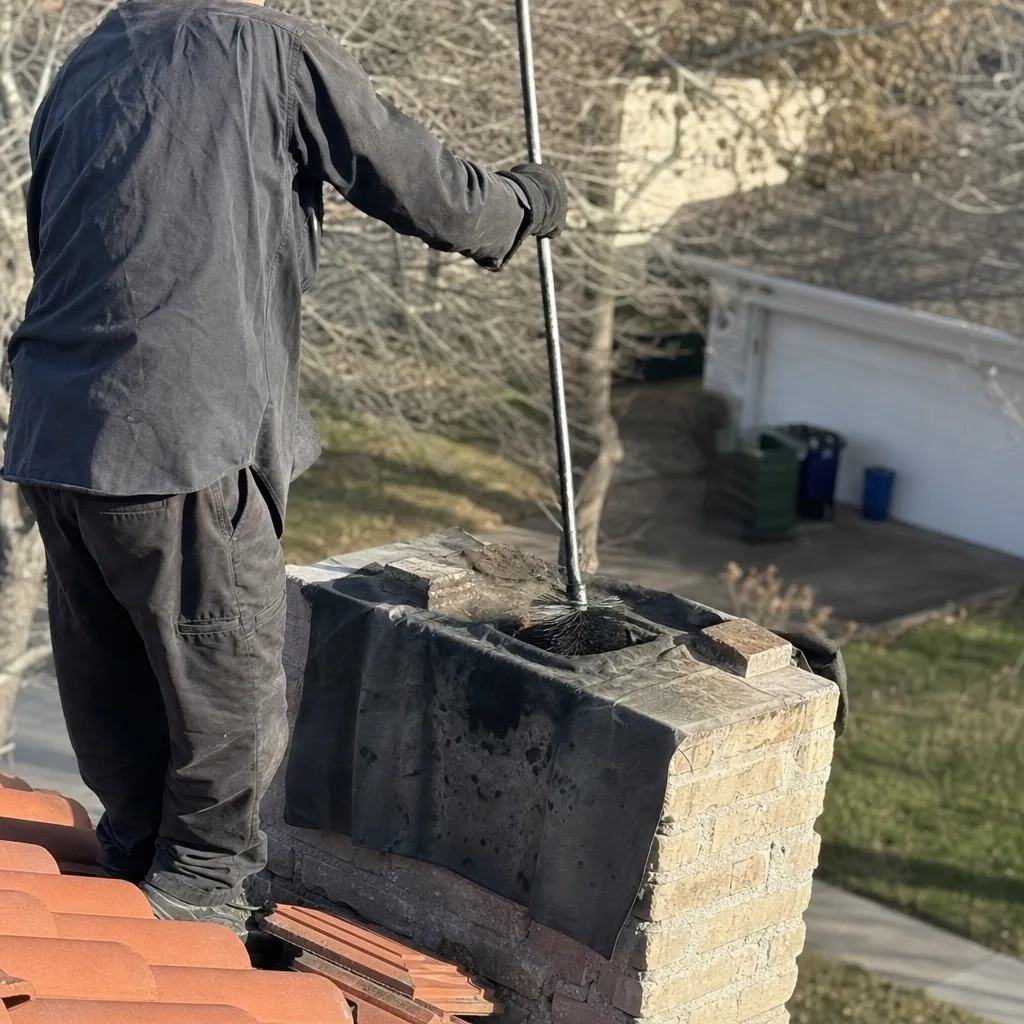
Smoke shelf and damper throat: Open the damper fully. Use your flashlight to inspect the smoke shelf - the flat area behind the damper. Accumulated soot depth matters: more than one-eighth inch suggests it’s time to schedule Chimney Cleaning & Sweep services. Look for bird nests, which in McKinney often contain twigs from live oak or cedar elm, or debris from deteriorated chimney caps. Do not reach into the flue. Note any odor of decay or ammonia, which indicates active animal presence requiring professional removal.
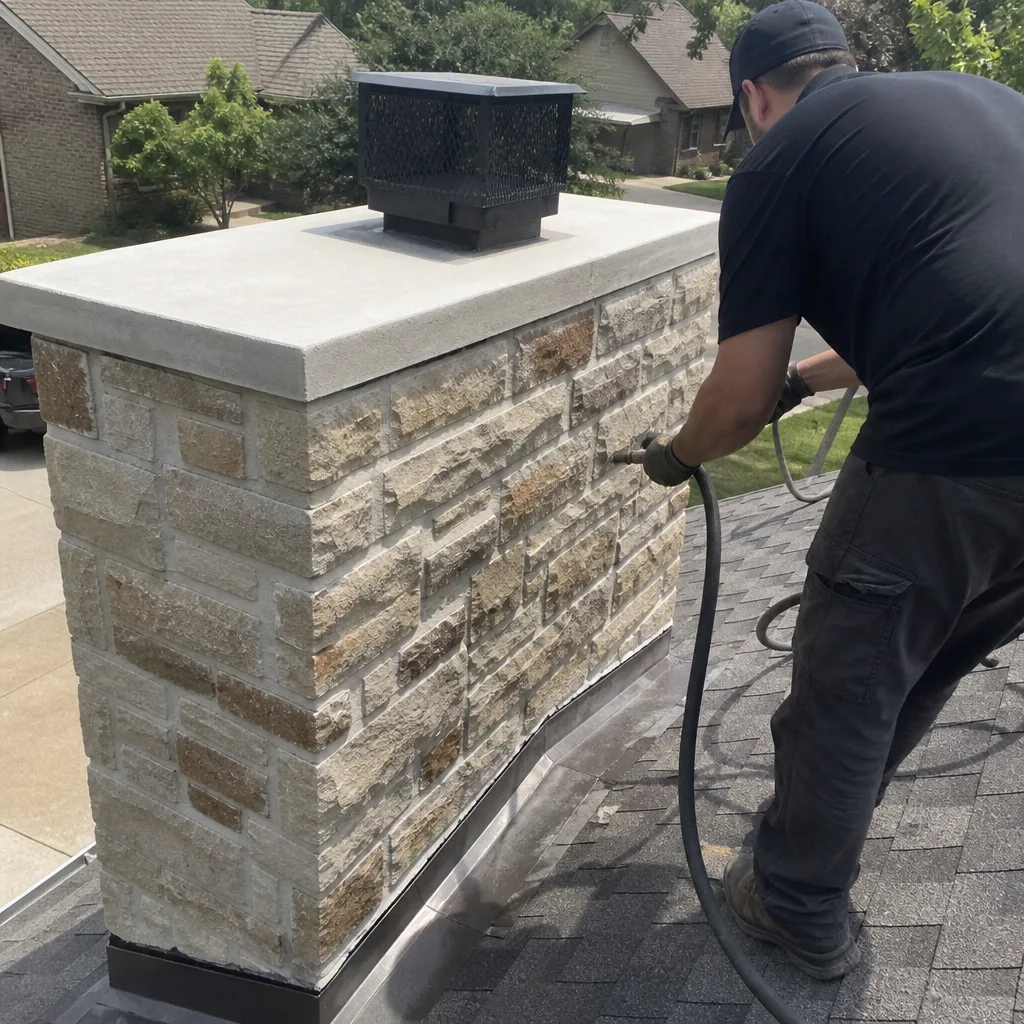
Exterior ground inspection: Walk the roofline from the ground with binoculars if you have them. Check for missing or displaced chimney cap mesh, crown cracks wider than one-sixteenth inch, and flashing that has pulled away from the brick course. After McKinney’s March-May hail season, we replace dozens of chase covers in Estates of Verona and Trinity Falls that homeowners didn’t notice until water appeared on the fireplace face.
Safe DIY limits: If you find any of the above, mark the location and describe it to your sweep. Do not attempt to clean the flue, remove animal nests, or apply sealants. These tasks require proper PPE, containment, and in the case of Class III glazed creosote, chemical treatment that generates toxic runoff.
Firebox and Smoke Shelf: Visual Benchmarks for Damage
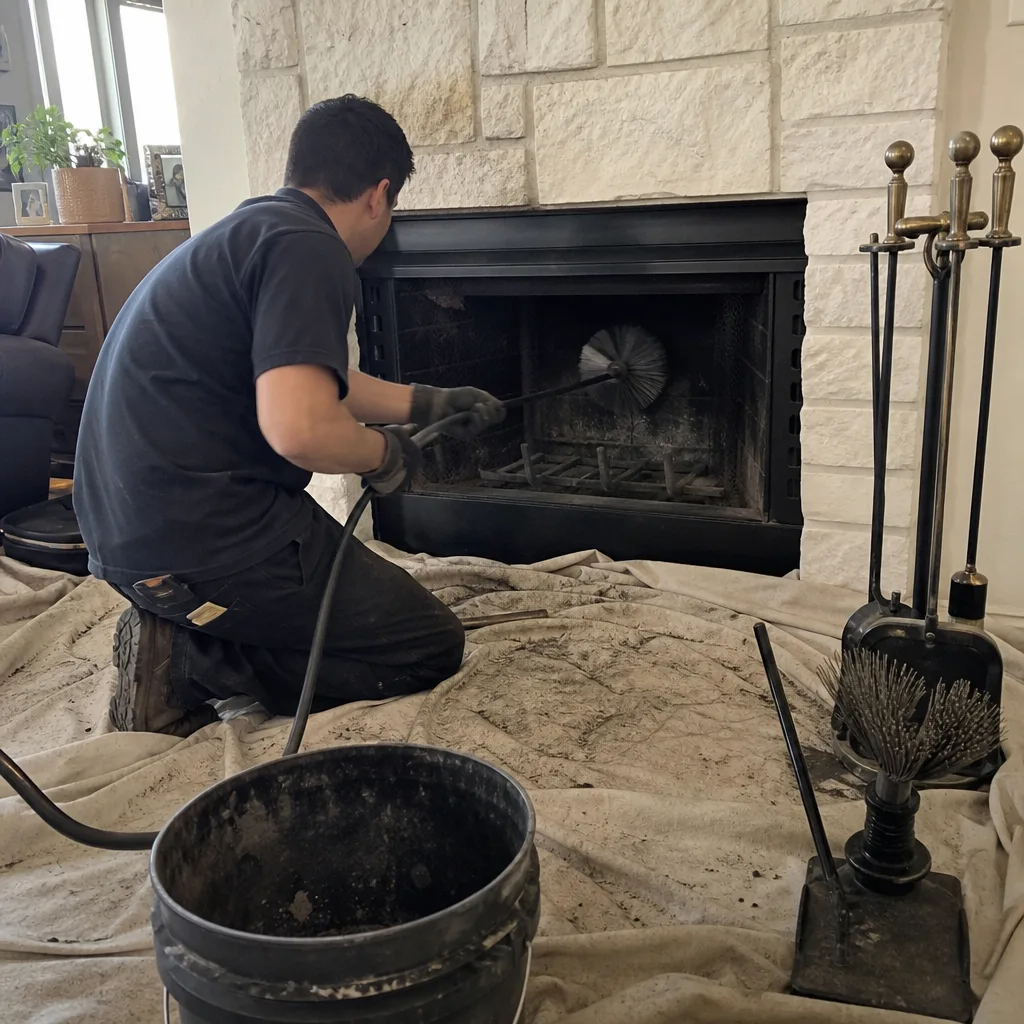
The firebox is where combustion happens, and it’s where homeowners can do the most meaningful pre-professional observation. The key is knowing which defects are cosmetic, which require monitoring, and which mean stop using the fireplace immediately.
Firebrick joint recession: National Fire Protection Association guidelines and our own Haven Standard specify repointing when mortar joints are recessed more than one-quarter inch. Shallower recession is normal aging. In McKinney, where summer temperatures regularly exceed 100°F and winter fires may follow within hours of HVAC shutdown, thermal cycling accelerates joint deterioration. We’ve documented 40% faster joint recession in homes without exterior chimney insulation, common in builds from 2015-2018 in Spicewood at Craig Ranch.
Spalling versus staining: Staining - darkening or light surface discoloration - does not compromise structural integrity. Spalling, where the brick face separates in layers or chunks, exposes the interior to accelerated moisture damage and reduces heat resistance. Any spalled brick in the firebox should be replaced, not patched. HeatShield refractory mortar, which we apply for certain firebox repairs, is rated for this environment but requires professional surface prep and curing control that DIY application cannot achieve.
Smoke shelf depth and condition: The smoke shelf should be flat, level, and free of debris accumulation exceeding one-eighth inch. Its purpose is to block downdrafts and collect falling debris; a degraded shelf allows smoke spillage into the room and provides fuel for chimney fires. In our McKinney inspections, we measure shelf depth from the damper throat to the back wall. Standard construction is 6-8 inches. Less than 4 inches indicates a design or modification problem that affects draft performance.
Hearth extension requirements: The non-combustible hearth extension in front of the firebox must extend at least 16 inches for standard appliances, 20 inches for larger fireboxes. In McKinney’s historic district near downtown, we’ve found original 1920s hearths that don’t meet modern clearances - these require documented evaluation for insurance compliance, not guesswork.
Damper Inspection: Pass-Fail Standards and Draft Loss Thresholds
The damper is the most frequently misdiagnosed component in homeowner inspections. A damper that “seems fine” may be costing 15-25% in heating efficiency, or it may be a safety hazard that won’t show symptoms until a smoky fire forces the issue.
Operational test: With the fireplace cold, open and close the damper through its full range. It should move smoothly without grinding or catching. Note the position when fully open - many homeowners in McKinney’s newer developments assume their damper is open when it’s actually stuck at 60% closure, a common finding in homes where construction debris entered the flue during build-out.
Plate condition: Remove any visible rust scale with a wire brush (gentle, surface only - this is still observation, not repair). Look for warping greater than one-eighth inch from flat when the plate is laid on a known flat surface. A warped plate cannot seal fully when closed, wasting conditioned air year-round, and creates turbulence when open that reduces draft efficiency. We’ve replaced dampers in Trinity Heights where warping exceeded three-sixteenths inch - the threshold where draft loss becomes measurable in blower door tests.
Frame and pin integrity: The pivot pin should seat firmly in both frame brackets without vertical play exceeding one-sixteenth inch. Frame cracks at the bracket welds are failure points that require replacement, not welding repair - the heat-affected zone from field welding compromises the metal’s temper.
Top-sealing damper conversion indicators: If your throat damper has failed twice in ten years, or if your flue liner is being replaced, a top-sealing damper from Gelco or Famco is often the better long-term solution. These mount at the flue terminus and seal with a silicone gasket rather than metal-on-metal contact. They add approximately $400-$650 to a sweep visit in the McKinney market, including installation and adjustment. Unlike throat dampers, they also function as chimney caps, eliminating a separate component.
Draft measurement context: Professional evaluation includes draft pressure measurement with a manometer. Acceptable draft varies by flue height, appliance type, and local atmospheric conditions. In McKinney’s relatively low elevation (approximately 600 feet) and humid subtropical climate, we see slightly lower baseline draft than mountain regions. A reading below 0.02 inches water column with a hot fire indicates restriction, leakage, or inadequate flue height - all requiring professional diagnosis.
Exterior Crown, Flashing, and Chase Cover: McKinney-Specific Failure Modes
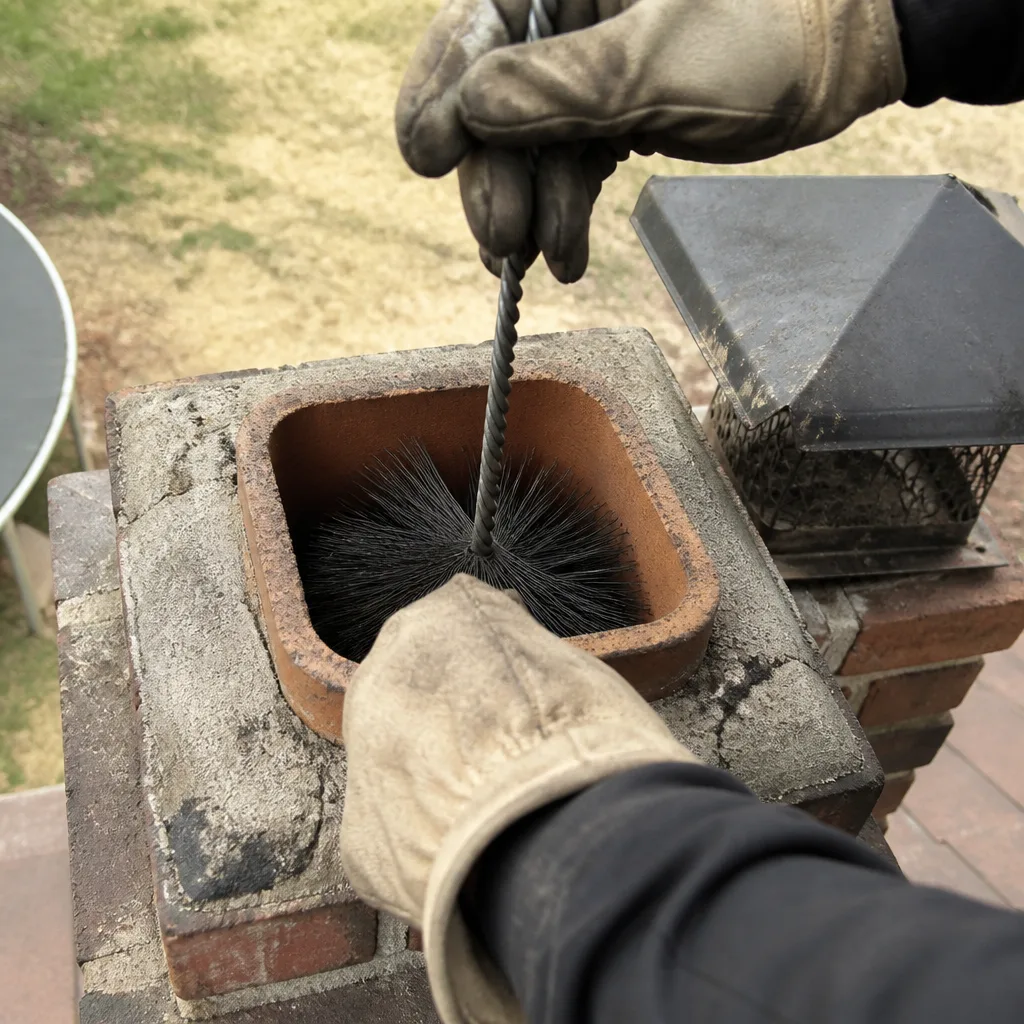
North Texas geology and climate create exterior chimney failure patterns that national checklists miss entirely. McKinney homeowners need benchmarks tuned to clay soil movement, hail exposure, and thermal stress that exceeds most U.S. markets.
Crown cracks and the clay soil factor: McKinney sits on expansive clay soils, particularly in western neighborhoods like Frisco Ranch and McKinney Ranch. These soils swell when wet and shrink during drought, creating differential foundation movement that transmits to chimney structures. Crown cracks from this movement typically appear as vertical or stair-step patterns following mortar joints, rather than the random map cracking from freeze-thaw cycles seen in northern climates. A crown crack wider than one-sixteenth inch is active and requires sealing or rebuild. Wider than one-eighth inch, and water is already reaching the reinforcing mesh or concrete body, accelerating deterioration.
Proper crown construction benchmark: A correctly built crown has a minimum two-inch overhang beyond the chimney face, slopes at least one-quarter inch per foot away from the flue, and is constructed with Portland cement-based mix, not mortar. The flue tile should project at least two inches above the crown surface with a gap filled by flexible sealant, not rigid mortar. In McKinney’s summer heat, rigid filler cracks within two seasons. We’ve rebuilt crowns in Stonebridge Ranch where original construction used mortar instead of proper crown mix - these fail predictably within 5-7 years.
Flashing inspection points: Step flashing should extend at least four inches up the chimney face and be embedded in mortar joints, not surface-mounted with sealant only. Counterflashing should overlap step flashing by at least three inches. Look for lifted corners, sealant separation, or rust perforation. After hail events common in March through May, we find dented counterflashing in McKinney that compromises the overlap seal without visible leaks until wind-driven rain occurs.
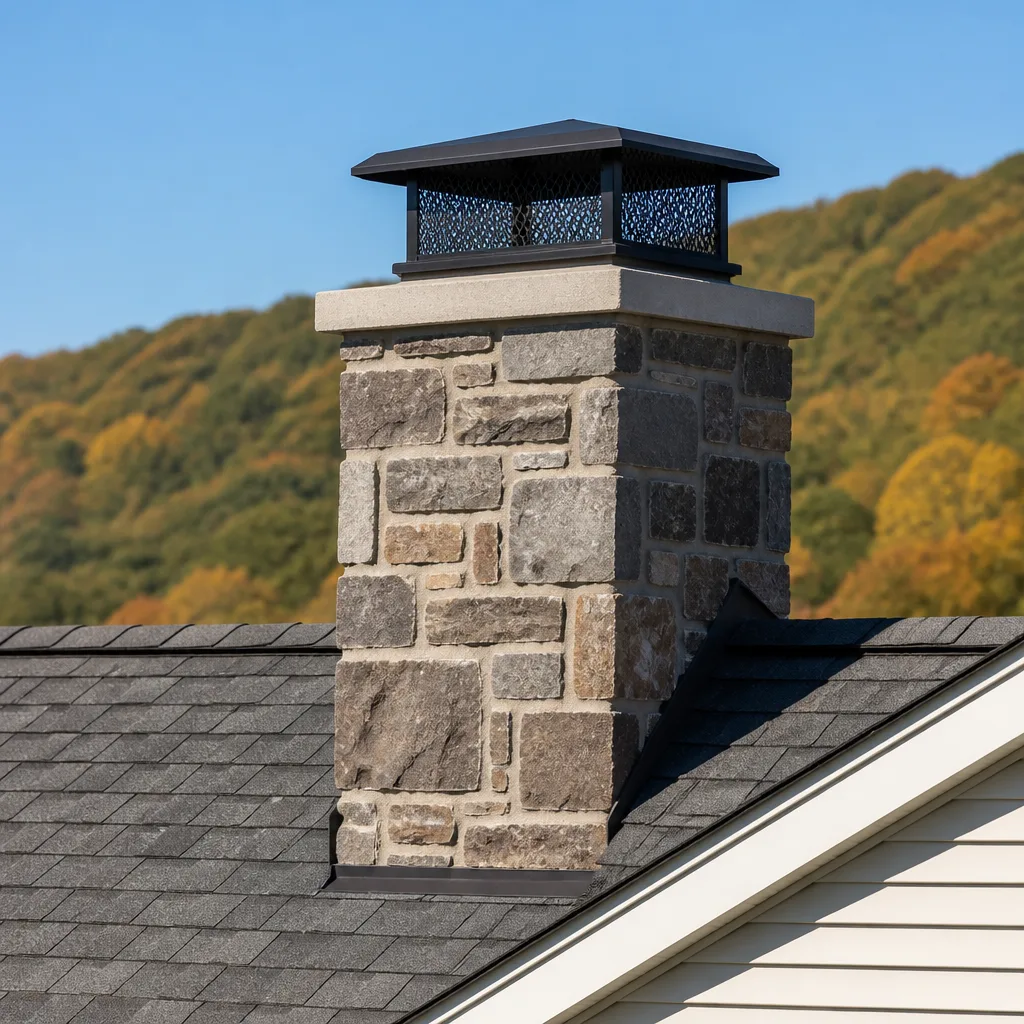
Chase cover condition on factory-built chimneys: Prefabricated chimney chase covers, typically galvanized or stainless steel, should sit flat without ponding, have welded or cross-broken seams (not flat sheet with sealant), and include a minimum one-inch drip edge. Rust staining on the chase siding below the cover indicates failure. In McKinney’s climate, galvanized covers last 7-12 years; stainless steel or copper from Olympia Chimney’s product line typically exceeds 20 years. We replace chase covers most frequently in 2005-2015 builds where original galvanized covers have reached end of service.
Cap and spark arrestor mesh: Mesh should be 5/8-inch or 3/4-inch stainless steel, intact without corrosion holes, and secured to the cap frame. Smaller mesh clogs with creosote; larger mesh admits birds and debris. In McKinney’s mature neighborhoods with heavy tree canopy, we recommend annual cap inspection for leaf and seed accumulation that restricts airflow.
What Requires a Licensed Professional: NFPA 211 Level 2 Standards
Some checklist items are safe homeowner observation. Others require training, equipment, and licensing. The National Fire Protection Association’s NFPA 211 standard defines three inspection levels. Level 1 is visual, accessible surfaces only. Level 2, which we perform on every Chimney Cleaning & Sweep in McKinney, requires internal camera inspection of the flue, roof access, and inspection of attics and crawl spaces where the chimney passes through. Level 3 involves demolition of building materials and is reserved for suspected hazards requiring full access.
Homeowner-safe observation only: Ground-level exterior inspection, firebox visual check from the opening, damper operation test, hearth extension measurement, and documentation of concerns for professional follow-up.
Requires professional equipment and training:
- Flue liner camera inspection: A chimney fire can occur with no visible exterior warning. Only a camera lowered through the flue can identify cracked clay tile liners, joint separation, or spalling that creates creosote accumulation points. Our Haven Standard Clause 4 requires this documentation on every job, a practice we’ve maintained since 2009.
- Creosote classification and removal: Creosote accumulates in four stages. Stage 1 is soot, removable with brushes. Stage 2 is granular, requiring rotary equipment. Stage 3 is glazed, a hardened tar-like deposit that demands chemical treatment and mechanical removal - generating toxic waste that requires proper containment. Stage 4 is restricted airflow with heavy glaze, often requiring liner replacement. Misidentified creosote stage leads to incomplete removal and fire risk.
- Smoke chamber parging: The smoke chamber above the damper must be smooth to guide smoke into the flue. Corbelled brick or rough surfaces create turbulence and creosote accumulation. Parging with approved refractory material, such as HeatShield’s chamber coat system, requires surface preparation and application technique that affects cure and adhesion.
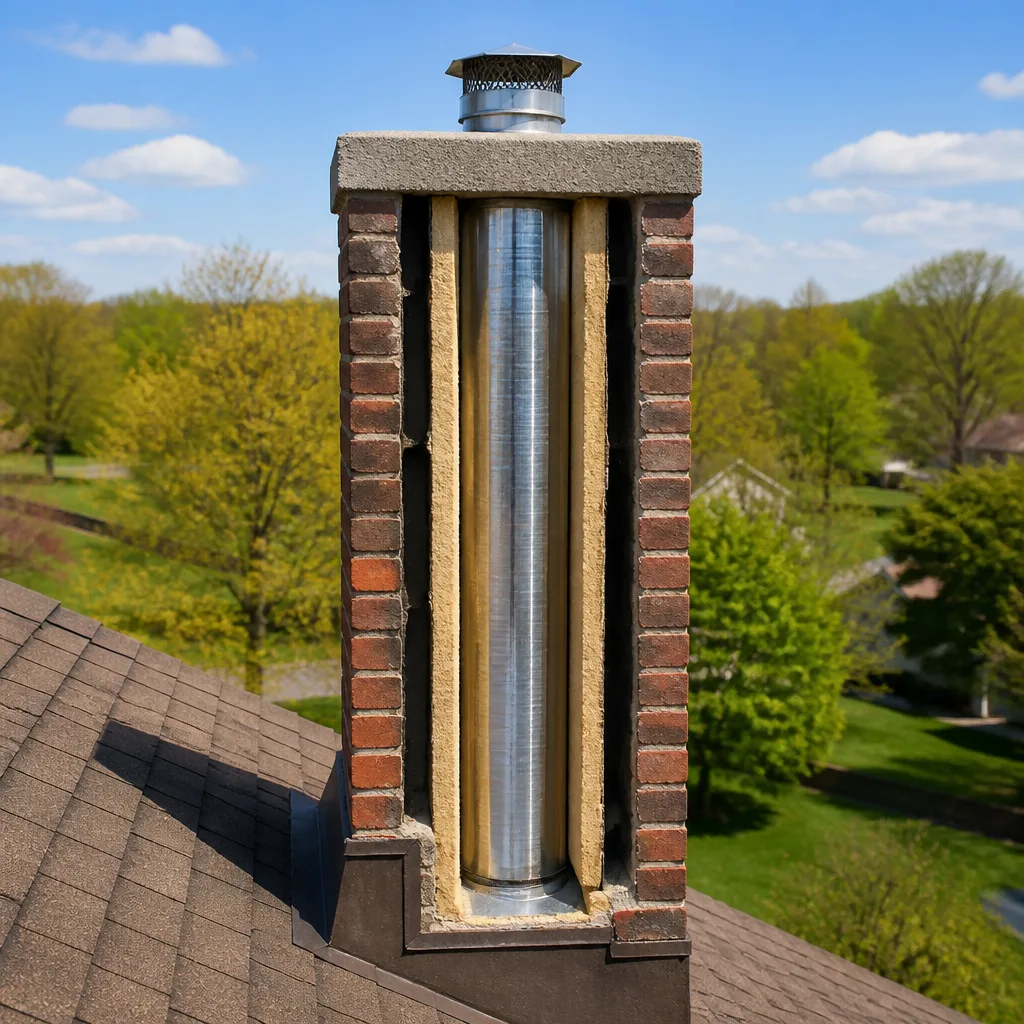
- Liner installation and sizing: A liner must be correctly sized to the appliance. Oversized liners cool flue gases too quickly, causing condensation and accelerated creosote formation. Undersized liners restrict draft and can cause smoke spillage. Sizing calculations use appliance BTU output, flue height, and connector pipe configuration - not guesswork.
- Crown rebuild and flashing replacement: These involve working at height, proper material specification for local climate, and waterproofing details that determine service life. In McKinney, where summer UV exposure is extreme, crown sealant selection specifically affects 5-year versus 15-year performance.
Why we default to Level 2: After 38,000 inspections, we’ve found that Level 1 misses approximately 30% of conditions that affect safety or require repair disclosure. A homeowner in McKinney’s Viridian community might have a fully functional fireplace with a cracked liner segment hidden above the smoke shelf - functional until it isn’t, typically during the first heavy-use fire of the season. Camera inspection eliminates this uncertainty.
Post-Service Verification: Confirming the Work Matches the Invoice
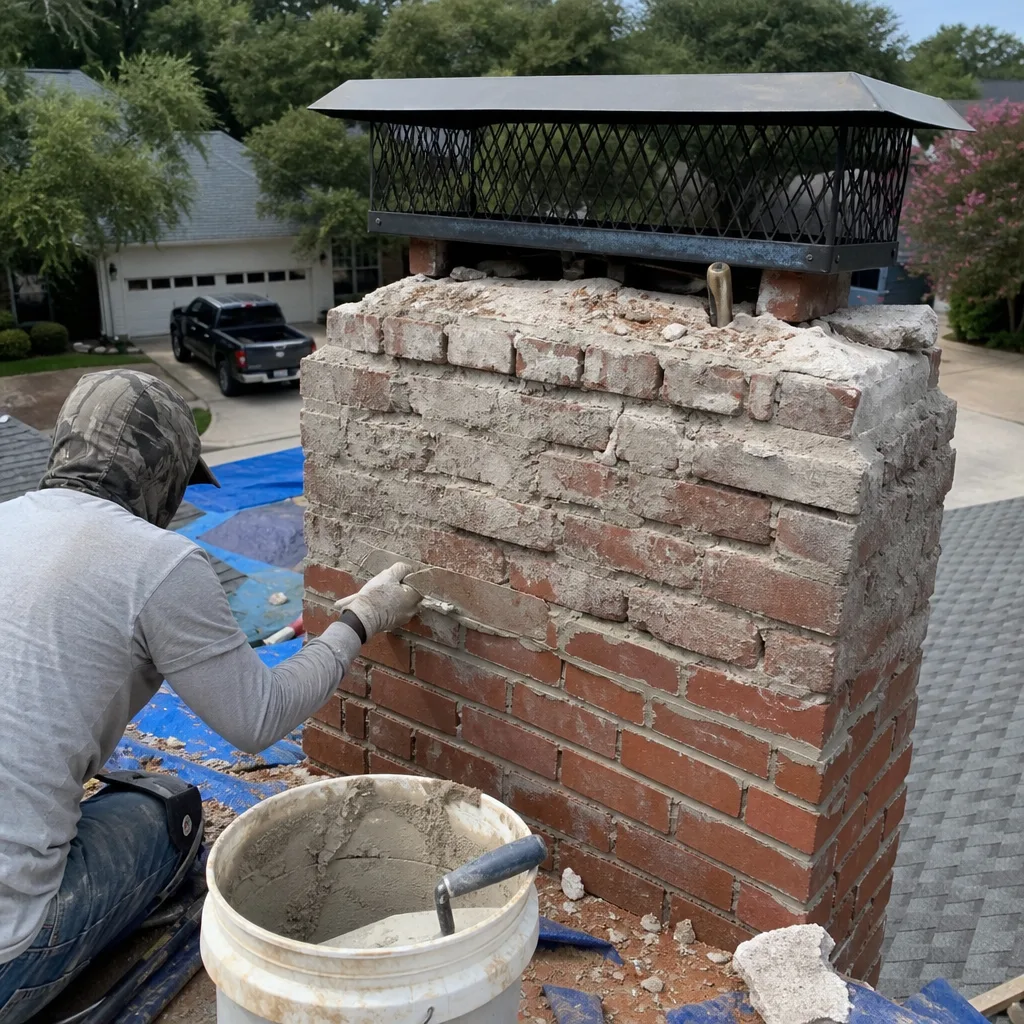
The most important checklist is the one you run after the technician leaves. Professional chimney service should leave behind verifiable evidence, not just a clean firebox and a receipt.
Immediate visual verification:
- Firebox should be free of soot and debris, with firebrick faces visible and distinguishable. A “clean” firebox with blackened mortar joints indicates surface-only cleaning, not complete removal.
- Damper should operate smoothly through full range, with no grit or resistance. If replaced, the new damper should be the specified type - throat or top-sealing - with visible brand marking where accessible.
- Hearth and surrounding area should be protected by drop cloths during service and left clean. Soot tracking on carpet or flooring indicates poor containment protocol.
Documentation verification: Before payment, you should receive four items minimum. First, before-and-after camera images of the flue interior, with timestamps or job reference numbers. Second, a written description of creosote depth and classification found. Third, the written price you agreed to before work began, matching the invoice total. Fourth, warranty terms in writing. Under Haven Standard Clause 1, our written price, scope, and warranty are delivered before any work starts - not after the technician is in your home.
Specific red flags: Recommendations for liner replacement, crown rebuild, or masonry repair made without camera evidence you can see. Claims of “urgent” conditions that don’t match the visual documentation. Invoice totals exceeding the written estimate without change order documentation signed by you. In McKinney’s competitive sweep market, we’ve provided hundreds of Free Second Opinions on competitor estimates where the scope didn’t match the documented condition.
The 365-Day Done Right Promise verification: Our warranty is stamped on every job record. If work requires correction within 365 days, we return and make it right. Ask any sweep: what does your warranty cover, for how long, and how do I invoke it? Vague answers suggest warranty theater, not actual protection.
Documentation Standards: What You Should Walk Away With
Documentation is where professional service separates from casual labor. After any chimney service in McKinney, you should possess a complete record that supports insurance claims, real estate transactions, and future service decisions.
Required documentation on every professional visit:
- Before/after camera images: Clear, dated photographs of the flue interior showing liner condition, joint integrity, and any anomalies. These should be labeled with location (flue segment or height reference) and readable without enhancement. Haven Standard Clause 4 has required this since 2009.
- Creosote depth reading and classification: Measured in inches or millimeters at multiple points, with classification as Stage 1-4. This determines when your next sweep is due and whether chemical treatment was necessary.
- Written price, scope, and warranty: The estimate you approved, the work performed, and warranty terms in a single document. Not a handwritten ticket. Not a verbal promise.
- Condition assessment with recommendations ranked by urgency: Immediate safety concerns, maintenance items due within 12 months, and monitoring items for future inspection. This prevents the common problem of all recommendations seeming equally urgent.
- Appliance and flue specification record: Manufacturer, model, liner diameter and material, cap type, and damper type. Essential for future service compatibility and for buyers if you sell.
Digital versus paper: We provide both. Digital records survive floods and moves; paper records are immediately accessible for real estate inspections. In McKinney’s active resale market, particularly in 2015-2022 builds now turning over, documented chimney condition supports faster sales and reduces buyer negotiation pressure.
Archive retention: Professional records should be maintained by the service company for minimum seven years. We maintain ours indefinitely - every one of our 38,000+ jobs is searchable by address, with the original camera images, written price, and completion documentation intact.
How Often to Run This Checklist in McKinney’s Climate
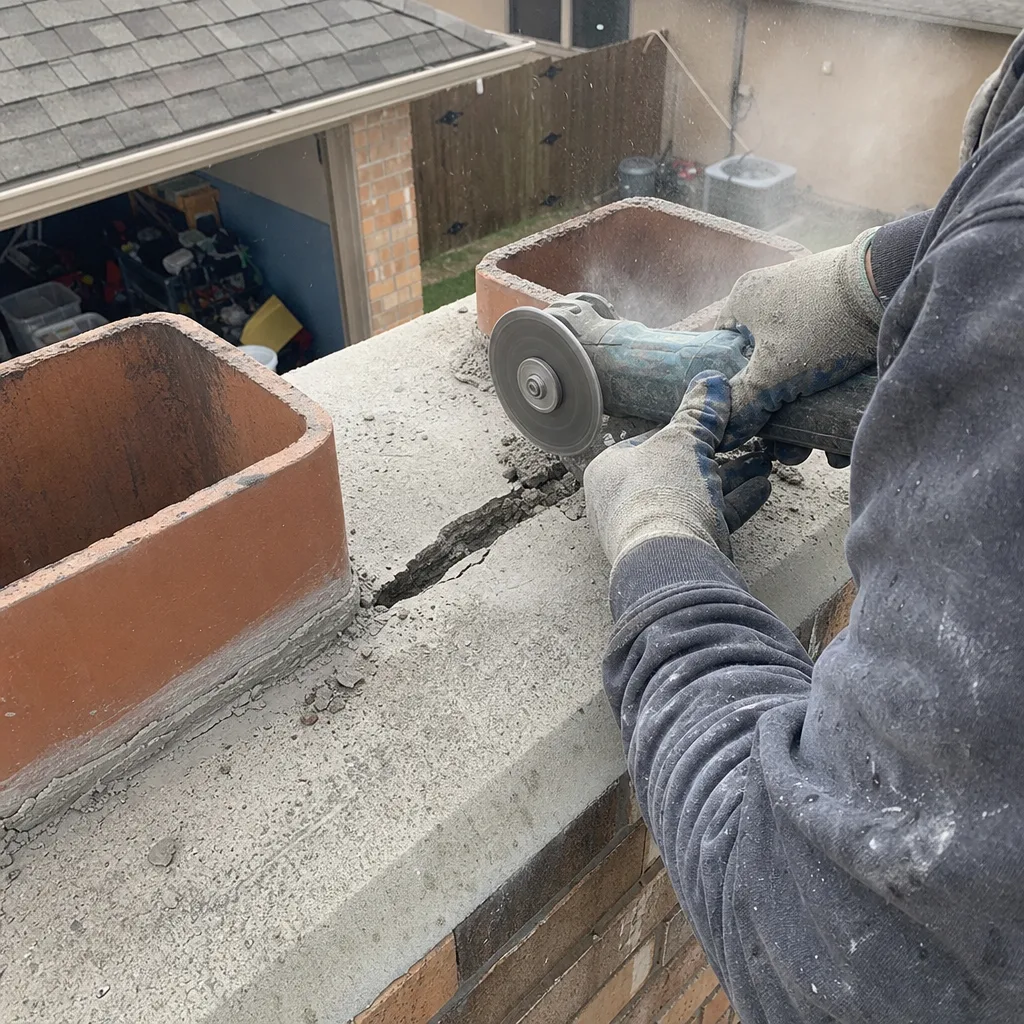
Frequency depends on use, fuel, and local conditions. McKinney’s climate creates specific timing considerations that differ from national one-size-fits-all guidance. Our The Complete Guide to Chimney Cleaning in McKinney covers local schedules in detail.
Annual sweep minimum: NFPA 211 recommends annual inspection for all chimneys, regardless of use. For wood-burning appliances, sweep when creosote accumulation reaches one-eighth inch. In practice, McKinney homeowners burning oak or mesquite 2-3 times weekly during November through February typically reach this threshold in 12-18 months. Those burning pine or softwoods, or using the fireplace as primary heat, may need semi-annual service.
Gas appliance inspection: Gas fireplaces and inserts require annual inspection of burner operation, venting integrity, and carbon monoxide spillage potential. McKinney’s hard water produces mineral accumulation on gas log sets that affects flame pattern and sooting. We inspect and clean these during Fireplace Services in McKinney visits.
Pre-burning season timing: Schedule professional service in August through October. This avoids the October-December rush, allows time for repairs before first use, and identifies animal nesting or moisture damage from summer storms. In McKinney, our peak booking begins September 15; August appointments typically offer more flexible scheduling.
Post-hail event inspection: After significant hail, add exterior crown, cap, and chase cover inspection to your checklist even if the chimney wasn’t directly struck. Vibration and wind pressure can dislodge caps and crack crowns. We see this pattern consistently after McKinney’s spring storm season.
Real estate transaction timing: Sellers should complete inspection 30-45 days before listing to allow repair scheduling. Buyers should request Level 2 inspection during option period, with documentation review before closing. In McKinney’s fast-moving market, we’ve seen transactions delayed when chimney conditions surface late in negotiation.
Common Mistakes to Avoid
- Assuming no smoke problems means no problems: A chimney can be actively hazardous with normal draft and no visible smoke spillage. Liner cracks and creosote accumulation often produce no symptoms until failure. Camera inspection is the only verification.
- Using the wrong fuel for your appliance: Burning construction scraps, treated wood, or paper with colored ink in a standard fireplace creates toxic emissions and accelerated creosote. In McKinney’s active renovation market, we’ve found pressure-treated lumber and pallet wood in fireboxes during inspection - both produce arsenic and copper emissions.
- Ignoring summer moisture: McKinney’s spring storms and humid summers drive water into crown cracks and failed flashing. Homeowners who only think about chimneys in October often find September damage that could have been addressed months earlier.
- Accepting verbal estimates: Any scope beyond basic sweep should be documented in writing before work begins. Verbal pricing invites scope expansion and dispute. Haven Standard Clause 1 exists specifically because we’ve seen the alternative damage customer trust.
- DIY chemical creosote treatments without professional follow-up: Commercial creosote modifiers can reduce accumulation but do not remove existing glazed deposits. Used without mechanical removal, they create a false sense of security and can produce corrosive runoff that damages metal components.
- Neglecting the smoke chamber: Even conscientious homeowners who schedule regular flue sweeping often miss smoke chamber condition. This area above the damper is where many chimney fires actually begin, and it’s invisible without proper access and lighting.
- Replacing components without addressing cause: A second failed damper in five years suggests oversizing, poor draft, or moisture corrosion - not bad luck. Component replacement without diagnosis wastes money and repeats failure.
When to Call a Professional
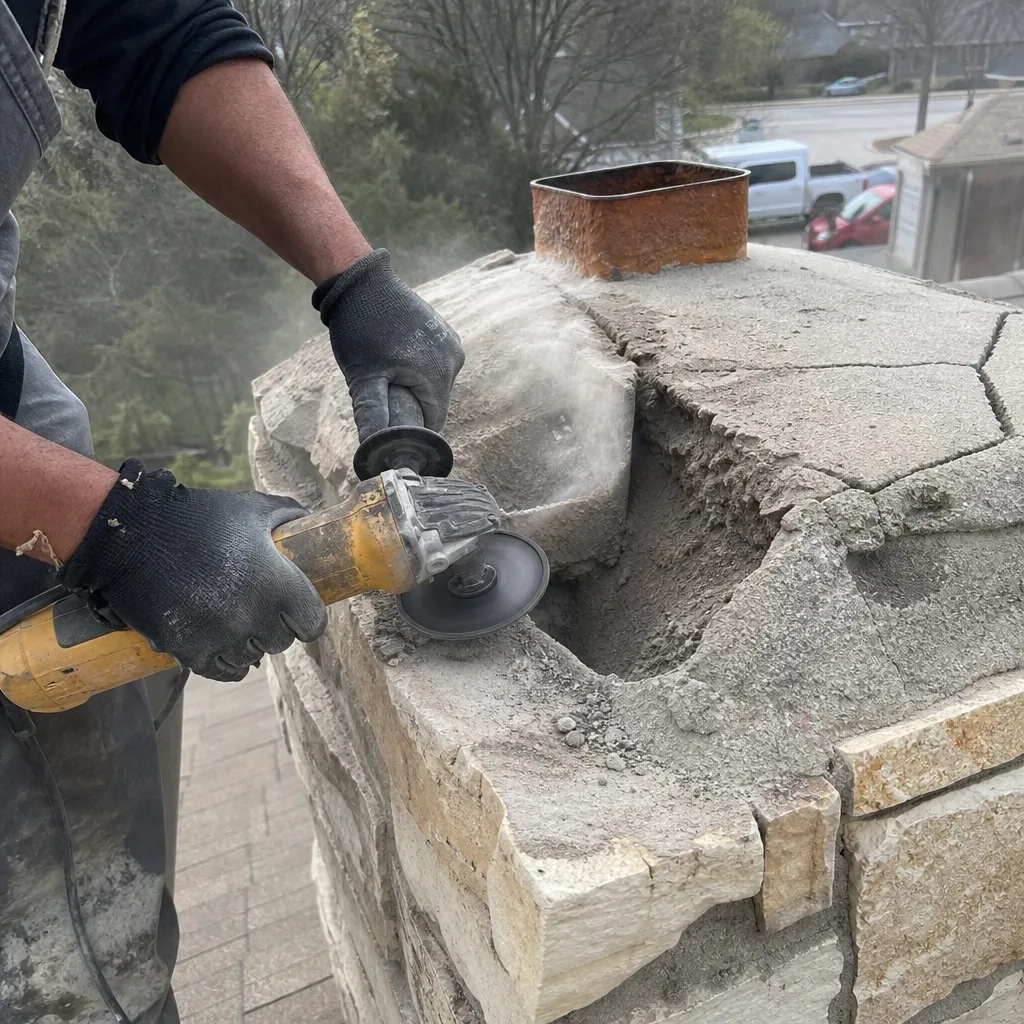
Call a licensed chimney professional when your walkthrough reveals any of the following: firebox cracks through brick rather than mortar, damper operation that sticks or won’t fully seal, exterior crown cracks wider than one-sixteenth inch, flashing separation or rust, animal presence or odor, or any accumulation you cannot identify. Also call before first use of a new home’s fireplace, after any chimney fire event (even minor), and when purchasing or selling a home.
For McKinney homeowners, Level Two Chimney McKinney home provides NFPA 211 Level 2 inspection with camera documentation, written pricing before any work begins, and the 365-Day Done Right Promise. Free estimates are available - call (469) 429-2623. We also offer Free Second Opinion on any competitor’s written estimate, with no obligation.
Frequently Asked Questions
A professional chimney sweep in McKinney typically ranges from $199 to $349 for a standard NFPA 211 Level 2 inspection with cleaning, depending on appliance type, accessibility, and creosote condition. Factory-built fireplaces with straight flues fall at the lower end; masonry fireplaces with multiple flues or heavy glazed creosote require additional labor and chemical treatment. Level Two Chimney McKinney delivers a written price before any work starts - call (469) 429-2623 for an exact quote; estimates are free.
You need a new liner when the existing one is cracked, separated at joints, or improperly sized for the appliance - conditions that camera inspection reveals and that we document with photographs you can review. A cracked clay tile liner can allow heat transfer to combustible framing, and an oversized liner causes creosote condensation. We recommend replacement only with camera evidence you can see, and we’ll show you exactly which segments are affected and which can safely remain. Call (469) 429-2623 for a documented evaluation.
Annual inspection is the minimum for all chimneys; sweep frequency depends on use and fuel. Most McKinney homeowners with occasional wood-burning use (1-2 fires weekly, November through February) need sweeping every 12-18 months. Heavy use, softwood burning, or gas appliance sooting may require more frequent service. The definitive measure is creosote accumulation - sweep when it reaches one-eighth inch depth anywhere in the flue.
Skipped maintenance leads to three predictable outcomes: creosote accumulation increases chimney fire risk, moisture intrusion degrades liners and masonry, and minor defects become major repairs. In McKinney’s climate, we’ve seen crown cracks progress from $200 sealant repairs to $2,400 rebuilds within three years of neglect. Carbon monoxide spillage from blocked or damaged flues presents the most serious risk, with no warning odor or visible symptom. The cost of scheduled maintenance is consistently lower than emergency repair or damage remediation.
You can perform surface soot removal from the firebox and hearth, and you can observe the conditions described in this checklist. Flue cleaning, creosote classification, liner inspection, and component replacement require professional equipment and training. Class III glazed creosote removal involves chemical agents and mechanical equipment that generate toxic waste; improper handling exposes you and your household to hazardous compounds. For safety and documentation, professional service is the appropriate choice.
McKinney’s specific conditions include expansive clay soil movement that cracks crowns and separates flashing, hail exposure that dents chase covers and dislodges caps, and extreme summer heat that accelerates mortar joint failure and sealant degradation. The city’s rapid growth from 2010-2020 also means many chimneys were built during periods of high construction velocity, with variable quality control. We’ve documented higher rates of incomplete smoke chamber parging and improper crown construction in 2015-2019 McKinney builds compared to surrounding markets.
The Bottom Line
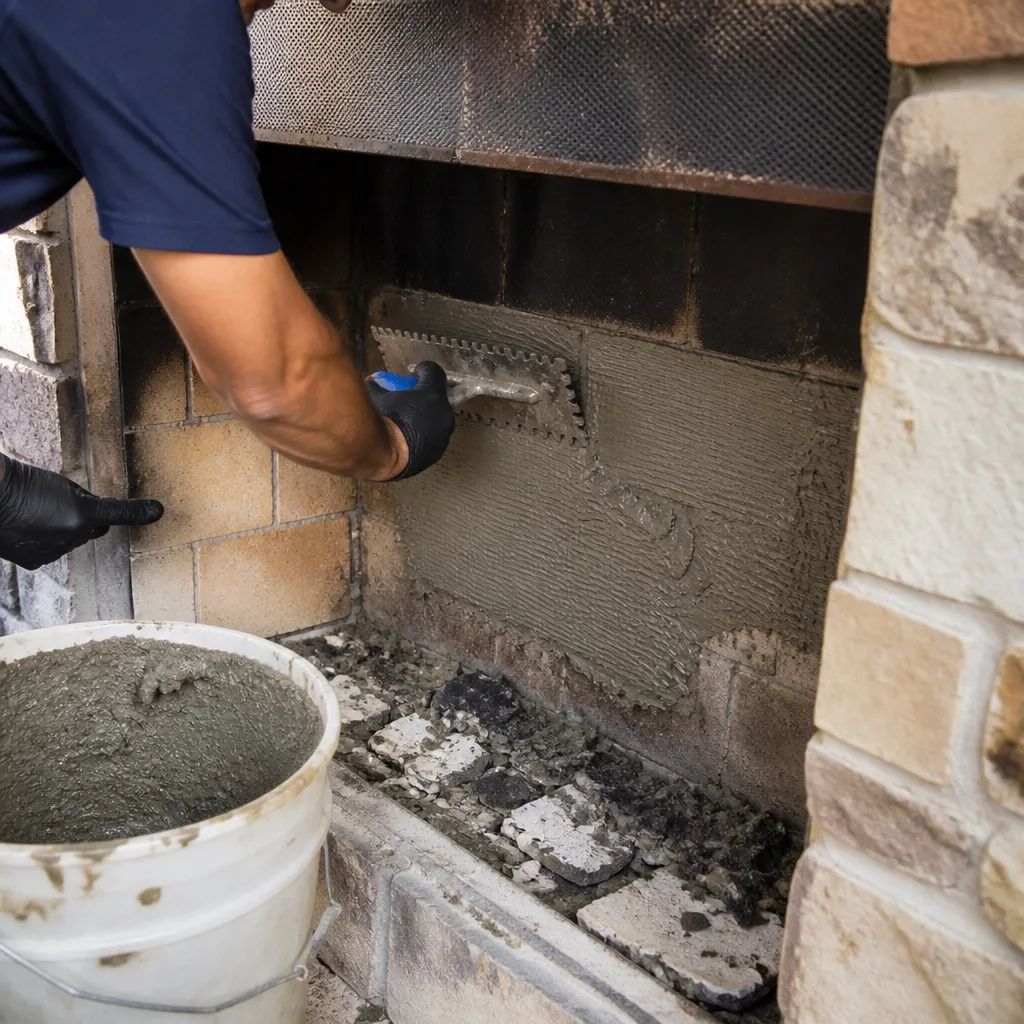
A chimney maintenance checklist is only as good as the benchmarks it provides. This guide gives McKinney homeowners specific pass-fail thresholds for firebox condition, damper operation, exterior integrity, and documentation standards - the same measurements professionals use. Run the pre-sweep walkthrough yourself to surface concerns and protect against unnecessary sales. Verify post-service documentation against the invoice to confirm work completed matches work charged. And recognize that McKinney’s clay soils, hail exposure, and thermal cycling create failure patterns requiring local expertise, not generic national guidance. For camera-documented inspection, written pricing before work begins, and the 365-Day Done Right Promise, Chimney Repair in McKinney and full sweep services are available through Level Two Chimney McKinney.
Written by Corrine Halstead, Owner at Level Two Chimney McKinney, serving McKinney since 2009.