
Last updated September 22, 2026
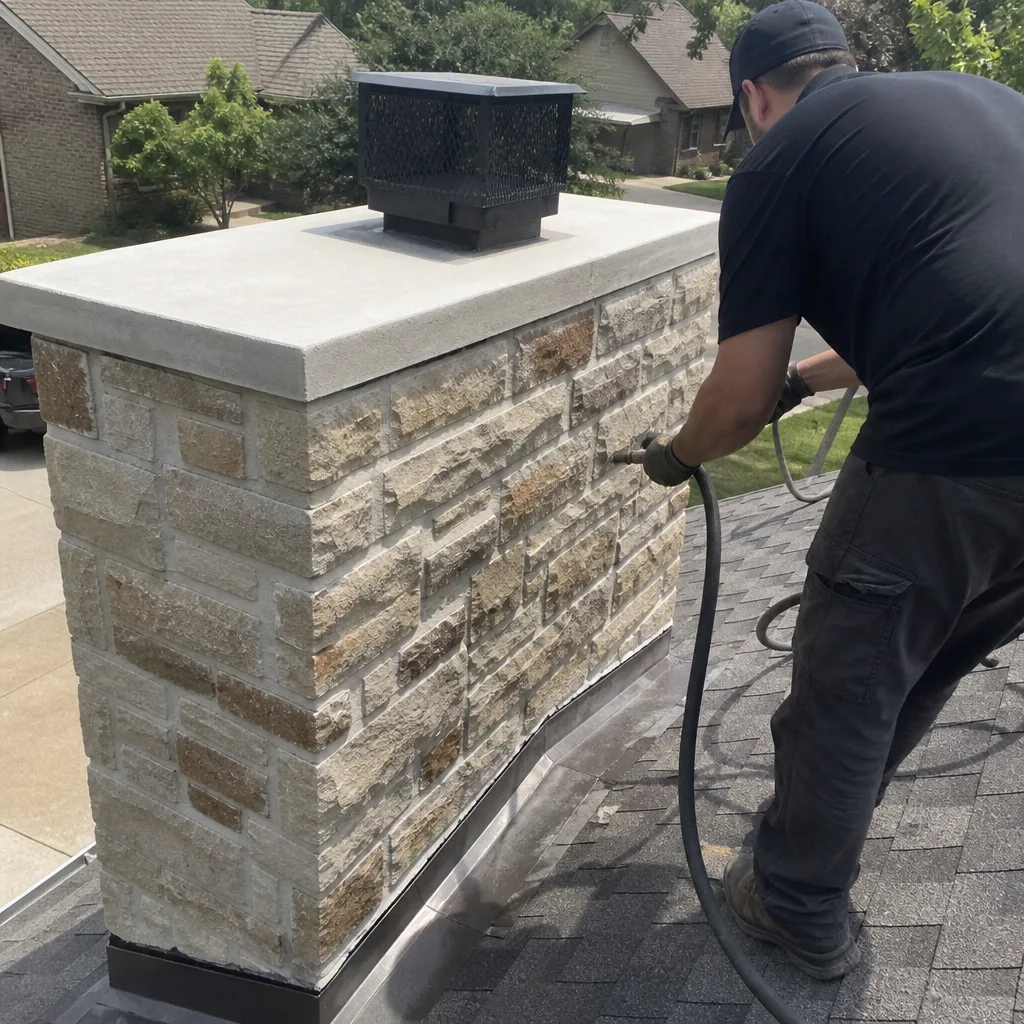
Level 1 sweep and inspection to the NFPA 211 annual standard - flue, crown, cap, and flashing checked and photographed
Chimney sweep logs do not sweep chimneys. They loosen some creosote - which then falls where a brush and vacuum still have to collect it.
Masonry repairGas fireplace service
 Before
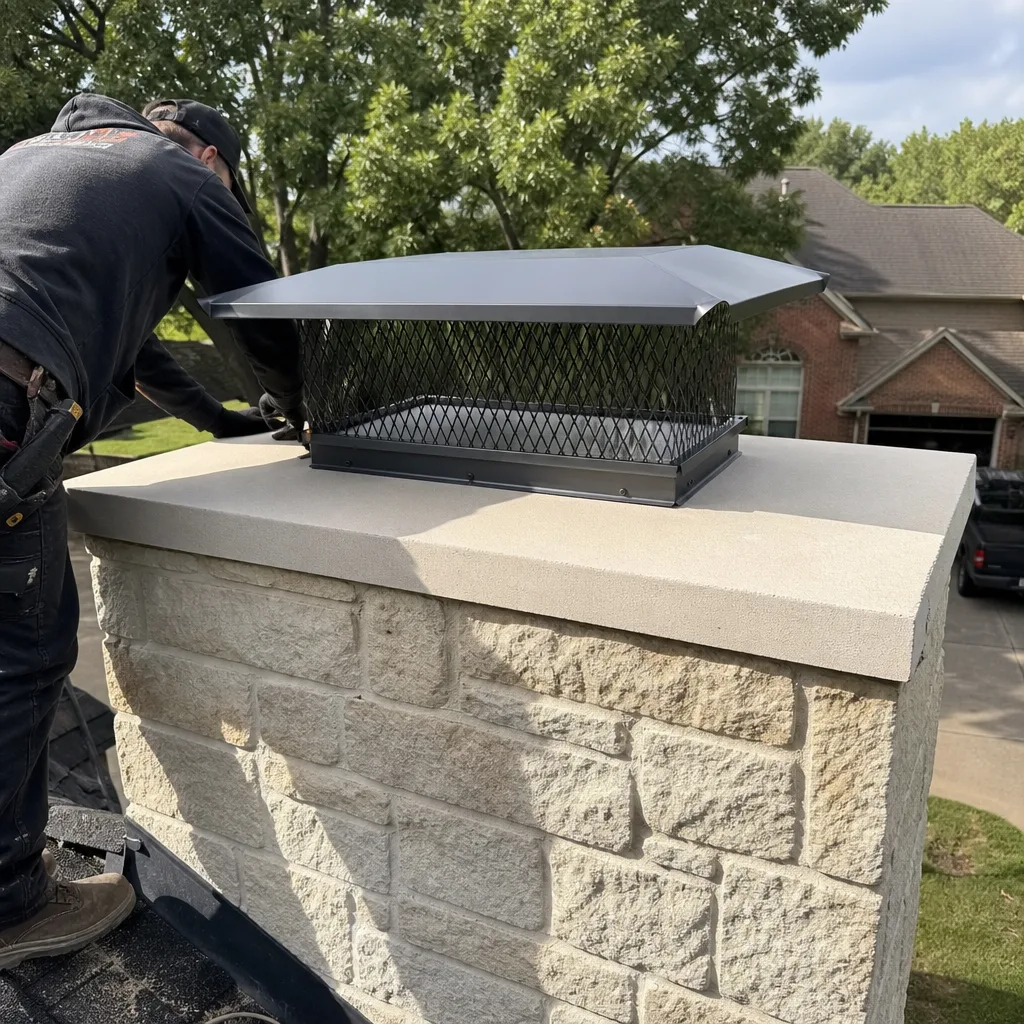 After
After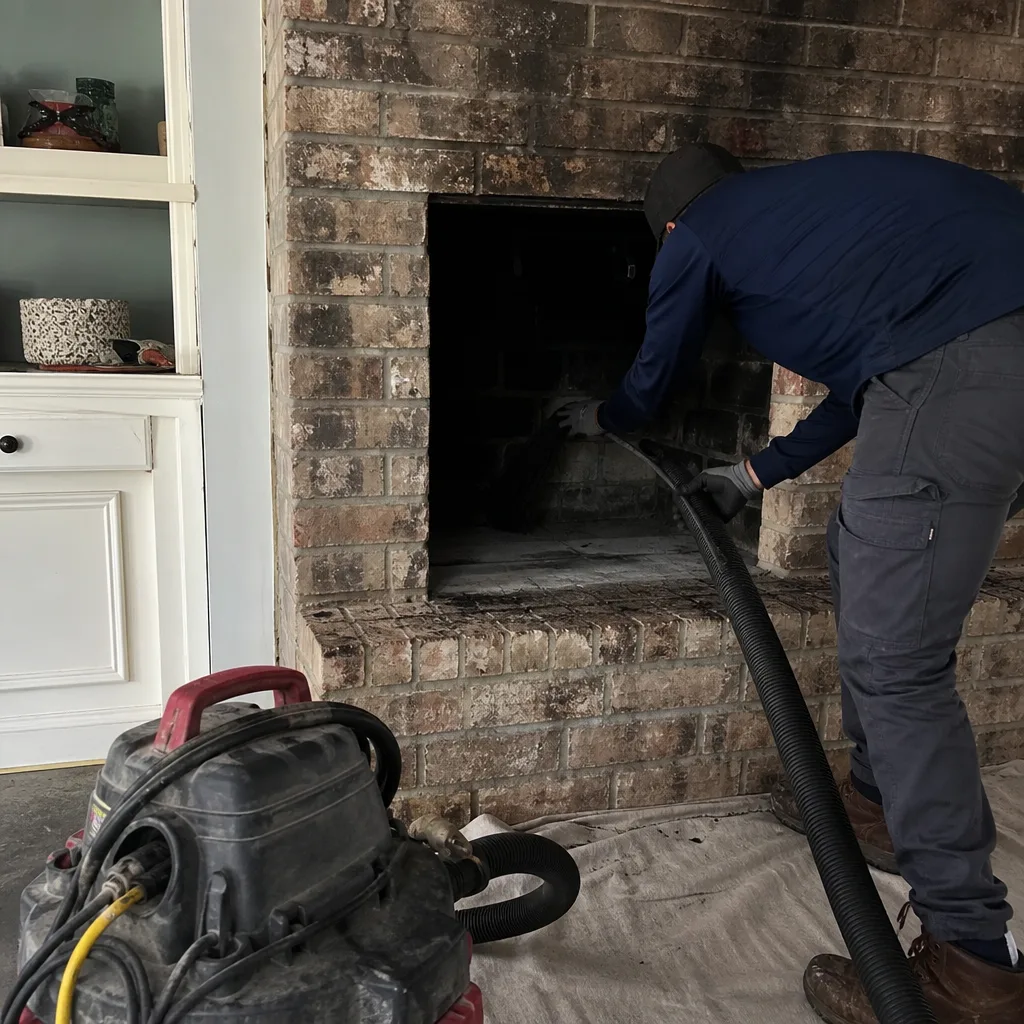 Before
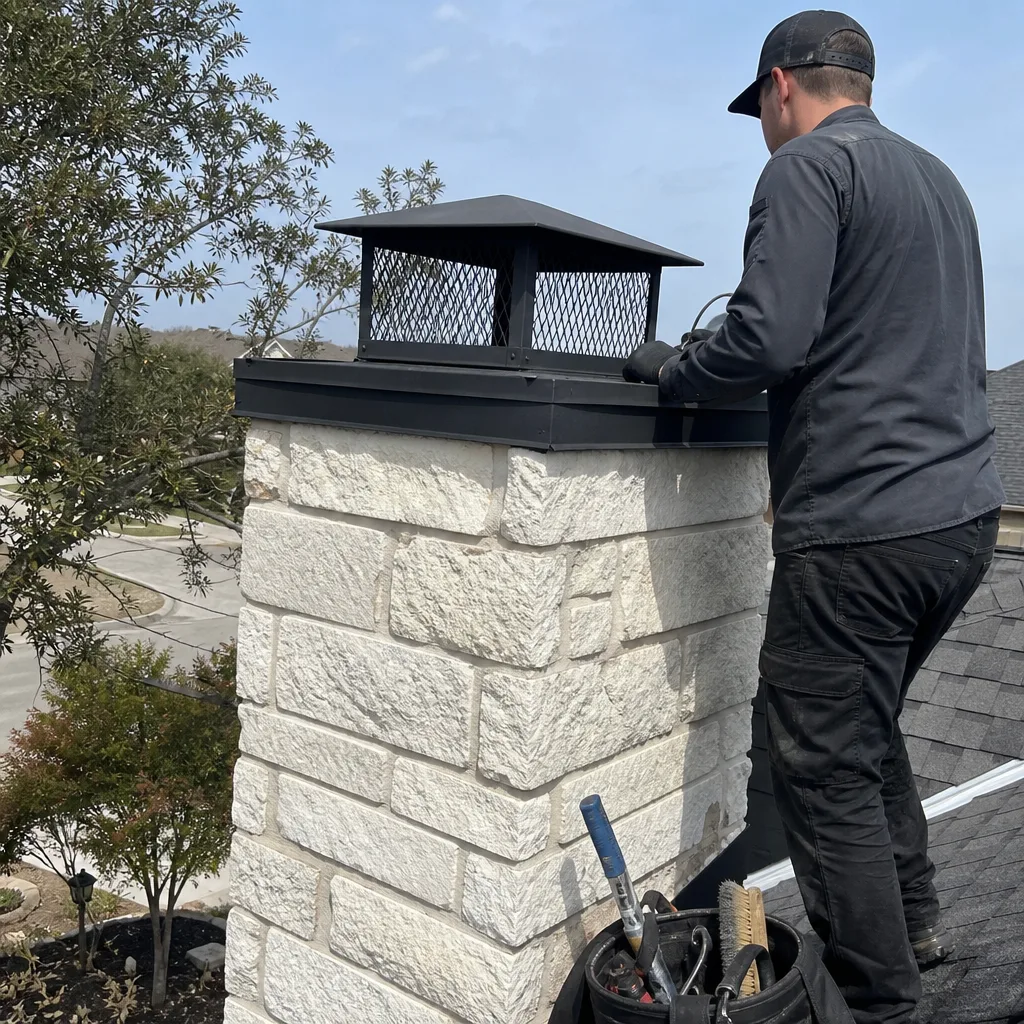 After
After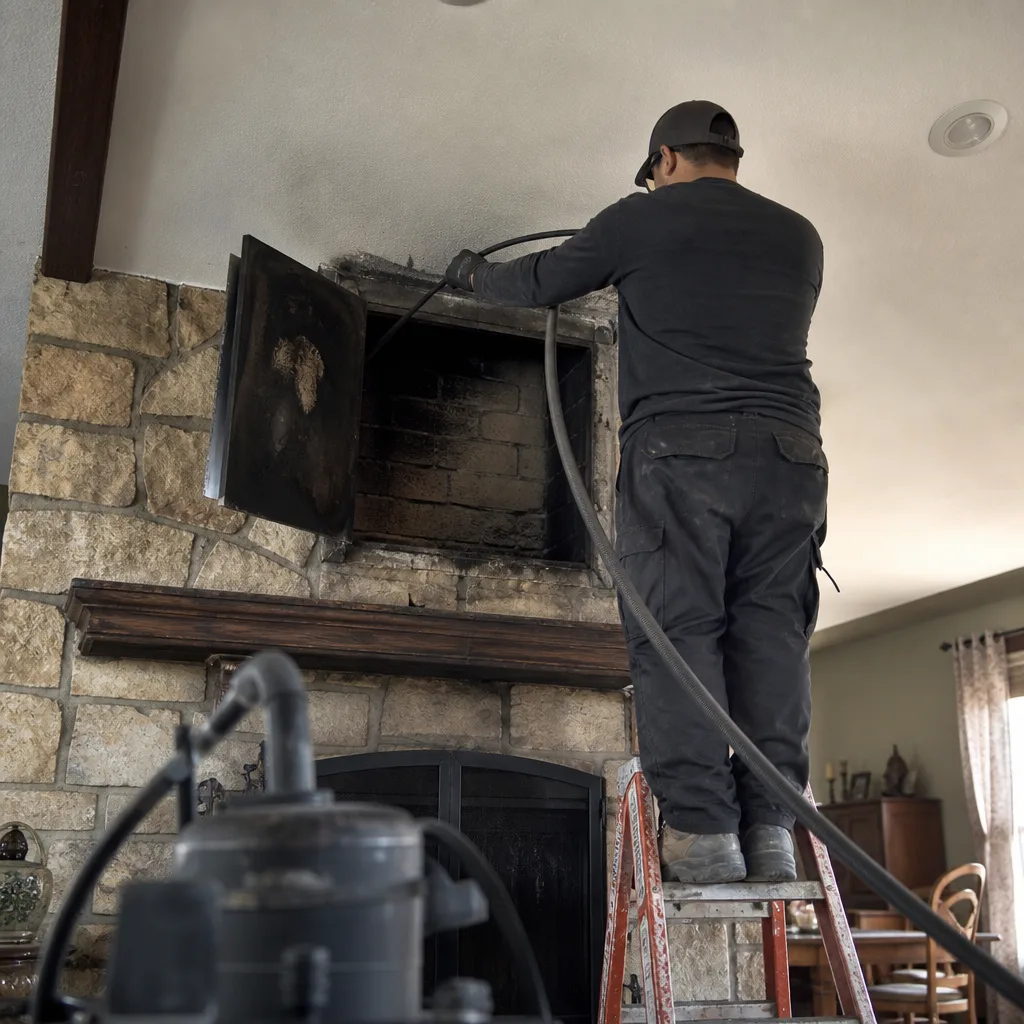 Before
 After
AfterThe Complete Guide to Chimney Cleaning in McKinney
Here’s a number that stops most McKinney homeowners cold: NFPA data shows 30% of chimney fires happen in systems that were “recently cleaned.” The sweep removed the creosote but missed the cracked flue liner or deteriorated mortar joint that let it ignite. In McKinney, where clay tile liners from the 1990s and 2000s building boom are now reaching critical age, this gap between cleaning and inspection is especially costly. This guide walks through what chimney cleaning actually involves, how often your specific setup needs it, and why the camera scan matters more than the brush.
Quick Answer
Chimney cleaning in McKinney typically costs $199-$349 for a standard sweep with NFPA 211 Level 2 camera inspection included. Most wood-burning systems in McKinney need cleaning after every 1-2 cords of oak or mesquite burned, which for average use means annually before burn season starts in October. Gas systems need less frequent debris removal but still require annual inspection for vent integrity, particularly given North Texas wind patterns and freeze-thaw cycles that stress exterior masonry.
Table of Contents
- What Chimney Cleaning Actually Involves
- The Three Types of Creosote and Why They Matter
- How Often Should You Clean Your Chimney in McKinney?
- Sweep vs. Inspection: Know What You’re Paying For
- McKinney-Specific Factors: Clay Tiles, Burn Wood, and Local Codes
- What Your Post-Cleaning Record Should Include
- Costs and Pricing for Chimney Cleaning in McKinney
- Common Mistakes to Avoid
- When to Call a Professional
- Frequently Asked Questions
- The Bottom Line
 Before
 After
AfterWhat Chimney Cleaning Actually Involves
A proper chimney sweep is not a vacuum job. It’s a mechanical process that removes combustible deposits from the flue, smoke chamber, and firebox so they can’t fuel a chimney fire. At Level Two Chimney McKinney home, we follow a sequence developed across 38,000+ visits since 2009.
The process breaks down into five stages:
- Pre-work documentation. We photograph the exterior crown, cap, and visible flue opening before anything moves. This establishes baseline condition and protects both parties if pre-existing damage is present.
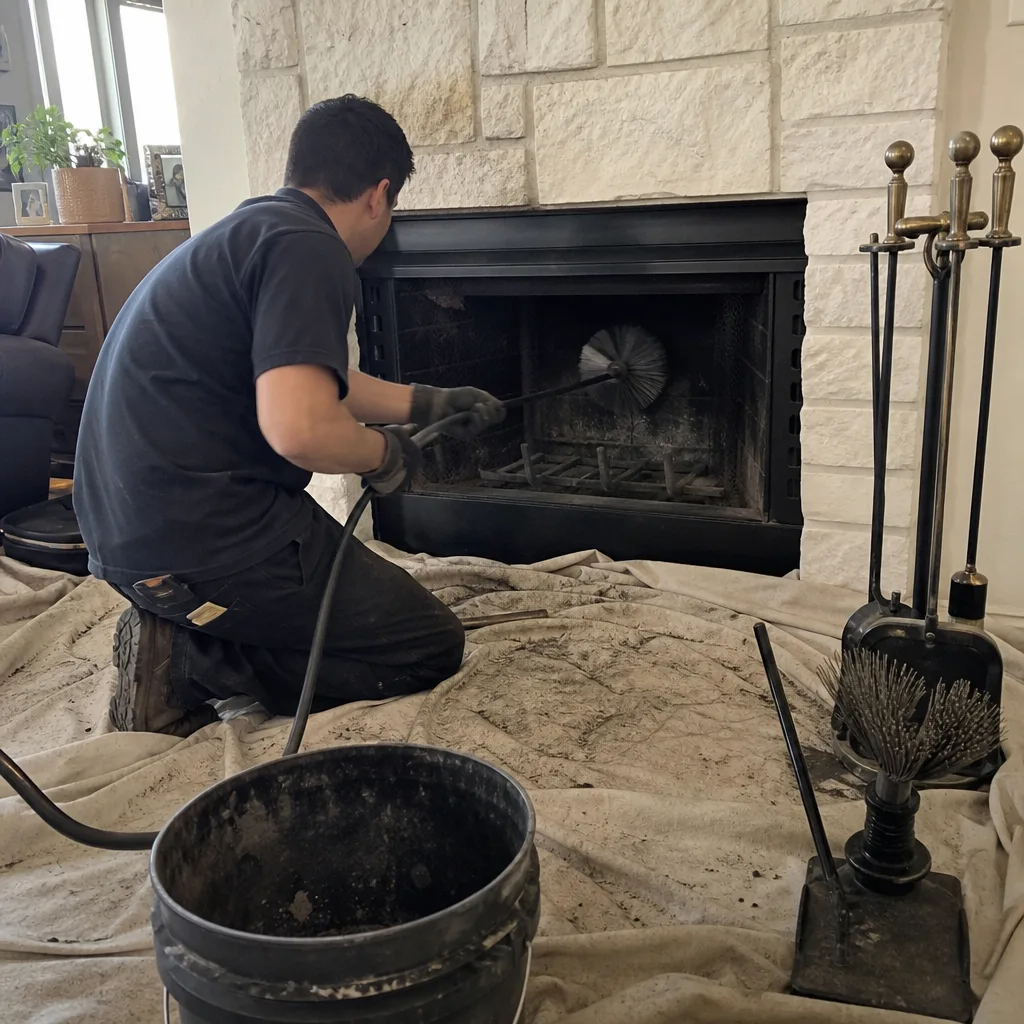
- Interior containment. Drop cloths seal the work area. A high-velocity vacuum runs continuously to capture airborne particulate, not just the debris the brush knocks loose.
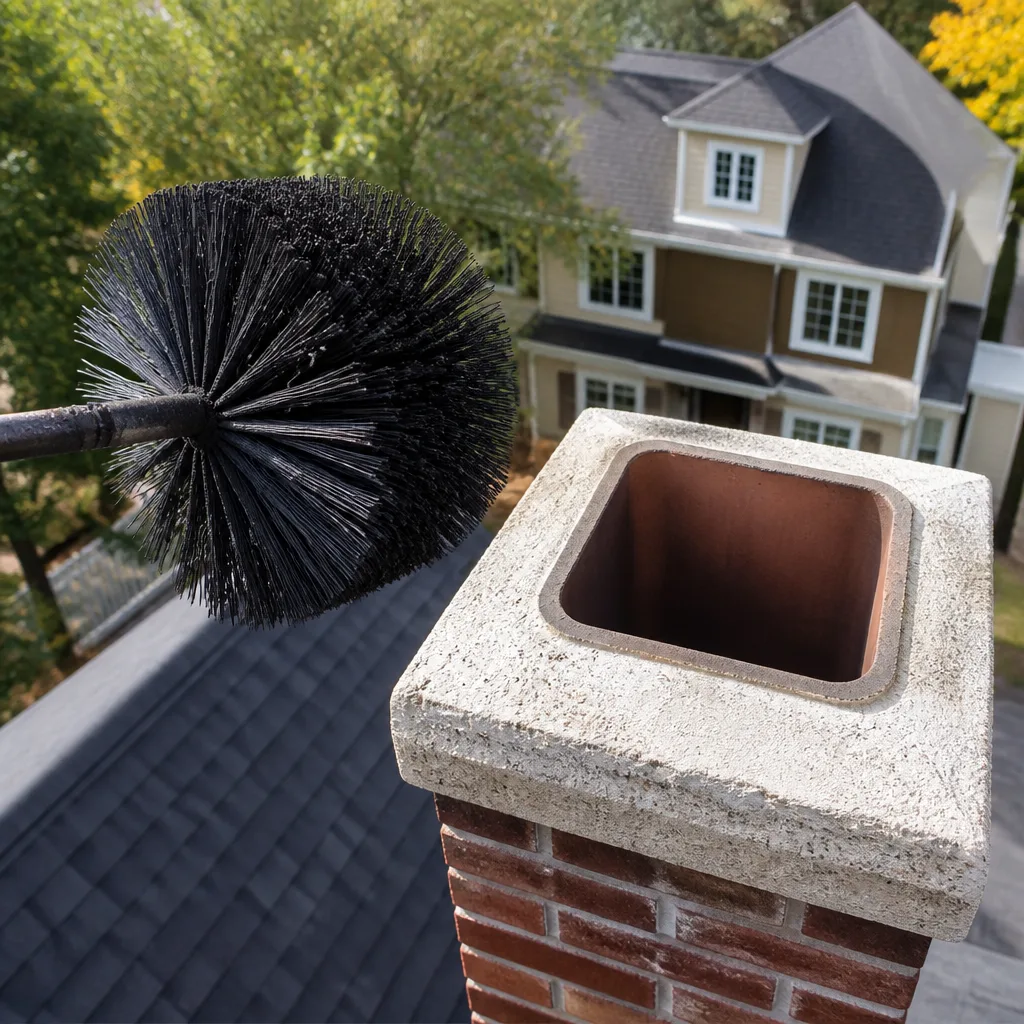
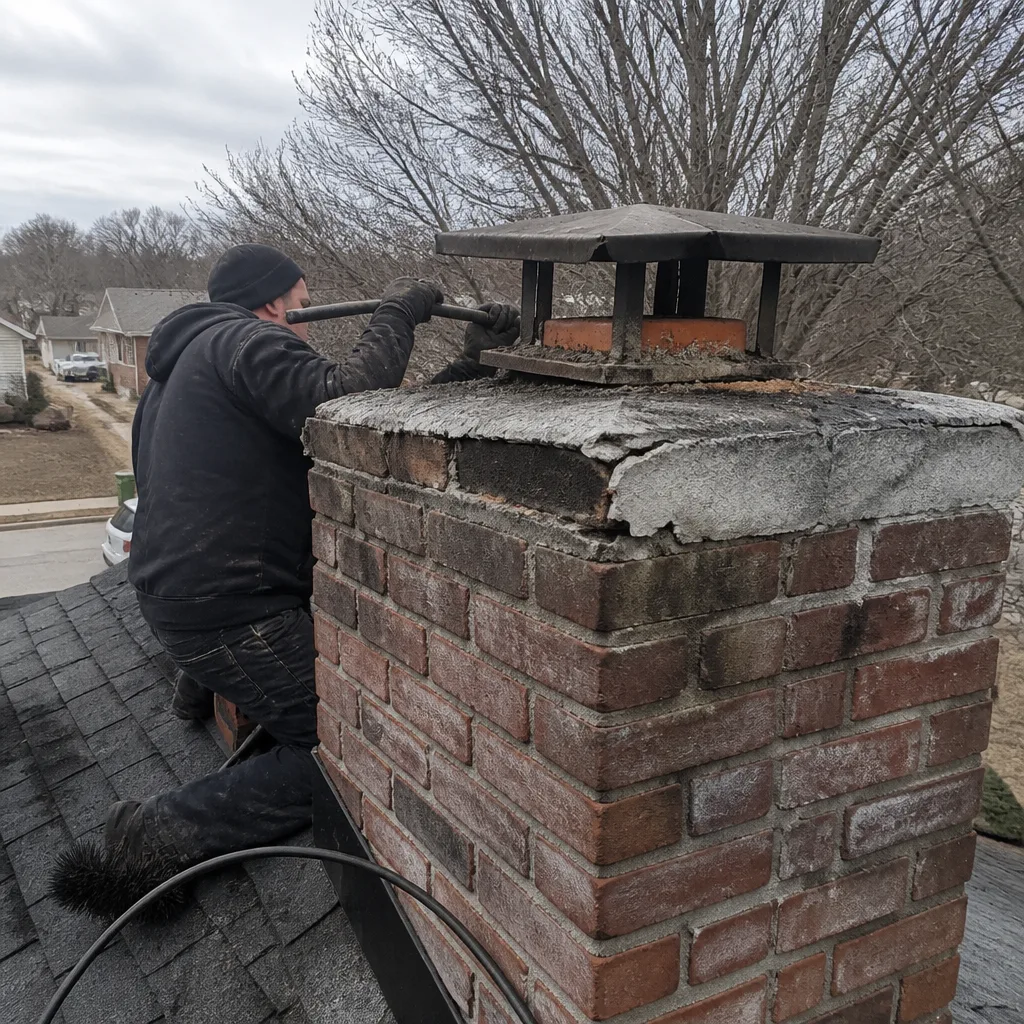
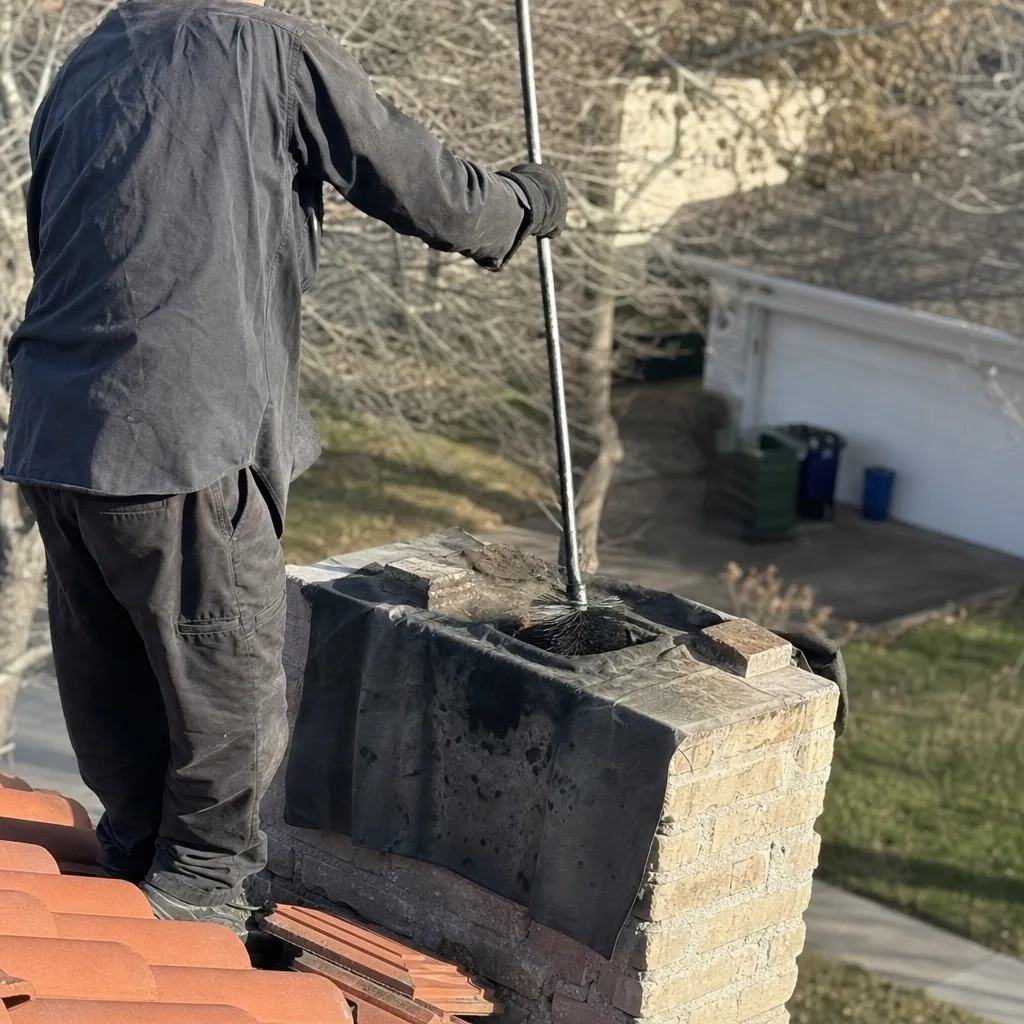
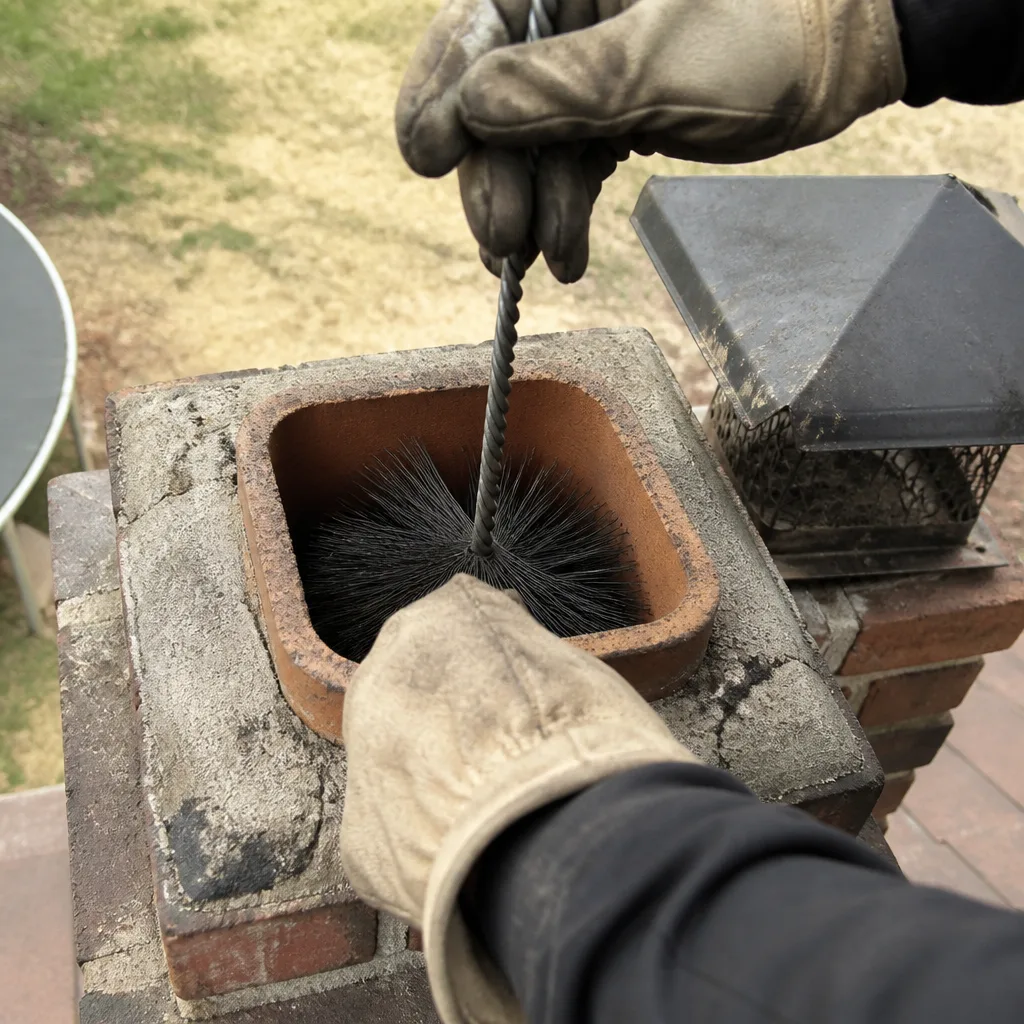
- Mechanical sweeping. Poly or steel brushes sized to the flue diameter are driven the full length of the system, typically with a rotary driver for Class II and III creosote. The brush choice matters: poly for stainless liners, steel for clay tile when glaze is present.
- Smoke chamber and firebox cleaning. The area above the damper and the firebrick surface are scraped and brushed. This is where many sweeps stop short; it’s also where significant creosote accumulation hides in McKinney’s common Rumford-style fireplaces.
- Post-sweep camera scan. A chimney inspection camera travels the full flue length to confirm the cleaning exposed no hidden defects and to document liner condition, joint integrity, and any remaining deposits. Clause 4 of the Haven Standard requires this photo record on every job, and we’ve done it since 2009.
The entire process for a standard McKinney single-flue system takes 60-90 minutes. Two-flue systems common in homes near Adriatica or Trinity Falls add 30-45 minutes. What changes the timeline is not the sweeping itself but what the camera finds: a cracked liner segment in a 1998-built home near Eldorado Parkway can turn a routine sweep into a documented repair recommendation with written pricing before any additional work proceeds.
The Three Types of Creosote and Why They Matter
Creosote forms in three stages, and the stage determines both fire risk and cleaning method. A flashlight glance from the top or bottom cannot distinguish them. Only a camera scan can, which is why the NFPA 211 Level 2 inspection protocol exists.
Class I creosote is sooty, dusty, and flakes off easily. It forms with dry hardwood burned hot with adequate air supply. In McKinney, this is what we see in systems burning seasoned post oak from local suppliers, properly operated. A standard poly brush removes it.
Class II creosote is crunchy and porous, like honeycomb charcoal. It indicates cooler flue temperatures, often from smoldering fires or green wood. McKinney’s occasional ice storms push homeowners to burn whatever’s available; we see Class II spike after those events in neighborhoods like Stonebridge Ranch and Craig Ranch. Mechanical brushing still works, but rotary tools and more time are required.
Class III creosote is a glossy, tar-like glaze that bonds to liner surfaces. It’s the most combustible form and the hardest to remove. It forms from chronically low flue temperatures, often in exterior chimneys on north-facing walls that never fully warm up. Many 1980s and 1990s McKinney homes in older sections near downtown have this exposure. Class III requires chemical treatment or rotary flail systems, sometimes across multiple visits. Attempting to burn it out is dangerous; the concentrated heat can crack clay tiles or warp stainless liners.
Here’s the critical point: you cannot tell your creosote class by looking up from the firebox or down from the roof. The camera must travel the full flue. We’ve documented Class III glaze in fireboxes that looked nearly clean from below, and we’ve found cracked tiles hidden behind thin Class I deposits. The sweep addresses what you can see; the inspection addresses what you can’t.
How Often Should You Clean Your Chimney in McKinney?
The NFPA 211 standard says “annual inspection,” not “annual cleaning.” Whether cleaning is needed depends on what you burn, how much, and what the last camera scan showed. For McKinney homeowners, we use this decision tree:
Wood-burning fireplaces and inserts: Clean after every 1-2 cords of seasoned hardwood. For a typical McKinney household burning Friday-Sunday evenings October through March, that’s roughly one cord per season. Annual cleaning before October is the safe default. If you’re burning mesquite, which is common in Collin County due to local availability, the resin content pushes you toward the 1-cord interval. Post oak, properly seasoned to 20% moisture or below, burns cleaner and may stretch toward 2 cords.
Gas log sets and gas fireplaces: These produce minimal creosote but still require annual inspection. The concern is not soot accumulation but venting integrity: deteriorated connections, debris from McKinney’s spring storm season blocking termination caps, or condensation damage in the flue. A Level 2 camera scan every 12 months catches these before carbon monoxide becomes a risk.
Pellet stoves: Clean every 1-2 tons of pellets burned, typically annually for McKinney use patterns. The venting system, not just the burn pot, needs attention.
Systems with known defects: If your last scan showed spalling clay tiles, a cracked crown, or missing mortar joints, clean more frequently. Defects trap moisture and accelerate creosote buildup. In McKinney’s climate, with summer humidity followed by hard freezes, this cycle is aggressive on compromised systems.
McKinney’s burn season runs roughly October 15 through March 15, though the first cold snap often hits in late September. The practical schedule: book your inspection and cleaning in August or September. For year-round maintenance tips, see our Seasonal Chimney Cleaning Care for McKinney: Year-Round Homeowner’s Guide. By October, every sweep in Collin County is booked two weeks out, and the first fire happens before the system is checked.
Sweep vs. Inspection: Know What You’re Paying For
Most McKinney homeowners assume “chimney cleaning” includes a full condition assessment. It often doesn’t. Understanding the distinction protects you from paying for a sweep when you need an inspection, or worse, getting a sweep that misses the problem that matters. For help deciding, see our DIY vs Professional Chimney Cleaning: The McKinney Homeowner’s Decision Guide.
A chimney sweep (or cleaning) is a maintenance service: removing deposits, obstructions, and debris so the system operates safely. It does not include systematic documentation of structural condition. A sweep can be done without ever running a camera.
A chimney inspection is a diagnostic service: documenting the condition of the flue liner, crown, cap, smoke chamber, firebox, and exterior masonry. NFPA 211 defines three levels:
- Level 1: Visual examination of readily accessible portions. Appropriate for unchanged systems with no known problems, performed annually. No tools, no camera, no roof access required.
- Level 2: Includes Level 1 plus camera scan of the flue interior, accessible portions of the attic and basement, and examination from the roof. Required at property transfer, after chimney fire or seismic event, or when the appliance or fuel type changes. This is what we perform on every visit at Level Two Chimney McKinney, regardless of circumstance. Clause 4 of the Haven Standard made it our default in 2009.
- Level 3: Invasive examination involving demolition of building components to access concealed areas. Only when Level 2 indicates a serious hazard that cannot be confirmed otherwise.
The industry problem: many McKinney-area sweeps advertise “inspection included” but deliver a Level 1 visual check, not a camera scan. The customer thinks they’ve been cleared; the cracked liner three feet above the smoke shelf goes undocumented. We’ve been called to homes in Tucker Hill and Provine Farm Estates where a “clean and inspect” from another provider missed significant defects because no camera was used.
At Chimney Cleaning & Sweep in McKinney, we don’t separate the two services for routine visits. The sweep and Level 2 camera inspection are a single appointment, a single written price agreed before work starts, and a single documented record delivered afterward. If you don’t need cleaning, you pay only for the inspection. If you need cleaning, the inspection is included. No guesswork about what you’re actually buying.
McKinney-Specific Factors: Clay Tiles, Burn Wood, and Local Codes
McKinney’s housing stock has characteristics that directly affect chimney maintenance. Understanding them helps you ask better questions of any sweep you hire. Our How to Hire a Chimney Cleaning Contractor in McKinney: A Step-by-Step Guide covers what to look for.
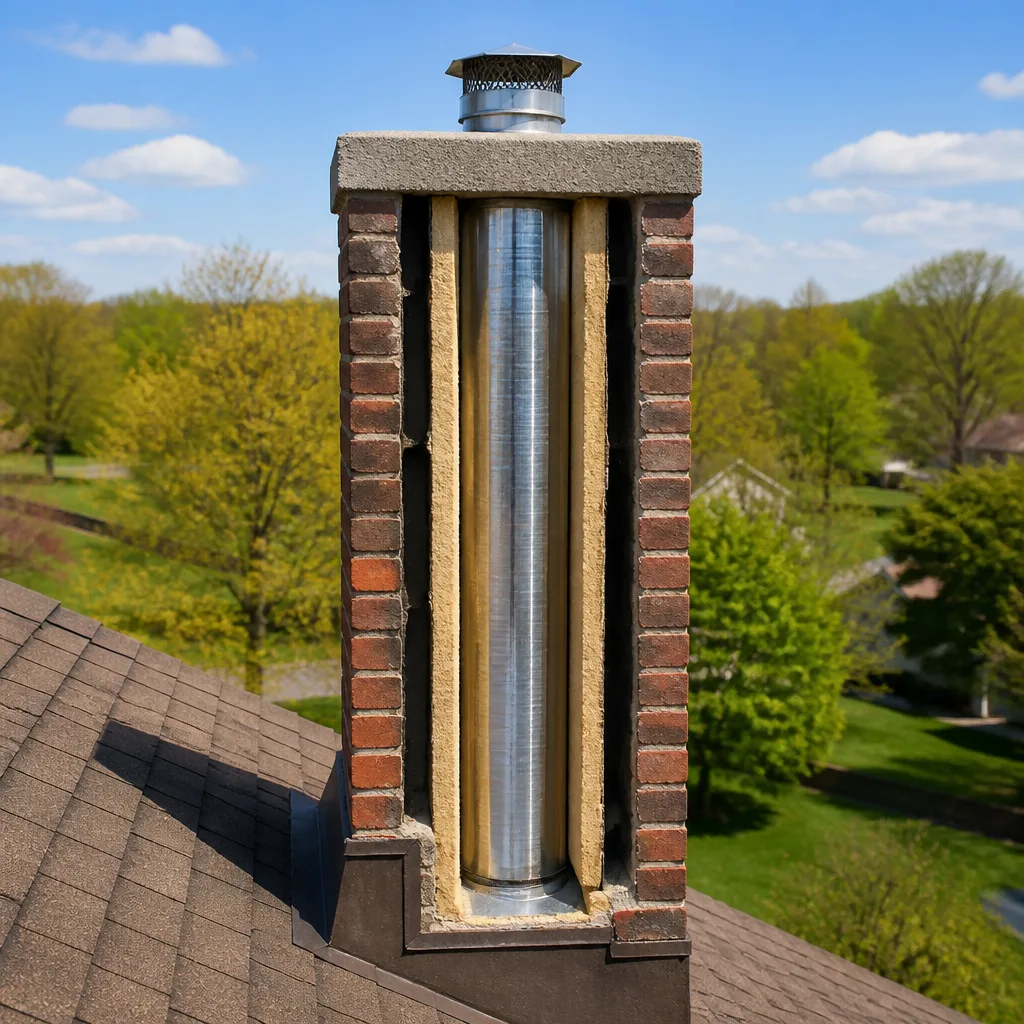
Clay tile liners in 1990s-2000s construction: The building boom from roughly 1992 to 2008 filled McKinney with homes using clay flue tile liners, typically 8×8 or 8×12 interior dimensions. Clay is durable when dry and properly maintained, but it has limits. Thermal shock from chimney fires cracks it. Freeze-thaw cycles in McKinney’s variable winters spall the surface. And clay cannot accommodate the lateral flex that stainless steel handles when a house settles. In neighborhoods like Forest Grove, McKinney Ranch, and the older sections of Stonebridge Ranch, we’re now seeing systematic liner deterioration as these systems age past 25 years. Cleaning protocol matters: steel brushes on deteriorating clay can chip tile edges, worsening the problem. We assess liner condition with the camera before selecting tools.
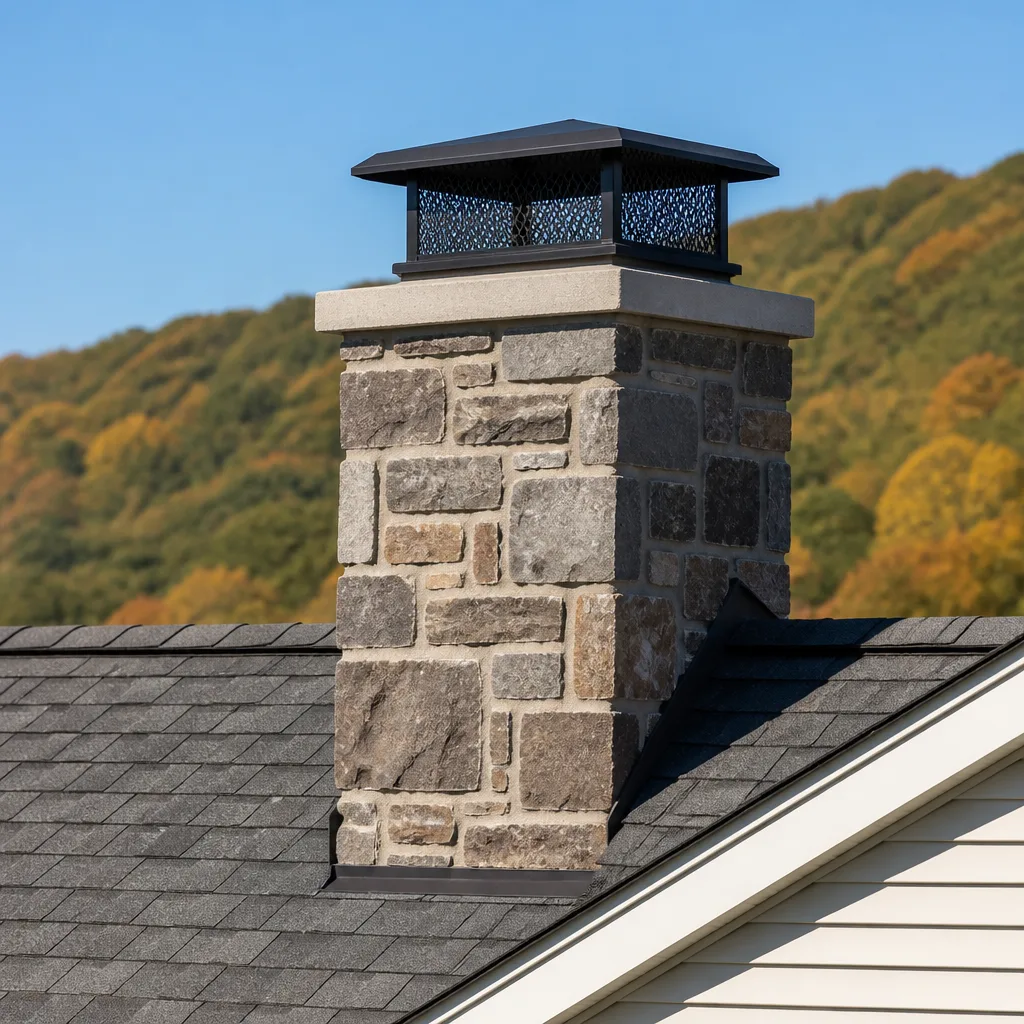
North Texas wind and weather: McKinney sits on the southern edge of Tornado Alley with sustained spring winds that frequently exceed 30 mph. Chimney caps from big-box retailers often fail within 3-5 years here. A proper cap, like those we source through Famco and Olympia Chimney’s professional lines, uses heavier gauge stainless and secure mounting that withstands these conditions. The cap isn’t cosmetic; it keeps rain, debris, and animals out of a system that must stay dry to function.
Local fuel preferences: Post oak and mesquite dominate McKinney’s firewood market. Post oak, properly seasoned, is excellent: dense, hot-burning, moderate creosote. Mesquite burns hotter still but with more resin; it requires more vigilant maintenance. Cedar, sometimes available from land-clearing operations, is the worst choice: high resin, rapid creosote formation, and the distinctive risk of sparking. We see cedar-related chimney fire calls every winter, usually from rural-exterior McKinney properties or homes near the Trinity River corridor.
Code and permit context: McKinney follows the 2021 International Residential Code with local amendments. Chimney repairs exceeding $5,000 or involving structural modification require a permit from McKinney Building Inspections. Re-lining a clay tile system with a stainless steel insert typically triggers this threshold. A reputable sweep will flag when permitting is needed and should provide documentation that satisfies both the city and your insurer. We include permit guidance in our written scope when applicable.
Insurer documentation requirements: Several homeowners carriers writing policies in Collin County now request proof of annual chimney inspection for wood-burning systems, particularly after the 2021 Texas winter storm losses prompted broader risk review. The documented photo record from a Level 2 inspection, with dated images of liner condition, increasingly satisfies this requirement. Our records are archived and available to the homeowner on request.
What Your Post-Cleaning Record Should Include
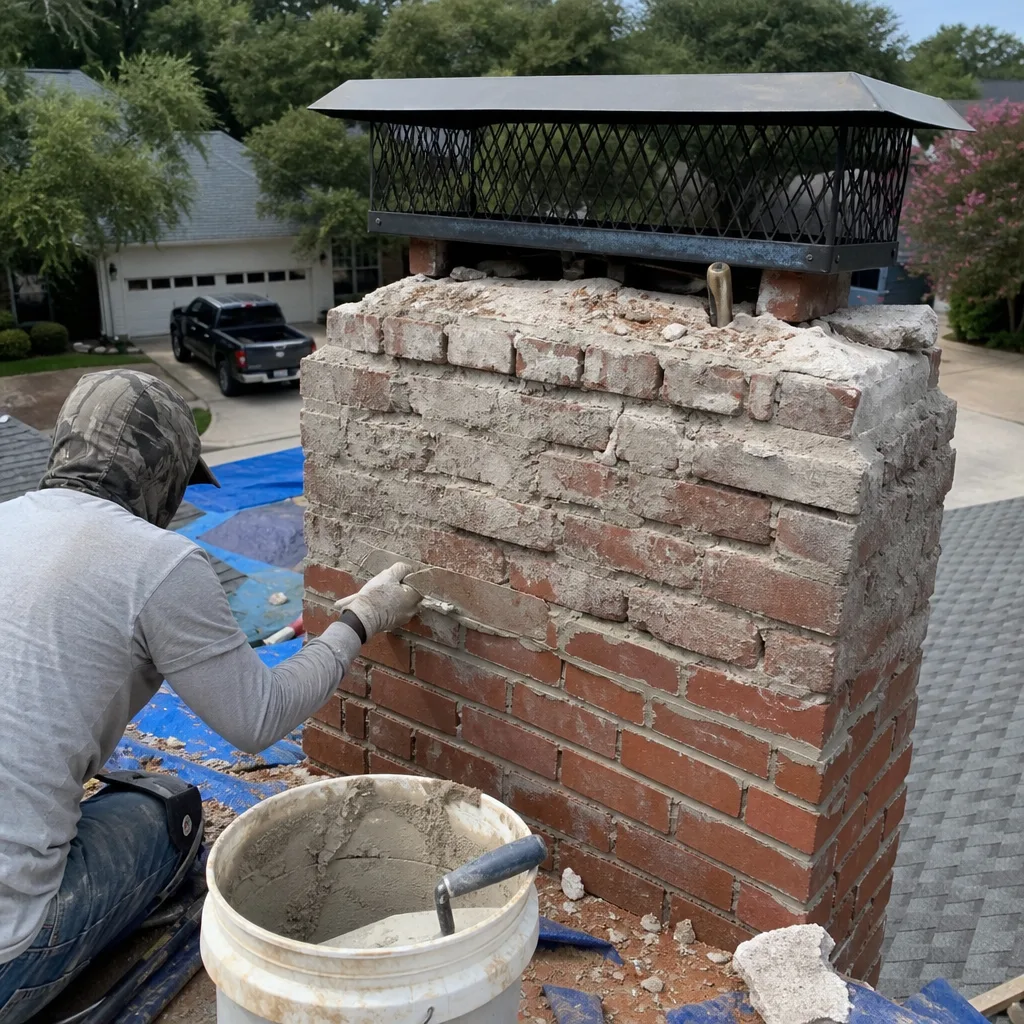
After 38,000+ visits, we’ve learned that the document you walk away with matters as much as the work itself. It’s your proof for insurance, your reference for next year’s comparison, and your protection if something goes wrong. A proper post-service record should contain:
- Dated photo documentation of the flue interior. Not one image, but a continuous scan or sequential stills showing the full liner length. Clause 4 of the Haven Standard requires this; we’ve delivered it since 2009.
- Written description of creosote class found and removed. “Cleaned” is insufficient. “Class II creosote, approximately 3/16″ thickness, removed by rotary poly brushing” is what your insurer or next sweep needs to know.
- Liner condition assessment. For clay tile: note any spalling, cracks, or missing mortar. For stainless: note deformation, corrosion, or joint separation. Include dimensional measurements if available.
- Crown, cap, and exterior condition. Photos of the crown surface, cap mounting, and visible masonry. In McKinney, crown deterioration from UV exposure and freeze-thaw is common; documenting it annually tracks progression.
- Smoke chamber and damper condition. These are high-stress areas that affect draft and safety.
- Written scope of any recommended repairs. With specific components, quantities, and flat pricing. Haven Standard Clause 1 requires a written price before any work starts; the post-service record confirms what was done against what was proposed.
- Warranty documentation. Our 365-Day Done Right Promise covers workmanship and materials. The written record activates it.
We archive every record and can reproduce it years later. Homeowners in McKinney’s longer-held properties, particularly in historic districts or early 1990s subdivisions, benefit from this longitudinal view. We can show you your liner’s condition in 2019, 2022, and 2024, and demonstrate whether a crack is new or stable. That context prevents unnecessary repairs and identifies genuine emergencies.
Costs and Pricing for Chimney Cleaning in McKinney
Specific pricing matters. “Call for a quote” wastes your time and often masks bait-and-switch tactics. Here’s what chimney cleaning costs in McKinney’s market, based on our 2024-2025 service data:
| Service | Price Range | What’s Included |
|---|---|---|
| Standard sweep with Level 2 inspection, single flue | $199-$249 | Full mechanical sweep, camera scan, photo record, written report |
| Standard sweep with Level 2 inspection, two flues | $279-$349 | Same as above for both flues, common in homes with fireplace + furnace or two fireplaces |
| Class III creosote removal (chemical treatment + rotary) | $349-$499 | Pre-treatment application, return visit for mechanical removal, full documentation |
| Gas fireplace inspection and debris removal | $149-$199 | Level 2 camera scan, connection check, termination inspection, written record |
| Chimney cap replacement (standard stainless) | $289-$449 installed | Professional-grade cap, proper mounting, documentation |
| Minor crown repair (sealing, small cracks) | $199-$349 | CrownSeal or equivalent application, photo before/after |
These are the prices we put in writing before work starts. No exceptions. If we arrive and find conditions that change the scope, we stop, explain, and provide a revised written price before proceeding. Haven Standard Clause 1 exists precisely because too many homeowners have experienced the “while we’re here” upsell after the tech is already in their living room.
Materials matter for durability in McKinney’s climate. We source through professional buying networks for DuraFlex stainless liners, HeatShield refractory repair systems, and caps from Olympia Chimney and Famco. These aren’t retail-grade products; they’re specified for professional installation with proper warranties. The price difference between a professional-grade cap and a big-box equivalent is $80-$120, but the service life in North Texas wind is 15+ years versus 3-5.
Our Chimney Repair in McKinney page details larger-scope work: liner replacement, crown rebuild, masonry repair. All carry the same written-price-first protocol and 365-Day Done Right Promise.
Common Mistakes to Avoid
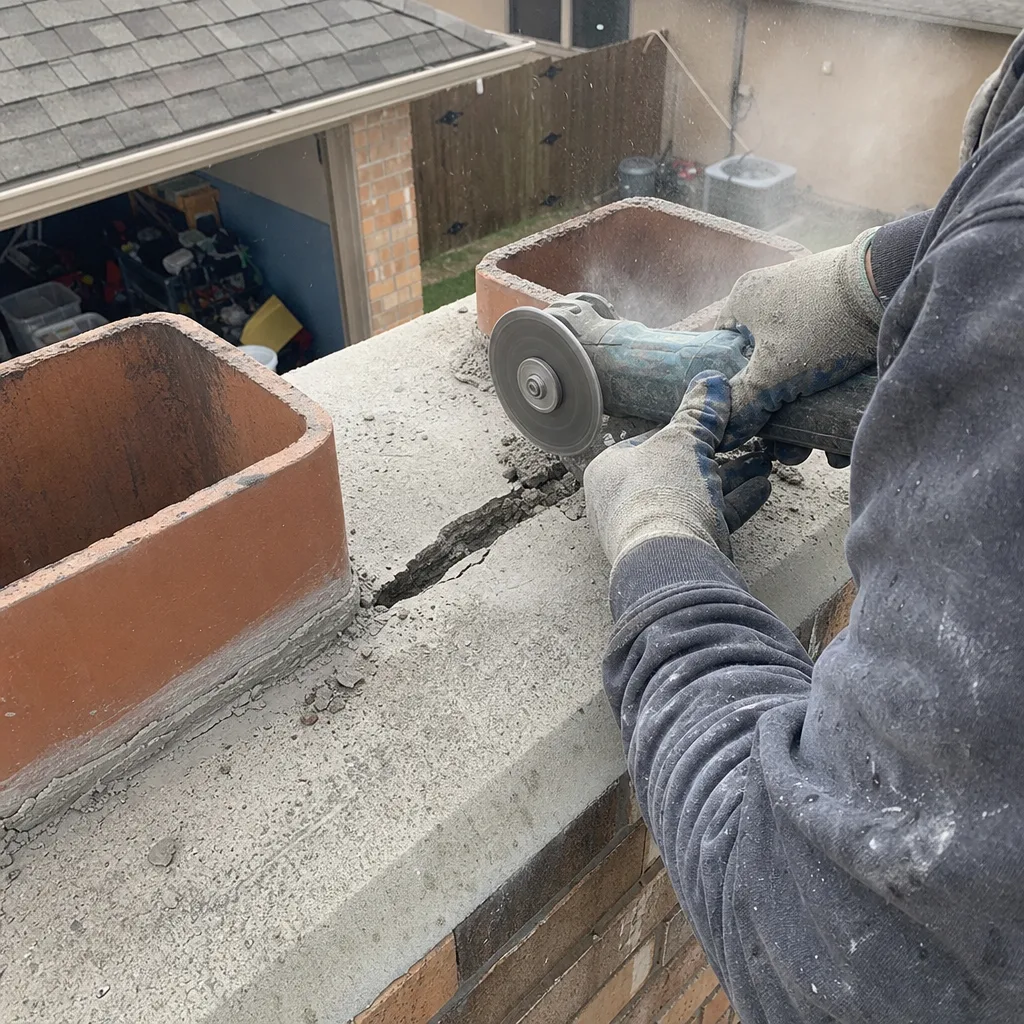
- Booking by calendar date instead of burn volume. A McKinney household that burns two cords annually needs more frequent service than one that burns half a cord. The correct interval depends on fuel consumed, not months elapsed.
- Accepting a “cleaning” without camera documentation. In Craig Ranch and Adriatica, we’ve found significant defects in systems that were “swept” months earlier with no images to show for it. The sweep was performed; the condition was not assessed.
- Burning unseasoned or soft wood to save money. Green wood and high-resin species like cedar cost less per cord but create Class II and III creosote rapidly. The savings evaporate in accelerated cleaning costs or, worse, liner damage from a chimney fire.
- Ignoring gas systems because “they don’t get dirty.” Gas fireplaces in McKinney accumulate debris from wind-driven rain and animal intrusion, and their vent connections degrade. The carbon monoxide risk from a failed gas vent exceeds the fire risk from creosote.
- DIY sweeping without understanding liner type. Clay tile liners in McKinney’s 1990s-era homes crack under aggressive brushing or wrong tool selection. A homeowner with a rented brush can turn a $249 sweep into a $2,400 liner replacement.
- Skipping service because “we hardly use it.” Even unused chimneys deteriorate. Moisture intrusion, freeze-thaw cycling, and animal nesting happen regardless of burn frequency. Annual inspection catches these before they become expensive.
- Choosing by lowest price without verifying what’s included. A $129 “special” that omits the camera scan, provides no written record, and sends an unverified technician is not comparable to a documented Level 2 service. The true cost reveals itself at claim time or at the next inspection.
When to Call a Professional
Call for service before burn season starts, not after the first cold night. Specific scenarios that warrant immediate attention: visible creosote flakes falling into the firebox, a strong smoky odor when the system is not in use, white efflorescence or spalling brick on the exterior chimney, or any suspected chimney fire (loud roaring, dense smoke, flames visible at the cap). For gas systems, any soot accumulation on logs or glass, or a carbon monoxide detector activation, requires immediate inspection.
Level Two Chimney McKinney offers free estimates in McKinney. We’ll review your situation, provide a written scope and flat price before any work begins, and answer questions about what your specific system needs. Call (469) 429-2623 to schedule.
Frequently Asked Questions
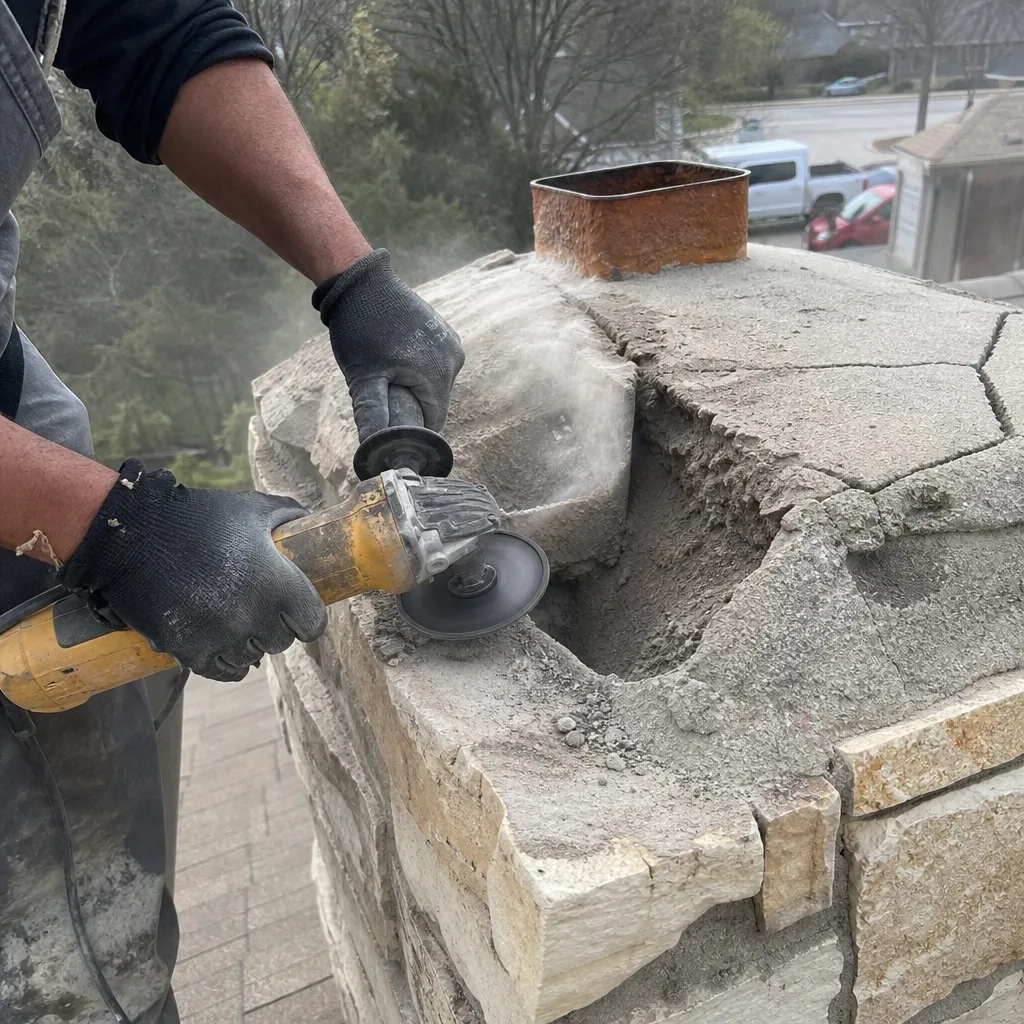
A standard chimney sweep with NFPA 211 Level 2 camera inspection in McKinney costs $199-$249 for a single flue and $279-$349 for two flues. Class III creosote removal or chemical treatment runs $349-$499. Every job gets a written price before work starts, with no hidden fees. Call (469) 429-2623 for an exact quote on your system - estimates are free.
You need a new liner when the existing one is cracked, spalled, or otherwise compromised to the point that it cannot contain heat and combustion byproducts safely. In McKinney’s 1990s-2000s housing stock with clay tile liners, we see this most often after chimney fires, freeze-thaw damage, or simple age-related deterioration past 25 years. We never recommend liner replacement without camera evidence you can see yourself, and we’ll tell you plainly when a defect can be monitored rather than replaced. Call (469) 429-2623 for a free second opinion on any written estimate.
Wood-burning systems should be cleaned after every 1-2 cords of seasoned hardwood burned, which for typical McKinney use means annually before October. Gas systems need annual inspection for vent integrity, with debris removal as needed. The specific interval depends on your fuel, burn volume, and what the last camera scan showed, not a fixed calendar date. Call (469) 429-2623 to discuss your usage pattern.
Skipped cleaning allows creosote accumulation that increases chimney fire risk and can obscure developing structural defects. A chimney fire can crack clay tile liners, damage surrounding framing, and in severe cases spread to the roof. Even without fire, heavy creosote restricts draft, causing smoke backup and inefficient burning. In McKinney’s climate, deferred maintenance also means moisture damage and animal intrusion go undetected. The cost of prevention is consistently lower than the cost of repair.
A chimney sweep removes deposits and debris; a chimney inspection documents structural condition. They are distinct services, though we combine them in every routine visit. A sweep without inspection can leave cracked liners or deteriorated mortar undetected. An inspection without cleaning may miss combustible deposits that pose immediate fire risk. Our Fireplace Services in McKinney page covers additional diagnostic and repair options.
Clay tile chimneys are safe when properly maintained and undamaged. The concern in McKinney is age: systems installed during the 1990s and 2000s building boom are now 20-30 years old, and clay does not flex with house settling or thermal stress the way stainless steel does. Annual camera inspection tracks condition over time. When clay tiles crack or spall, we typically recommend a stainless steel liner insert, which we install using DuraFlex materials sourced through our professional buying network. The decision is always based on documented evidence, not age alone.
The Bottom Line
Chimney cleaning in McKinney is not a calendar appointment. It’s a decision based on what you burn, how much, and what the camera found last time. Explore more guides & resources to keep your system safe. The sweep removes what’s combustible; the inspection reveals what’s compromised. Both matter, and neither substitutes for the other. Book before burn season, demand documented evidence, and never accept work without a written price agreed in advance. The 30% of chimney fires that happen in “recently cleaned” systems are a reminder that cleaning without inspection is incomplete.
Level Two Chimney McKinney has operated under the Haven Standard since 2009, completing more than 38,000 chimney inspections and cleanings with a written price before every job and a documented photo record after. Our 365-Day Done Right Promise, background-checked uniformed technicians, and live 24/7 phone support are the baseline, not extras. Call (469) 429-2623 for a free estimate, or bring us any competitor’s written quote for a free second opinion.
Written by Corrine Halstead, Owner at Level Two Chimney McKinney, serving McKinney since 2009.