
Last updated September 22, 2026
Level 1 sweep and inspection to the NFPA 211 annual standard - flue, crown, cap, and flashing checked and photographed
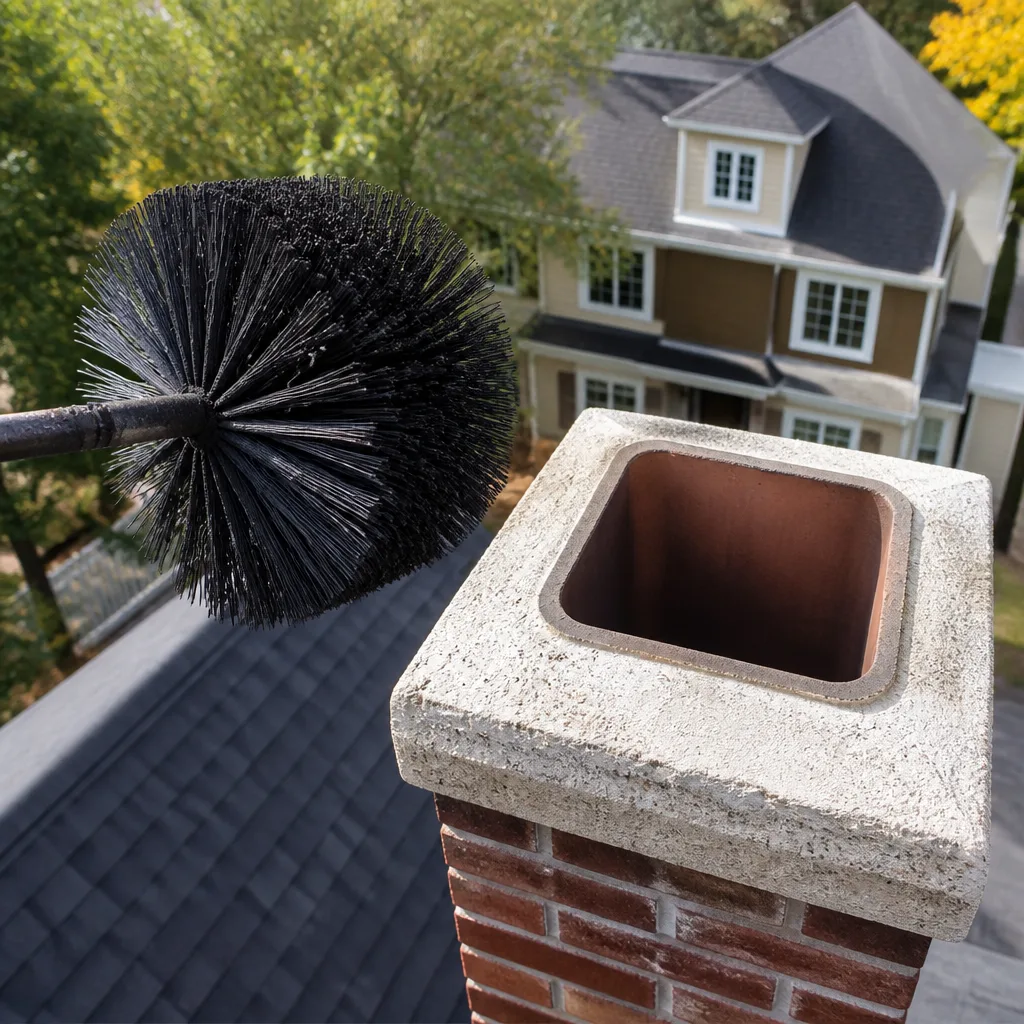
Chimney sweep logs do not sweep chimneys. They loosen some creosote - which then falls where a brush and vacuum still have to collect it.
Masonry repairGas fireplace service
 Before
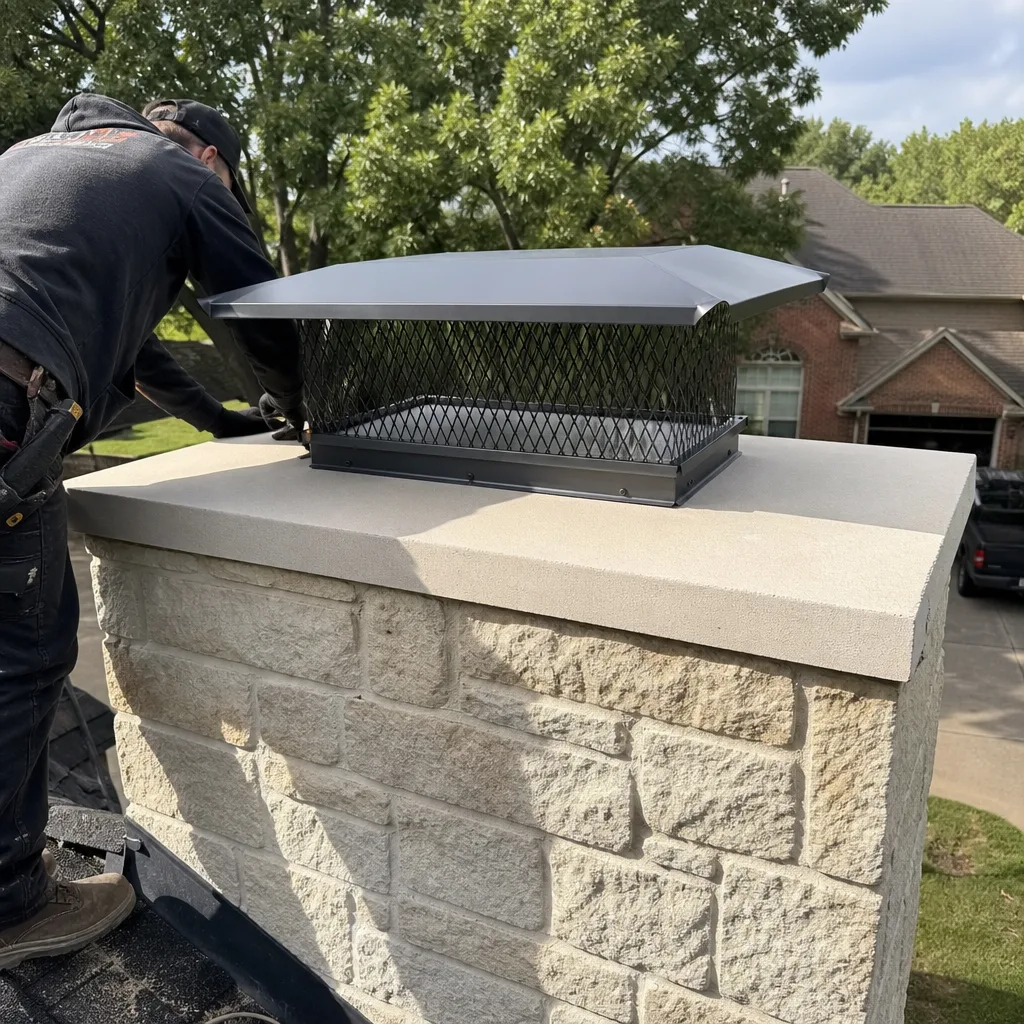 After
After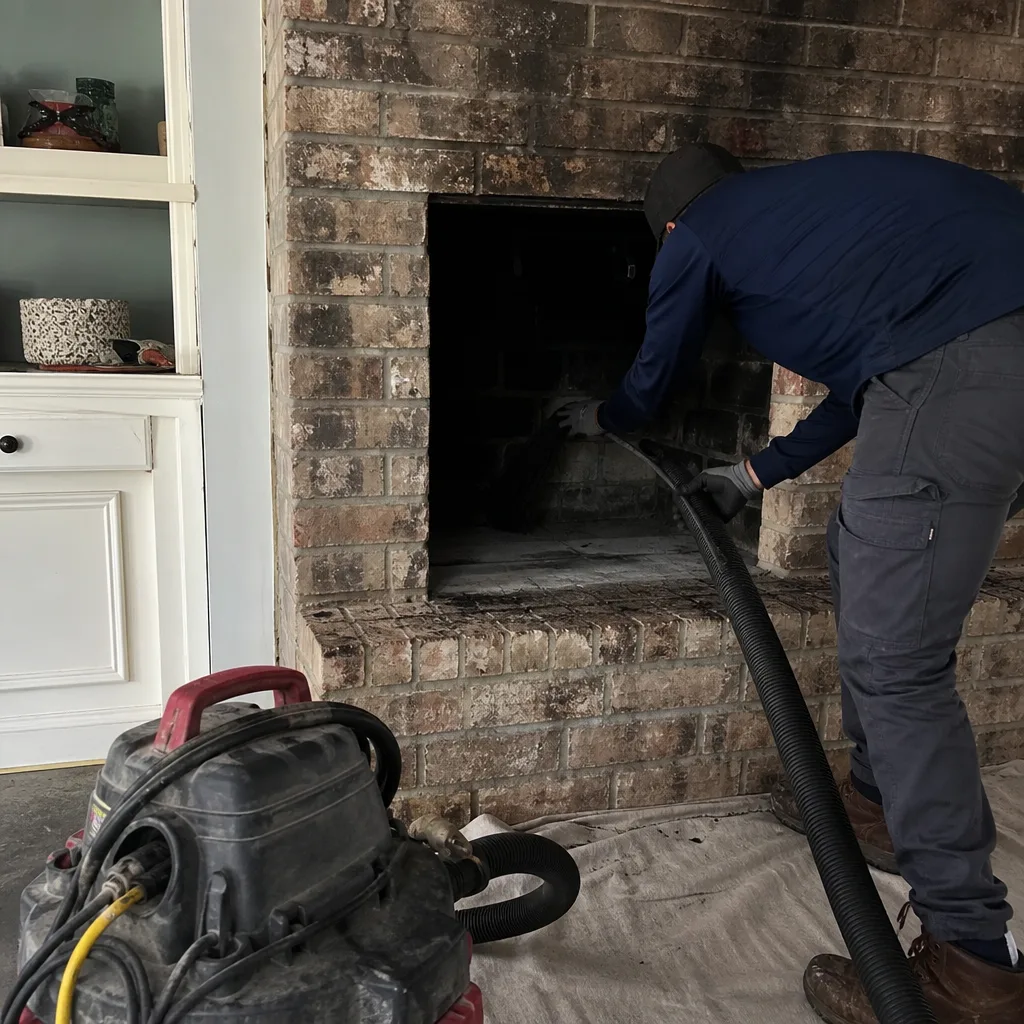 Before
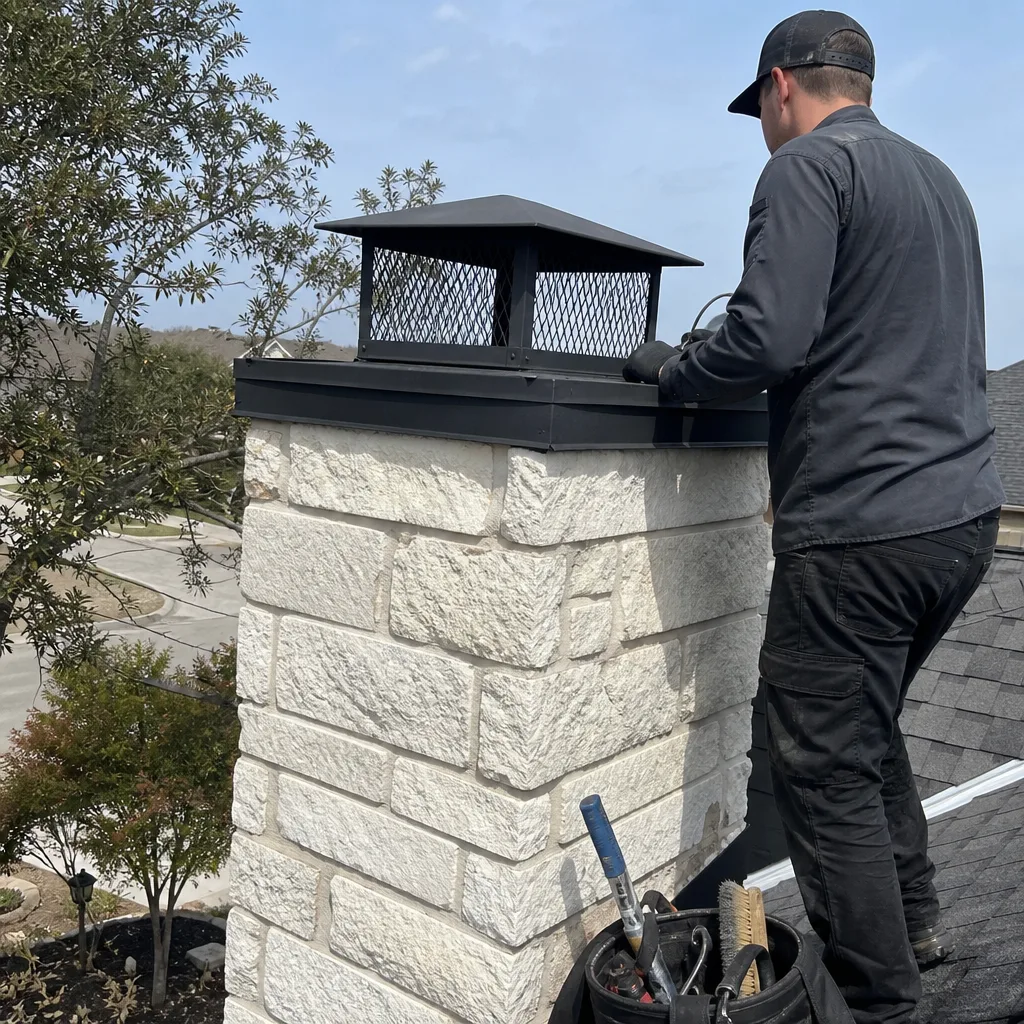 After
After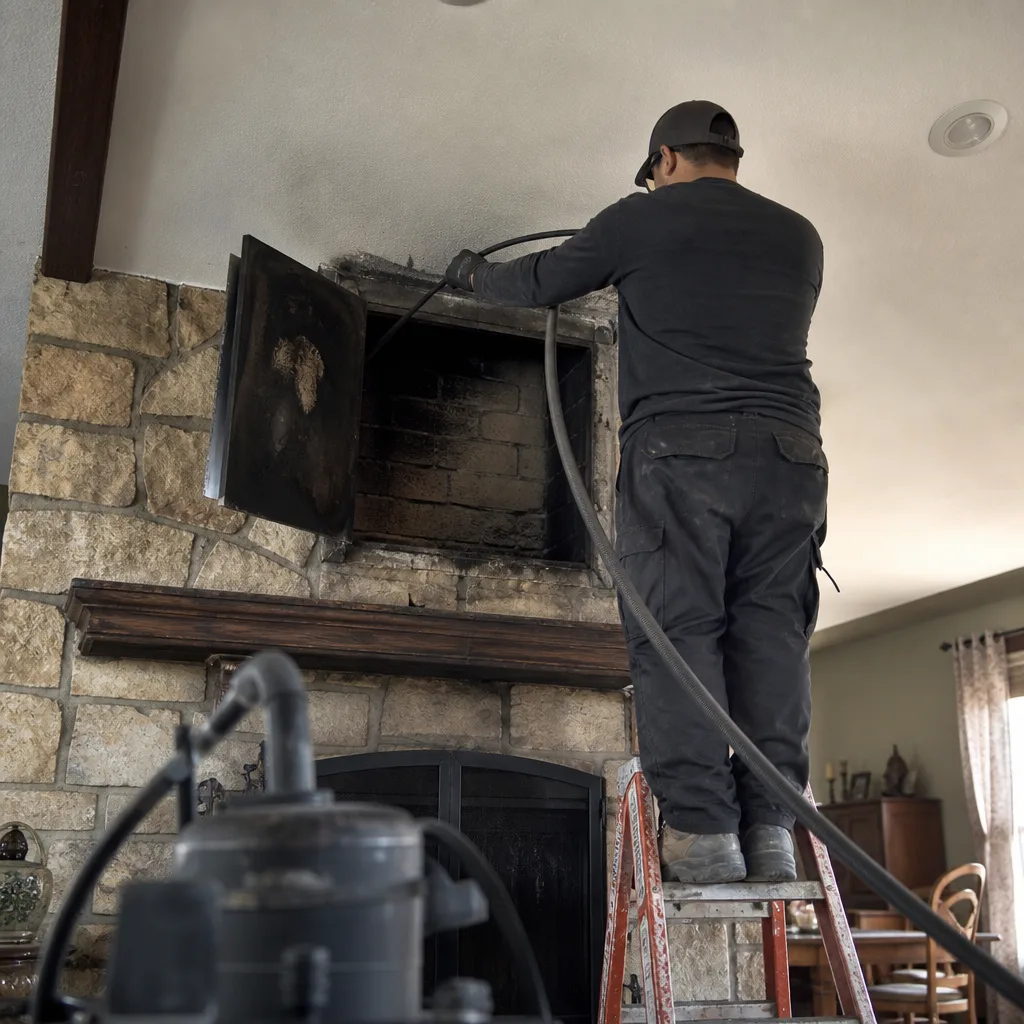 Before
 After
AfterChimney Cleaning Warning Signs: A McKinney Homeowner’s Reference Guide
White staining on brick and black staining near your firebox opening look equally alarming, but one is a cosmetic moisture issue and the other may signal active carbon monoxide backdrafting. In McKinney, we’ve seen homeowners spend thousands on unnecessary repairs while missing real hazards, simply because no one explained what each sign actually means for the component that’s failing. This guide ties every visible warning sign to its specific failure mechanism, documented risk level, and the documentation you should receive after it’s addressed. For The Complete Guide to Chimney Cleaning in McKinney, see our companion resource. You’ll learn to prioritize correctly instead of panicking at every dark streak.
Quick Answer
The most serious chimney warning signs requiring immediate action are smoke entering living spaces, visible flue liner damage, and sharp creosote odors, all of which indicate active combustion hazards. Moderate-priority signs including efflorescence, spalling brick, and cold drafts when the fireplace is closed should be addressed within 30 days. Minor mortar wear, slight discoloration, and musty odors warrant documentation at your next annual NFPA 211 Level 2 inspection but don’t require emergency response. If you’re weighing whether to tackle issues yourself, read our DIY vs Professional Chimney Cleaning: The McKinney Homeowner’s Decision Guide.
Table of Contents
- Stop Use Immediately: Critical Warning Signs
- Schedule Within 30 Days: Moderate Concerns
- Note for Annual Inspection: Minor Indicators
- Interior Warning Signs Homeowners Miss
- Camera-Only Warning Signs: What Flashlight Inspections Hide
- McKinney-Specific Risk Factors
- The Documentation Trail Every Homeowner Should Request
- Common Mistakes to Avoid
- When to Call a Professional
- Frequently Asked Questions
 Before
 After
AfterStop Use Immediately: Critical Warning Signs
These three signs mean active combustion danger. Stop using the fireplace or appliance and call for inspection before next use.
Smoke or Fumes in Living Spaces
Any smoke, soot smell, or combustion odor entering your home while the fireplace operates indicates failed containment. The flue liner, smoke chamber, or chimney crown has lost its seal, or there’s a blockage forcing exhaust backward. Carbon monoxide, which has no odor, travels with smoke, so visible smoke means invisible CO is present too.
In McKinney’s older neighborhoods like Historic Downtown and east of Highway 5, we’ve found this caused by deteriorated terra cotta flue liners cracked by thermal cycling. Newer construction in Trinity Falls and Stonebridge Ranch sometimes shows this from improper gas log conversion in wood-burning fireplaces, where the original flue is oversized for the reduced exhaust volume, causing spillage at the firebox opening.
What to do: Extinguish the fire if burning. Open windows for ventilation. Do not use the fireplace again until a camera-scan inspection confirms the flue path is intact and properly sized for the appliance.
Visible Flue Liner Damage
If you can see cracks, missing tiles, or gaps in the flue liner from the firebox opening, the chimney is no longer a contained exhaust system. Hot gases and sparks can reach combustible framing. NFPA 211 considers a damaged liner an immediate hazard.
We’ve documented this in over 200 McKinney homes since 2009, particularly in 1980s and 1990s construction where original terra cotta liners are reaching end of service life. The Chimney Repair in McKinney page covers liner replacement options using DuraFlex stainless steel and HeatShield cerfractory resurfacing, both materials we source through Haven’s buying network.
Sharp, Acrid Creosote Odor
A strong, sharp, chemical smell from the fireplace, especially in warm weather, indicates active Class III creosote, the glazed, tar-like deposit that ignites at 451 degrees Fahrenheit. This is the fuel for chimney fires. The odor means it’s off-gassing, which happens as temperatures rise.
McKinney’s humid subtropical climate accelerates this. Summer humidity causes creosote to absorb moisture and off-gas more aggressively than in drier regions. We’ve had McKinney homeowners call in July reporting “something died in the chimney” that was actually active Class III creosote degrading in the heat.
Safety note: Do not attempt to burn off creosote or use chemical chimney cleaning logs as a substitute for mechanical removal. Class III creosote requires rotary mechanical cleaning with chains or whips by a trained technician. The Chimney Cleaning & Sweep in McKinney service includes this as standard when found during inspection.
Schedule Within 30 Days: Moderate Concerns
These signs indicate progressive damage that will worsen and become hazardous, but don’t require emergency response if the fireplace isn’t in use.
Efflorescence (White Staining on Exterior Brick)
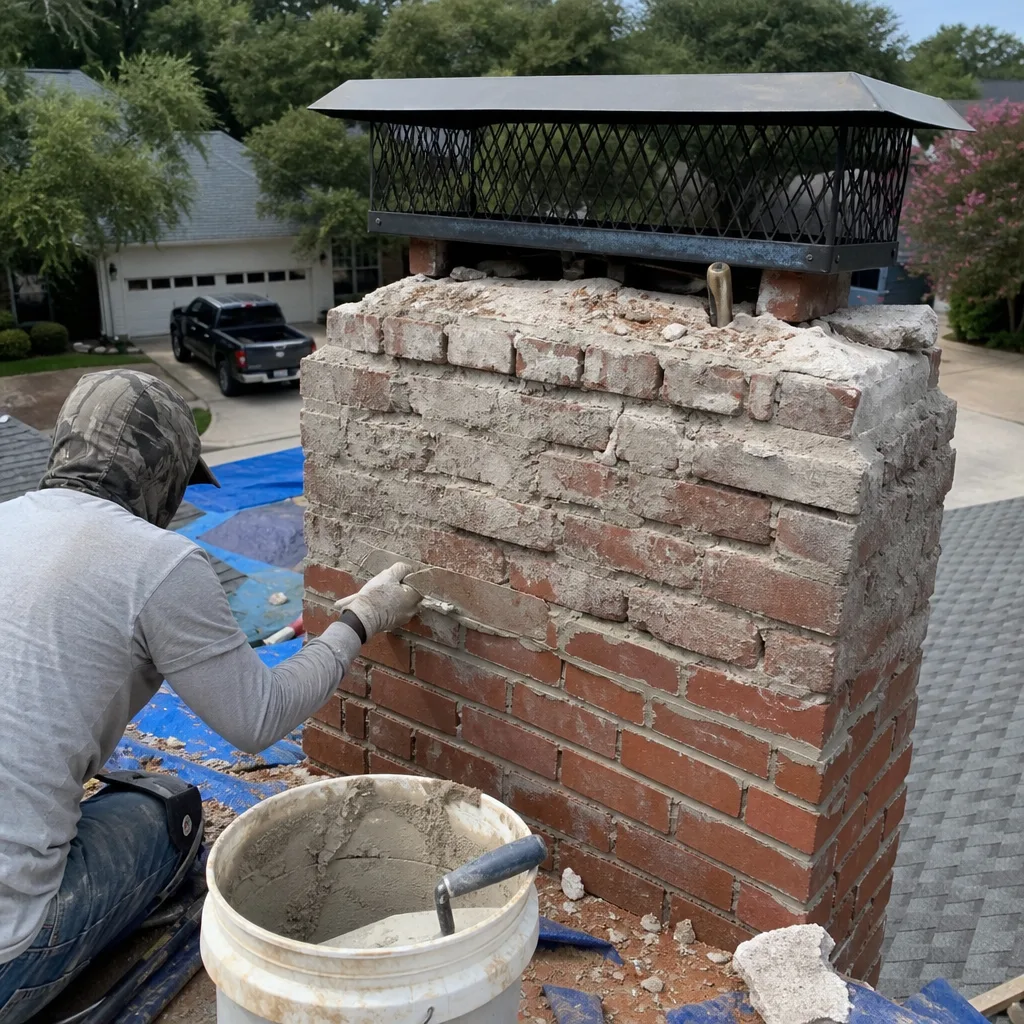
White powdery deposits on chimney brick mean water is moving through the masonry, dissolving salts, and depositing them on the surface as it evaporates. This is a moisture management problem, not a combustion hazard. Left unaddressed, it leads to spalling, freeze-thaw damage, and eventually structural compromise.
In McKinney, efflorescence is common after spring storm season when wind-driven rain saturates poorly crowned chimneys. The clay soils in Collin County also shift seasonally, creating hairline crown cracks that admit water. We’ve found this most frequently in homes built 2005-2015 with poured concrete crowns that lacked proper overhang or drip edge.
The repair is typically crown sealing or rebuilding, sometimes with waterproofing agent application to the masonry. A camera inspection should accompany this to confirm no interior water damage to the flue liner.
Spalling Brick or Deteriorating Mortar Joints
Spalling, the flaking or popping off of brick faces, occurs when water enters brick, freezes, and expands. McKinney averages 15-20 freeze-thaw cycles annually, enough to progressively destroy water-saturated brick. Deteriorating mortar joints accelerate the process by admitting more water.
Priority depends on location. Spalling on the chimney exterior above the roofline is weathering damage. Spalling visible inside the firebox or at the smoke chamber indicates high-temperature moisture exposure and possible liner breach.
Cold Drafts When Fireplace Is Closed
A persistent cold draft from the fireplace when not in use indicates negative pressure in the home, a blocked or improperly terminated flue, or missing or damaged damper seal. In McKinney’s newer airtight construction, whole-house negative pressure from HVAC systems can reverse chimney flow, pulling outdoor air down the flue.
This isn’t immediately dangerous but indicates the chimney isn’t functioning as designed. It also means conditioned air is escaping, and the chimney is acting as a thermal bypass. A smoke test and pressure diagnostic during inspection identifies the cause.
White Haze on Firebox Back Wall
A white or grayish haze on the rear firebox wall, especially below a gas log insert, often indicates thermal shock cracking. This is particularly common in McKinney homes where oversized gas log sets were installed in original wood-burning fireplaces without proper firebox modification.
The pattern forms because the concentrated heat pattern of gas logs differs from wood fires. The back wall receives direct radiant heat in a narrow band while surrounding areas stay cooler. Repeated cycling creates hairline cracks invisible to casual inspection but visible as efflorescence-like deposits where combustion byproducts migrate through the micro-fractures.
We’ve documented this in dozens of McKinney homes, especially in 2010-2018 construction in Craig Ranch and Adriatica where gas log upgrades were common seller improvements. The cracks themselves don’t immediately threaten the home but indicate the firebox is being operated outside its design parameters. A Level 2 inspection with camera scan confirms crack depth and whether HeatShield resurfacing or firebox reconstruction is indicated.
Note for Annual Inspection: Minor Indicators
These signs warrant documentation at your next scheduled NFPA 211 Level 2 inspection but don’t require unscheduled service.
- Minor mortar joint recession: Mortar eroded to 1/4 inch or less below brick face, but no loose brick. Typical in chimneys over 15 years old. Repointing can wait until it reaches 1/2 inch or water intrusion begins.
- Slight firebox brick discoloration: Uniform darkening from normal use, not localized overheating patterns. Indicates age, not hazard.
- Musty odor after heavy rain: Indicates minor water entry, typically crown or flashing related. Not urgent if no interior water damage is visible and odor dissipates within 48 hours.
- Rust stains on damper or firebox: Indicates past moisture exposure, possibly resolved. Document and monitor; active rusting requires investigation.
- Minor crown hairline cracks: Cracks under 1/16 inch that don’t extend to edges. Seal and monitor annually.
In our McKinney records, these minor indicators represent roughly 60% of what we document during routine inspections. The value is establishing baseline condition for comparison year over year, not immediate repair. Clause 4 of the Haven Standard requires this photo documentation precisely for this purpose, a practice we’ve maintained since 2009.
Interior Warning Signs Homeowners Miss
These signs appear inside the home, away from the chimney itself, and are frequently attributed to other causes.
Wallpaper Peeling Near Chimney Breast
Wallpaper or paint failing on walls adjacent to the chimney stack indicates moisture migration through the masonry into interior finishes. Homeowners often blame plumbing leaks or foundation issues first.
In McKinney, we’ve found this caused by deteriorated chimney flashing in homes with composite shingle roofs installed 2011-2017, when rapid housing construction sometimes prioritized speed over flashing detail. The moisture pattern is distinctive: vertical striping on the wall closest to the chimney, often worse on the second floor where the chimney stack passes through conditioned space.
A thermal imaging scan during inspection confirms the source. Repair typically involves flashing replacement and interior drying, not extensive plumbing or foundation work.
Odor Types and Their Meanings
Different chimney problems produce distinct odors. Learning to distinguish them prevents misdiagnosis:
- Musty, earthy smell: Moisture intrusion, typically crown, flashing, or masonry absorption. Worse in humid weather. Not immediately hazardous but promotes mold growth in framing cavities.
- Sharp, chemical, or asphalt-like: Active creosote, Class II or III. Hazardous. Indicates need for cleaning and inspection before next use.
- Sulfur or rotten-egg smell: Gas appliance issue, not wood-burning chimney. Could indicate gas leak or incomplete combustion in gas fireplace or furnace. Evacuate and call gas utility; this is not a chimney sweep matter.
- Stale, sooty smell when HVAC runs: Pressure imbalance pulling chimney odors into duct system. Indicates duct leakage or negative pressure, often in homes with attic ductwork common in McKinney’s 1990s-2000s construction.
Discolored or Warped Drywall Near Chimney Chase
In homes with factory-built metal chimneys enclosed in wooden chases, drywall discoloration or warping on the chase exterior indicates overheating of the chase enclosure. This is a genuine fire hazard distinct from masonry chimney moisture issues.
McKinney has significant factory-built chimney stock in 1980s-1990s subdivisions like Eldorado Heights and McKinney Heights. These systems require specific clearances to combustibles that are sometimes compromised by homeowner modifications, insulation additions, or rodent damage to chase covers. A Level 2 inspection includes verification of these clearances with photo documentation.
Camera-Only Warning Signs: What Flashlight Inspections Hide
The following conditions are invisible to flashlight inspection from the firebox opening or roof. They require NFPA 211 Level 2 camera-scan documentation, the inspection standard we’ve performed on every job since 2009.
Hairline Tile Fractures in Terra Cotta Liners
Terra cotta flue tiles crack from thermal shock, often without visible displacement. A flashlight shows intact tile; a camera reveals hairline fractures that open under heating, creating paths for combustion gases. We’ve found these in approximately 15% of McKinney homes with original terra cotta liners, particularly where previous chimney fires occurred without homeowner awareness.
The fractures are longitudinal, running tile height, and typically originate at mortar joints where expansion stress concentrates. They’re repairable with HeatShield cerfractory resurfacing if less than 1/8 inch wide and not displaced, or require DuraFlex stainless steel liner installation if more severe.
Obstructed Smoke Shelves
The smoke shelf, the flat area behind the damper, collects debris and creosote that falls from the flue. Excessive buildup narrows the smoke chamber throat and disrupts proper draft. A flashlight inspection from below can’t evaluate this area; a camera lowered from above documents accumulation depth and character.
In McKinney, we’ve found bird nesting material, construction debris from original build, and in one memorable case in Tucker Hill, a complete squirrel cache of pecans. The smoke shelf should be clean and level; any accumulation exceeding 1/4 inch warrants removal.
Liner Offset at Elbows
Factory-built metal chimneys and some masonry relining systems use elbows to navigate offsets. These joints can separate, corrode, or accumulate creosote at the inner edge where flow turbulence occurs. Only camera inspection from both directions reveals this.
Corrosion at elbows is accelerated in McKinney by the combination of humid summers and acidic condensate from high-efficiency gas appliances. We’ve replaced factory-built chimney sections in Adriatica and Spur 141 where elbow corrosion created visible gaps, documented only because our camera protocol caught what a flashlight inspection missed.
Hidden Crown Deterioration
The interior crown surface, where flue tiles penetrate, deteriorates differently than the exterior. Water entering through exterior cracks pools at the flue interface, causing accelerated concrete degradation hidden from roof inspection. A camera looking down from the flue top documents this condition.
This is particularly relevant for McKinney homes with poured concrete crowns installed 2000-2010, when some local builders used standard concrete mix without air entrainment for freeze-thaw resistance. The interior crown surface can be severely deteriorated while the exterior appears merely weathered.
McKinney-Specific Risk Factors
Local conditions in McKinney and Collin County create specific chimney vulnerabilities that warning sign guides for other regions miss. Explore more guides & resources tailored to North Texas homeowners.
Clay soil movement: Collin County’s expansive clay soils create foundation movement that stresses chimney structures. We’ve documented vertical chimney separation from rooflines in Stonebridge Ranch and Craig Ranch, where soil movement is pronounced. The warning sign is a widening gap between chimney and siding or roofline, often with caulk failure. This is structural, not combustion, but can compromise flashing and crown integrity.
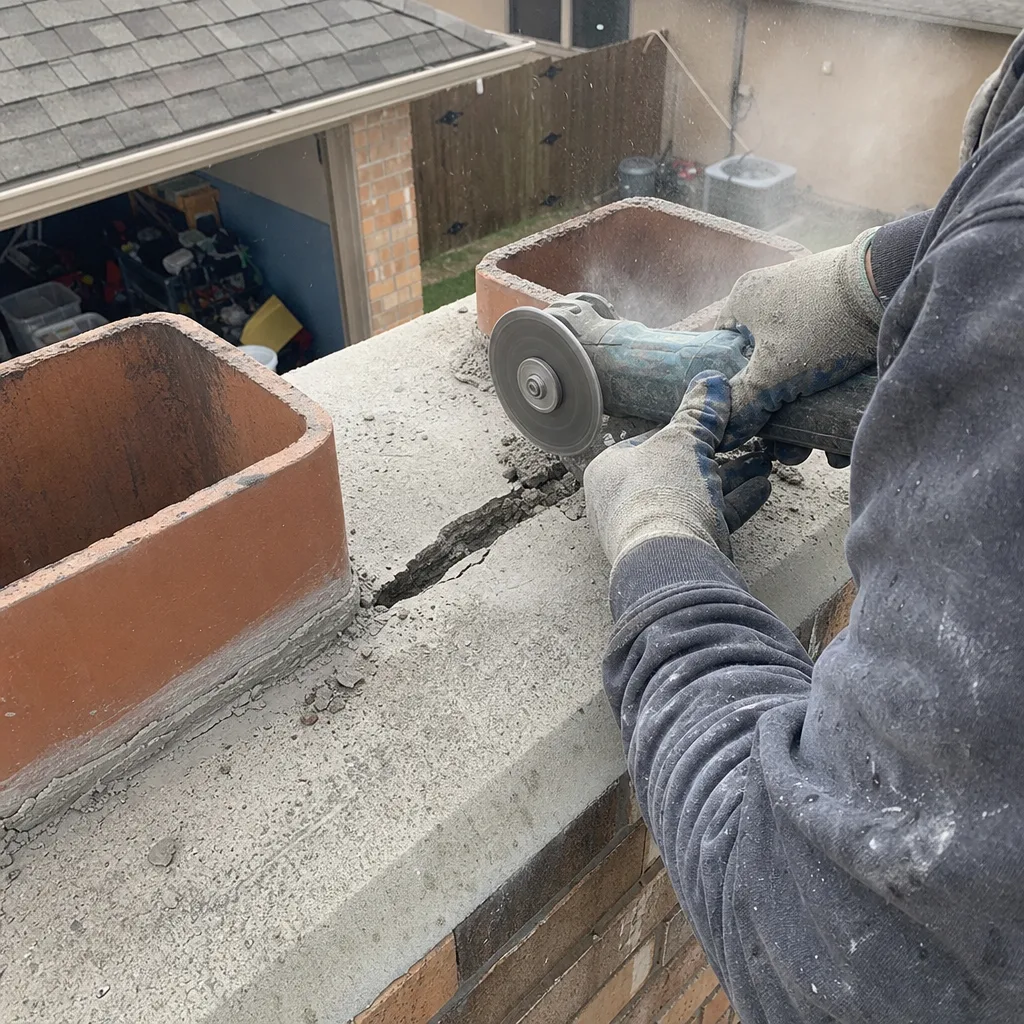
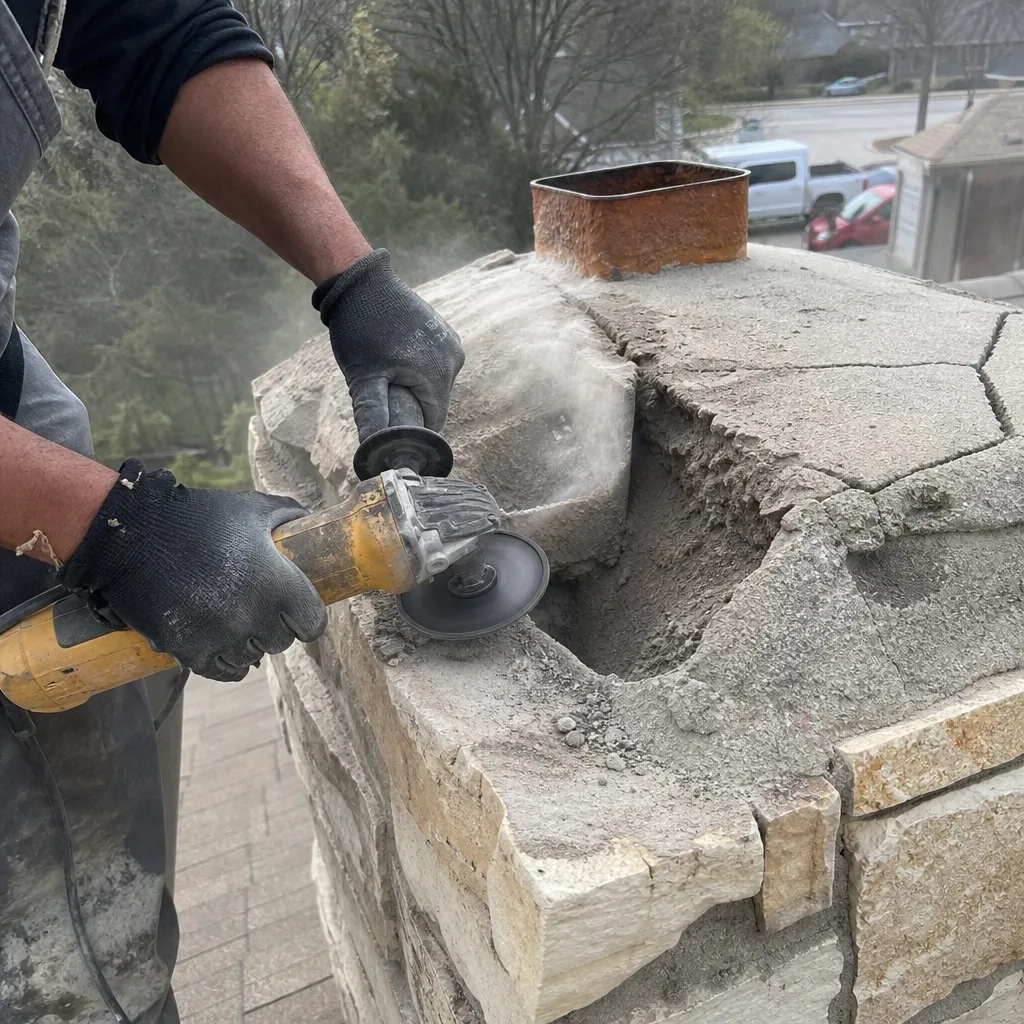
Hail impact on caps and crowns: McKinney’s position in Tornado Alley means regular hail exposure. We’ve replaced chimney caps dented to the point of blocking flue termination, and repaired concrete crowns spalled by direct hail impact. The warning sign is cap deformation or fresh concrete chipping after storm season.
Gas log conversions in wood fireplaces: McKinney’s 2015-2023 housing market saw frequent gas log installation as a selling feature. Many were oversized for the firebox or installed without proper flue sizing verification. The warning signs are soot staining at the firebox opening, thermal shock cracking described earlier, and carbon monoxide detector activation during operation.
Hard water and appliance scaling: McKinney’s municipal water is moderately hard. Tankless water heaters and high-efficiency furnaces vented through chimneys produce condensate that can scale and corrode metal liners. The warning sign is white or greenish scale deposits at the flue base, visible only on camera inspection.
Local code context: McKinney adopts the International Residential Code with local amendments. Current code requires carbon monoxide detectors on each floor and within 15 feet of sleeping areas, which can provide early warning of chimney backdrafting. However, code compliance doesn’t substitute for annual chimney inspection, as detectors respond only after failure, not before.
The Documentation Trail Every Homeowner Should Request
When a warning sign is found and addressed, the documentation you receive protects your investment, satisfies insurance requirements, and supports property resale. Under Clause 4 of the Haven Standard, we’ve provided this on every job since 2009.
- Pre-work photo record: Images of every warning sign identified, with location notation and severity classification. These establish baseline condition and justify recommended work.
- Written scope and price: Before any work begins, a document listing each item to be addressed, materials specified (including brand names like DuraFlex, HeatShield, or Olympia Chimney where applicable), labor description, and total price. Clause 1 of the Haven Standard requires this; we don’t start without it.
- Camera-scan footage: Video or sequential still images from the flue scan, showing condition before and after work. For liner repairs or relining, this includes footage demonstrating complete coverage and proper termination.
- Post-work photo record: Documentation of completed work, including material labels visible where possible, proper clearances, and clean work area.
- Written warranty: The 365-Day Done Right Promise, with specific coverage terms for each work category. Materials warranties from manufacturers like Gelco or Famco are included where applicable.
- NFPA 211 inspection report: Standardized form documenting inspection date, findings, recommendations, and next inspection due date. Required by many insurers and essential for real estate transactions.
For McKinney homeowners selling property, this documentation package satisfies buyer inspection objections and supports disclosure accuracy. We’ve provided retrospective documentation packages for past clients whose buyers requested verification, a service included under our ongoing relationship commitment.
Common Mistakes to Avoid
- Treating all stains as equally urgent: Efflorescence and soot staining have radically different implications. We’ve seen McKinney homeowners quoted $4,000 for “emergency waterproofing” for cosmetic efflorescence while missing active liner damage that posed real risk. Get a camera-scan diagnosis before authorizing major work.
- Assuming no odor means no problem: Carbon monoxide has no odor. A clean-smelling fireplace with visible deterioration can be more dangerous than one with obvious creosote odor. Odor is an unreliable hazard indicator.
- Accepting flashlight-only inspection: A flashlight from the firebox opening reveals perhaps 15% of flue condition. The NFPA 211 Level 2 standard exists because hidden damage is common. Any inspection quote that doesn’t include camera scan documentation is incomplete.
- Ignoring seasonal patterns: McKinney homeowners often notice warning signs in fall when fireplace use resumes, then delay service until “after the holidays.” This is backwards: the signs were present all summer, and first-fire conditions are when accumulated hazards manifest. Schedule inspection in late summer, before burning season.
- DIY creosote removal: Chemical logs and household brushes don’t remove Class III creosote and can polish it to a harder, more ignitable glaze. Mechanical removal requires proper equipment and training. The injury risk from falling tools and roof access exceeds any cost savings.
- Neglecting gas fireplace chimneys: Gas appliances produce corrosive condensate and require inspection despite cleaner operation. We’ve found deteriorated metal liners in gas-only chimneys that homeowners assumed were maintenance-free.
- Discarding documentation: Insurance claims and real estate transactions require proof of maintenance. The documentation package described above has supported successful McKinney home sales and insurance renewals for our clients.
When to Call a Professional
Call for immediate inspection if you observe smoke or fumes in living spaces, visible flue damage, or sharp creosote odors. Schedule within 30 days for efflorescence, spalling, persistent cold drafts, or white haze on firebox walls. For minor indicators, book your annual NFPA 211 Level 2 inspection and note findings for documentation.
Level Two Chimney McKinney offers free estimates in McKinney. Every estimate includes written scope and price before any work begins, camera-scan inspection with photo record, and is backed by our 365-Day Done Right Promise. Call (469) 429-2623 to schedule. Live phone support is available 24 hours a day, 7 days a week.
Frequently Asked Questions
Chimney cleaning and inspection in McKinney typically ranges from $189 to $349 for a standard NFPA 211 Level 2 service with camera scan and photo documentation included. The exact price depends on flue configuration, accessibility, and whether Class III creosote removal or additional services are needed. We provide a written price before any work starts, with no exceptions. Call (469) 429-2623 for a free estimate.
Annual inspection is recommended for all chimneys regardless of use frequency, per NFPA 211. Active wood-burning fireplaces should be cleaned when creosote accumulation reaches 1/8 inch, which for regular use in McKinney typically means annual sweeping. Gas fireplaces require inspection every 1-2 years for corrosion and debris. The inspection determines whether cleaning is needed; we don’t sell unnecessary services.
A new liner is necessary when the existing liner is damaged, improperly sized, or absent, as documented by camera inspection. We recommend replacement only with photo evidence you can review, and we provide free second opinions on any competitor’s written estimate. In McKinney, we’ve found that roughly 30% of recommended liner replacements we review are unnecessary or addressable with less extensive repair. The decision should be based on documented condition, not sales pressure.
Progressive creosote accumulation increases chimney fire risk, which can reach 2,000 degrees and damage surrounding structure. Moisture intrusion destroys masonry from within, leading to costly rebuild rather than repair. Gas appliance corrosion can create carbon monoxide pathways. Deferred maintenance typically costs 3-5 times more than scheduled service when failure finally occurs. Annual inspection catches deterioration before it becomes hazardous or expensive.
Summer chimney odors in McKinney typically result from humidity interacting with creosote deposits (sharp, chemical smell) or moisture intrusion promoting organic growth (musty, earthy smell). The combination of our humid subtropical climate and air conditioning creating negative indoor pressure draws these odors into living spaces. A summer inspection with cleaning and moisture source identification resolves most cases.
A Level 1 inspection is visual, from accessible areas, without specialized equipment. A Level 2 inspection includes camera scan of the flue interior, accessible portions of the attic and basement, and documentation of all findings. In McKinney, we perform Level 2 as our standard on every visit because hidden damage is common and documentation protects both homeowner and service provider. This became Clause 4 of the Haven Standard in 2009, years before it was industry common.
The Bottom Line
Not every chimney warning sign demands emergency response, but treating them all the same leads to either unnecessary expense or missed hazards. White staining and black staining mean different things. Odor type indicates different problems. Interior signs away from the chimney itself often reveal the true issue. And conditions invisible to flashlight inspection, documented only by camera scan, represent some of the most common serious findings in McKinney homes. The priority system in this guide, combined with proper documentation from a qualified inspection, lets you address what’s urgent, plan for what’s progressive, and monitor what’s minor. Annual NFPA 211 Level 2 inspection with photo record is the foundation; knowing what you’re seeing between inspections is the protection.
Written by Corrine Halstead, Owner at Level Two Chimney McKinney, serving McKinney since 2009.